In today's industrial landscape, monitoring airborne particulate matter is not just a regulatory requirement but a critical component of operational safety, equipment protection, and process optimization. Among the various technologies available, laser-based dust sensors have emerged as a superior choice due to their high precision, real-time capabilities, and reliability. These sensors utilize the principle of light scattering, where a laser beam illuminates particles, and a photodetector measures the scattered light to determine concentration and size distribution. This technology is indispensable in environments ranging from cleanrooms and pharmaceutical production to woodworking, mining, and HVAC system monitoring. For engineers, facility managers, and procurement specialists, selecting the right manufacturer is paramount. The market offers a diverse array of companies, each with its own strengths, specializations, and technological approaches. A high-quality sensor must deliver accurate data even in challenging conditions, offer robust connectivity for Industry 4.0 integration, and be backed by strong technical support. This guide delves into the key players in the field, highlighting manufacturers renowned for their innovation, product quality, and industry-specific solutions. It aims to provide a clear, unbiased overview to aid in the decision-making process.
One of the leading names in environmental and industrial monitoring is Siemens. With a vast portfolio under its Siemens Building Technologies and Process Automation divisions, they offer laser dust sensors designed for demanding industrial applications. Their devices are known for seamless integration into larger automation and building management systems, featuring protocols like PROFINET and Modbus. Siemens sensors are often chosen for large-scale projects where reliability and system-wide compatibility are non-negotiable. Another global giant, Honeywell, provides a range of laser-based particulate matter sensors, particularly strong in the commercial building and occupational health sectors. Their solutions focus on indoor air quality monitoring, often combining particle sensing with VOC, CO2, and environmental parameter measurement. Honeywell emphasizes user-friendly interfaces and cloud connectivity, making data accessible for facility management and analytics.
For applications requiring extreme precision and research-grade instrumentation, TSI Incorporated stands out. This US-based company is a specialist in measurement science. Their DustTrak™ DRX aerosol monitors are industry benchmarks, capable of real-time mass concentration measurement for multiple particle size fractions simultaneously. TSI sensors are frequently found in occupational health and safety compliance, environmental research, and filter testing. Their strength lies in scientific accuracy, detailed data logging, and robust construction for field use. Similarly, Particle Measuring Systems (PMS), now part of Spectris, is the undisputed leader in contamination control for ultra-clean environments. Their lasers for particle counting in cleanrooms, pharmaceuticals, and semiconductor manufacturing set the standard. PMS sensors offer unparalleled sensitivity for detecting even the smallest particles, which is critical for ISO-classified clean zones and critical manufacturing processes.
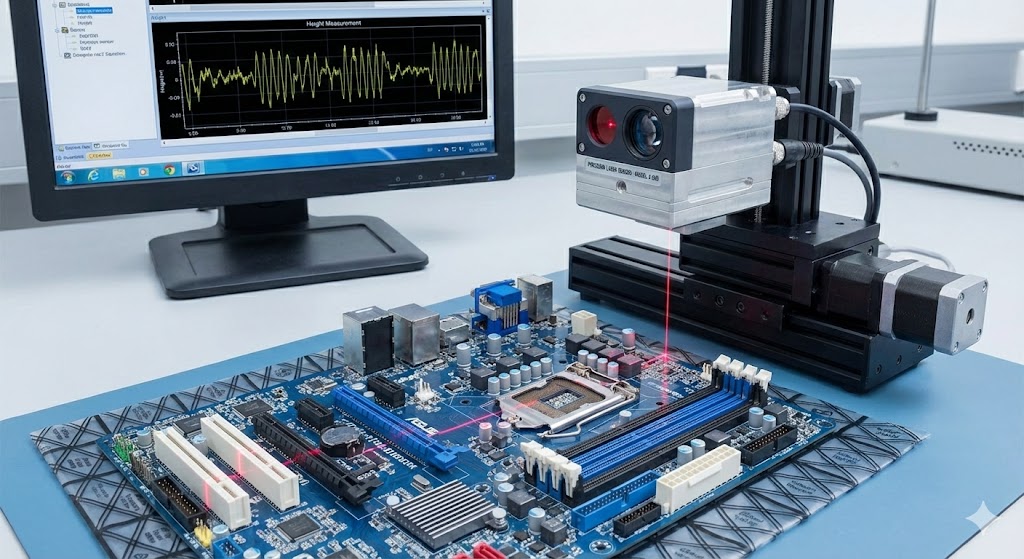
In the realm of more compact and cost-effective laser scattering sensors, several specialized manufacturers excel. Sensirion, a Swiss sensor manufacturer, has gained significant traction with its SPS30 particulate matter sensor. It's a digital sensor that provides mass concentration values for PM1.0, PM2.5, PM4.0, and PM10, along with particle number concentration. Its compact size, I2C/UART interface, and long maintenance interval make it highly popular for integration into HVAC systems, air purifiers, and IoT-based air quality monitors. Another key player is Plantower, a Chinese company whose laser sensor modules (like the PMS5003 series) have become ubiquitous in the consumer and prosumer air quality monitor market. They offer a compelling balance of performance, size, and price, driving widespread adoption in various devices.

Ametek (through its division like MOCON) and Testo also offer respected solutions. Ametek provides sensors for specific industrial process monitoring, while Testo, known for its portable test instruments, offers handheld laser dust measuring devices ideal for spot-checking and occupational safety surveys. Their products are praised for portability, intuitive operation, and reliable field performance.
When evaluating a manufacturer, several technical factors must be considered. Measurement range and resolution are fundamental; a sensor for a dusty quarry has different needs than one for a hospital operating room. The type of laser and detection angle significantly influence accuracy for different particle sizes. Connectivity options (analog 4-20mA, digital UART, Modbus, Ethernet) determine how easily the sensor integrates into your control system. Environmental durability, including rated operating temperature, humidity range, and ingress protection (IP rating), is crucial for harsh industrial settings. Finally, consider the total cost of ownership, which includes not only the initial purchase price but also calibration requirements, maintenance needs, and the availability of local technical support.

Choosing the right dust laser sensor manufacturer is a strategic decision that impacts safety, compliance, and efficiency. There is no single "best" manufacturer for all scenarios. Siemens and Honeywell offer robust, system-oriented solutions for large industrial and building projects. TSI and PMS deliver top-tier accuracy for safety and ultra-clean applications. Sensirion and Plantower provide excellent, integratable components for OEMs and IoT solutions. By carefully matching the manufacturer's expertise and product specifications to your specific application requirements—be it general industrial monitoring, cleanroom validation, indoor air quality management, or portable safety checks—you can ensure a reliable and effective particulate monitoring solution. Always request detailed datasheets, seek application notes, and, if possible, conduct pilot tests to validate performance in your actual operating environment before finalizing a procurement decision.