In the realm of industrial automation, precision and reliability are paramount. Among the myriad of sensing technologies available, laser sensors with background suppression (BGS) have emerged as a critical tool for enhancing accuracy in challenging environments. These advanced sensors utilize a focused laser beam to detect objects, while intelligently ignoring background interference, thus ensuring consistent performance even when targets are placed against complex or reflective backdrops.
The fundamental principle behind laser BGS sensors involves triangulation. The sensor emits a concentrated laser beam onto the target object. The reflected light is then captured by a receiver element within the sensor. By calculating the angle of the reflected beam, the sensor's internal processor can precisely determine the distance to the object. The key differentiator of background suppression models is their ability to set a specific sensing distance or "suppression zone." Any reflection from beyond this programmed distance is electronically ignored. This means that if an object is within the defined sensing range, it is detected; if the reflection originates from a wall, machine part, or other background element farther away, it is suppressed, preventing false triggers.

This capability offers substantial advantages in real-world applications. For instance, in packaging lines, laser BGS sensors can reliably detect transparent films, blister packs, or glossy product labels on conveyor belts, disregarding the metallic or brightly colored machinery behind them. In robotic pick-and-place systems, they ensure accurate detection of components within a bin, ignoring the bin's walls and bottom. Material handling, assembly verification, and edge detection on printing presses are other areas where these sensors excel. Their high resolution allows for the detection of minute differences in height or position, facilitating tasks like wafer alignment in semiconductor manufacturing or checking for proper seating of connectors.
When selecting a laser sensor with background suppression, engineers must consider several technical parameters. The sensing range is primary, defining the operational distance. The size of the laser spot is crucial for detecting small objects or precise edges. Response time determines how quickly the sensor can react in high-speed processes. Environmental factors such as ambient light immunity, resistance to dust and moisture (often denoted by IP ratings), and temperature stability are vital for harsh industrial settings. Modern variants often feature teach-in functions, allowing for easy configuration of the suppression point via a button or remote input, streamlining setup and reducing downtime.
Compared to standard diffuse reflective sensors, which can be affected by the color or reflectivity of both the target and background, BGS sensors provide superior stability. Unlike through-beam sensors that require separate emitter and receiver units, BGS sensors are single-unit devices, simplifying mounting and alignment. While ultrasonic sensors are also used for distance-based detection, laser BGS sensors typically offer higher precision, smaller spot sizes, and faster response times, albeit at a potentially higher cost.
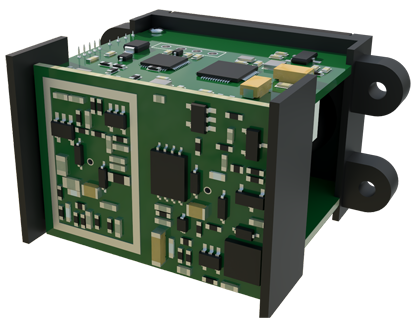
In conclusion, laser sensors with background suppression represent a sophisticated evolution in photoelectric sensing. By effectively separating the target signal from background noise, they deliver unmatched reliability for position detection, object presence verification, and distance measurement in complex industrial scenarios. Their integration continues to drive improvements in automation quality, efficiency, and flexibility, making them an indispensable component in the smart factory ecosystem. As technology advances, we can anticipate further miniaturization, enhanced connectivity for Industry 4.0 data collection, and even more robust designs to meet the ever-growing demands of modern manufacturing.