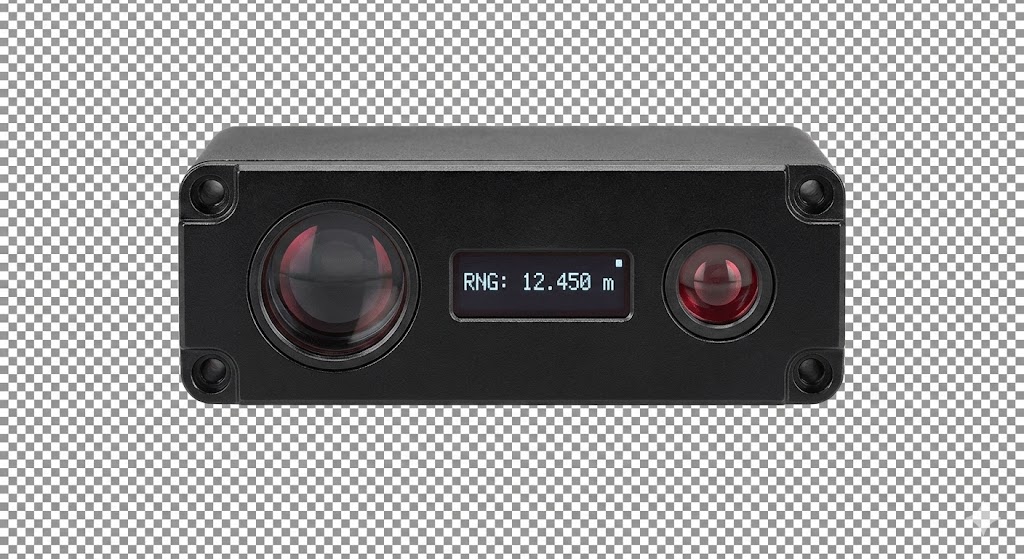
In the realm of industrial automation, quality control, and advanced manufacturing, the demand for non-contact, high-accuracy measurement has never been greater. Precision measurement laser sensors have emerged as a cornerstone technology, enabling micron-level and even sub-micron resolution for a vast array of applications. Unlike traditional contact probes or vision systems with limitations in speed and environmental sensitivity, laser sensors offer unparalleled speed, reliability, and precision. This article delves into the operational principles, key technologies, diverse applications, and critical selection factors for these sophisticated instruments.
At its core, a precision laser sensor operates on the principle of optical triangulation or time-of-flight (ToF), with triangulation being predominant for high-accuracy, short-range measurements. In a standard triangulation sensor, a focused laser diode projects a precise spot or line onto the target surface. The diffusely reflected light is then captured by a receiving lens at a known angle and focused onto a position-sensitive detector, typically a CCD or CMOS array. Any change in the target's distance causes the reflected spot to shift its position on the detector. This displacement is analyzed by the sensor's internal processor, which calculates the exact distance change with extreme accuracy. Advanced models incorporate sophisticated algorithms to compensate for surface color, texture, and inclination, ensuring stable readings across varied materials.
Several key technologies define the performance envelope of modern laser sensors. First is resolution, often specified in micrometers or nanometers, indicating the smallest detectable change. Related is repeatability, a statistical measure of consistency under unchanged conditions. High-end sensors boast repeatabilities down to 0.1 µm. Sampling speed, measured in Hertz (Hz), is crucial for dynamic measurements on moving production lines; speeds can exceed 100 kHz. The type of laser (typically red or blue-violet) influences spot size and material interaction. Blue lasers, with their shorter wavelength, can generate a smaller, more defined spot, improving resolution on certain surfaces. Furthermore, integrated controllers with programmable logic, analog/digital outputs, and Ethernet-based industrial communication protocols (like EtherCAT or PROFINET) are now standard, facilitating seamless integration into Industry 4.0 and IoT frameworks.
The applications for precision laser sensors are extensive and cross-sectoral. In the automotive industry, they are indispensable for measuring critical gaps and flushness between body panels, inspecting piston ring grooves, and controlling robotic welding paths. In electronics manufacturing, they measure component coplanarity, solder paste height, and PCB warpage. The semiconductor sector relies on them for wafer thickness mapping and bump height inspection. In precision machining, they perform in-process dimensional control of turned or milled parts, detecting deviations in real-time to prevent scrap. Beyond dimensional tasks, they are used for vibration analysis, edge detection, and even as highly sensitive presence sensors for tiny components.

Selecting the appropriate laser sensor requires a meticulous analysis of the application parameters. The primary consideration is the measurement range and stand-off distance. A sensor must be chosen whose specified range encompasses the expected target position variation. Required resolution and repeatability must be matched against sensor specifications, with a clear understanding that environmental factors like temperature drift can affect real-world performance. The target material's properties—its color, reflectivity, surface finish (matte, glossy, transparent)—are paramount. Highly reflective or transparent materials often require specialized sensors with adjustable gain or controlled laser power to avoid saturation or signal loss. Environmental conditions such as ambient light, dust, oil mist, or mechanical vibration necessitate sensors with robust housings (often IP67 rated), protective air purge fittings, and optical filters. Finally, the required output interface (4-20 mA, 0-10 V, digital I/O, or fieldbus) and data processing capabilities must align with the existing control architecture.
In conclusion, precision measurement laser sensors represent a mature yet rapidly evolving technology that is critical for maintaining competitive advantage in high-tech manufacturing. Their ability to deliver fast, accurate, and reliable data without physical contact makes them irreplaceable for applications demanding the highest quality standards. As sensor intelligence continues to grow with embedded analytics and easier connectivity, their role in enabling adaptive, data-driven manufacturing processes will only expand. For the engineering professional, a deep understanding of their principles and a systematic approach to selection are essential for unlocking their full potential on the factory floor.