In the rapidly evolving landscape of industrial automation, laser sensor platforms have emerged as a cornerstone technology, driving unprecedented levels of precision, efficiency, and reliability. These sophisticated systems utilize laser beams to detect, measure, and analyze objects or environmental conditions with exceptional accuracy. Unlike traditional sensing methods, laser sensors operate on principles of light reflection, time-of-flight, or triangulation, enabling non-contact measurement that is vital for delicate or high-speed applications. The core components of a modern laser sensor platform typically include a laser diode emitter, a photodetector receiver, signal processing electronics, and often integrated software for data interpretation and communication with broader control systems.
The applications of laser sensor platforms span a diverse range of industries. In manufacturing, they are indispensable for tasks such as precise dimensional gauging, defect detection on production lines, and robotic guidance. For instance, in automotive assembly, laser sensors ensure components are aligned within micron-level tolerances. In logistics and warehousing, they facilitate automated sorting and inventory management by reading barcodes or measuring parcel dimensions. Furthermore, in the realm of environmental monitoring, laser-based LiDAR (Light Detection and Ranging) platforms are revolutionizing topographic mapping and atmospheric analysis.
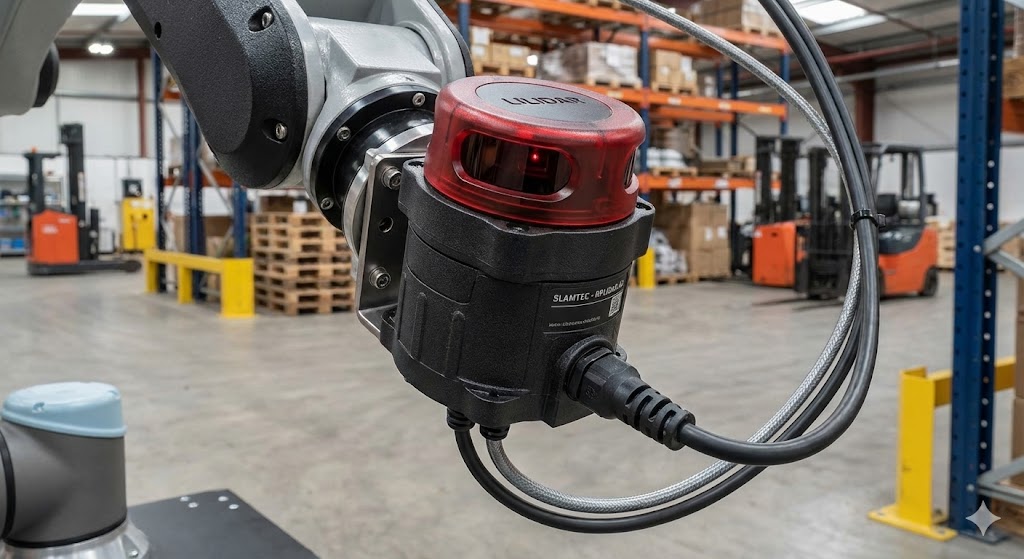
Recent technological advancements have significantly enhanced the capabilities of these platforms. The development of more compact and energy-efficient laser diodes has led to smaller sensor footprints, allowing integration into space-constrained machinery. Improvements in signal processing algorithms, often powered by edge computing, have increased measurement speed and noise immunity. The integration of Industrial Internet of Things (IIoT) connectivity is another pivotal trend, enabling real-time data streaming from sensor platforms to cloud-based analytics dashboards. This facilitates predictive maintenance, where sensor data can forecast potential system failures before they occur, minimizing downtime.
When selecting a laser sensor platform for a specific application, engineers must consider several critical parameters. Measurement range, resolution, and repeatability are fundamental. The choice of laser wavelength—common options include red visible lasers or infrared—affects performance in different environmental conditions, such as ambient light interference. The platform's housing and ingress protection (IP) rating are crucial for durability in harsh industrial environments with dust, moisture, or vibration. Additionally, the output interface (e.g., analog voltage, digital IO, Ethernet, or fieldbus protocols like PROFINET) must be compatible with the existing control architecture.
Despite their advantages, implementing laser sensor platforms presents challenges. Calibration can be complex, requiring precise alignment to ensure accurate readings. Certain materials, like transparent glass or highly reflective surfaces, can pose detection difficulties, necessitating specialized sensor models or supplementary systems. Cost remains a consideration for high-end platforms, though the return on investment through improved quality control and operational efficiency often justifies the expenditure.
Looking ahead, the future of laser sensor platforms is intertwined with trends like Industry 4.0 and smart manufacturing. We anticipate greater fusion with artificial intelligence and machine learning, where sensors not only collect data but also autonomously interpret complex patterns to optimize processes. The emergence of 3D laser scanning platforms will provide richer volumetric data for applications like reverse engineering and quality inspection. As these technologies mature, laser sensor platforms will become even more intelligent, adaptive, and integral to building fully autonomous industrial ecosystems, solidifying their role as the eyes of modern automation.