In industrial automation and machinery design, the installation location of proximity sensors is not merely a matter of convenience; it is a critical engineering decision that directly impacts system reliability, safety, and operational efficiency. These non-contact devices, which detect the presence or absence of an object within their sensing field, are fundamental to processes like positioning, counting, inspection, and safety interlocking. An improperly placed sensor can lead to false triggers, missed detections, premature failure, and costly downtime. This guide outlines the key principles and practical considerations for determining the optimal installation point for various types of proximity sensors, including inductive, capacitive, and photoelectric models.
The primary rule is to understand the sensor's specific sensing characteristics. For inductive sensors, which detect metallic objects, the effective sensing range (Sn) is specified for a standard target (usually mild steel). Using a different metal, such as aluminum or copper, reduces this range significantly. Therefore, the sensor must be positioned closer to the target than its nominal Sn when non-ferrous metals are involved. The target should approach the sensor's active face perpendicularly for maximum reliability. Avoid positioning it where only the edge of a metal part will pass by, as this drastically reduces the effective sensing distance. For capacitive sensors, sensitive to both conductive and non-conductive materials, environmental factors like humidity or dust accumulation on the sensor face can cause drift. Mount them away from sources of such contamination, and ensure the target object fills an adequate portion of the sensing field for consistent detection.
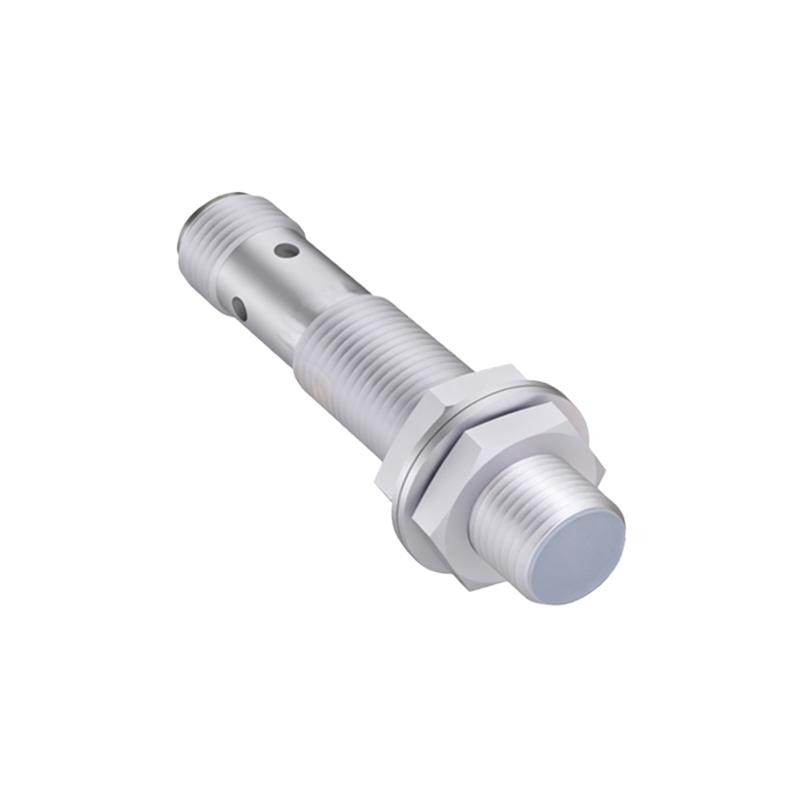
Mechanical considerations are paramount. The installation must protect the sensor from physical damage. Avoid locations where it could be struck by the target object, moving machine parts, or tools during maintenance. Use appropriate mounting brackets to ensure rigidity and prevent vibration from loosening the sensor or altering its position over time. Vibration can also internally damage sensitive components. For cylindrical sensors, ensure the mounting nut is properly tightened according to the manufacturer's torque specifications to maintain its IP (Ingress Protection) rating. Always maintain the recommended safe distance between multiple sensors to prevent mutual interference, where the electromagnetic field of one sensor can affect the switching state of its neighbor.
Environmental factors dictate many placement decisions. Keep sensors away from extreme heat sources like motors or welding stations, as high temperatures can exceed their operational limits and shorten lifespan. Similarly, avoid direct exposure to cutting fluids, oils, or harsh chemicals unless the sensor is specifically rated for such exposure (e.g., stainless steel housing with high IP69K rating). For photoelectric sensors, ambient light is a key concern. Do not point the receiver towards strong light sources like sunlight or high-bay lighting, which can swamp the receiver and cause failure. Use sensors with modulated infrared light and proper shading or housings in bright environments. Electrical noise from variable frequency drives (VFDs), motors, or power lines can induce false signals. Route sensor cables separately from power cables, using shielded cables grounded at one end, and position the sensor body away from strong electromagnetic fields.
The nature of the application provides the final guidance. For position detection, such as end-of-travel on a cylinder, mount the sensor so that the piston's actuator (often a built-in magnet or a metal flag) reliably enters the sensing zone at the precise required position. Account for potential over-travel or mechanical tolerances. For counting or speed monitoring on a conveyor, ensure the sensor detects a consistent and repeatable feature of the object. It is often better to detect a protruding feature rather than the main body if objects are tightly packed. In safety applications, such as light curtains or safety interlocks on guards, placement is dictated by safety standards (e.g., ISO 13855) to ensure the hazardous motion is stopped before a person can reach the danger zone. This involves precise calculation of distance based on system stopping time and sensor resolution.
In summary, optimal proximity sensor installation is a synthesis of electrical, mechanical, and environmental engineering. Always consult the sensor's datasheet for its precise specifications regarding sensing range, temperature, mounting, and mutual interference. Start by clearly defining the detection target and the environmental conditions. Then, prototype and test the installation under all expected operational modes—start-up, normal running, and worst-case scenarios. This meticulous approach to placement ensures maximum sensor performance, longevity, and ultimately, the smooth and safe operation of the entire automated system.