Laser confinement sensors represent a pivotal advancement in industrial sensing technology, offering unparalleled precision and reliability in diverse applications. These devices operate on the principle of using laser beams to detect, measure, or confine objects within a defined area, making them indispensable in modern automation systems. Unlike traditional sensors that may rely on physical contact or less accurate methods, laser confinement sensors utilize focused light to create a virtual boundary, enabling non-contact detection with high accuracy.
The core mechanism involves emitting a laser beam that forms a detection zone. When an object interrupts this beam, the sensor triggers a response, such as stopping machinery or logging data. This technology is particularly valuable in safety applications, where it can prevent accidents by monitoring hazardous areas without human intervention. For instance, in manufacturing plants, laser confinement sensors are often integrated into robotic cells to ensure that operators do not enter dangerous zones during operation. The sensors can detect even small intrusions, providing an extra layer of protection.
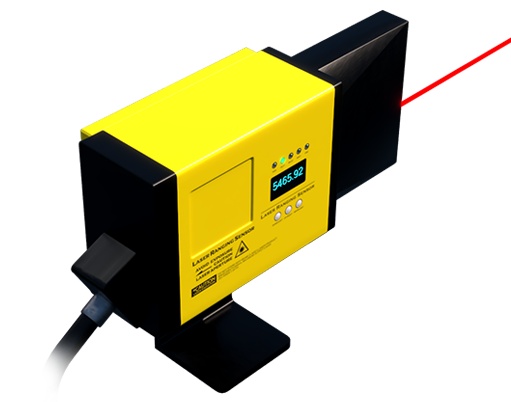
In terms of design, these sensors typically consist of a transmitter and a receiver. The transmitter projects the laser beam, while the receiver captures the reflected or transmitted light. Advanced models may incorporate multiple beams or scanning capabilities to cover larger areas or complex shapes. The choice of laser type—such as infrared, visible, or ultraviolet—depends on the specific application requirements, including environmental conditions and detection range. For example, infrared lasers are commonly used in dusty or humid environments due to their ability to penetrate obstacles better than visible light.
One of the key advantages of laser confinement sensors is their adaptability. They can be configured for various tasks, from simple presence detection to complex measurement of object dimensions or speed. In logistics and warehousing, these sensors help automate sorting systems by accurately identifying packages on conveyor belts. In the automotive industry, they assist in assembly lines by ensuring components are correctly positioned before welding or fastening. The high resolution and fast response time of laser sensors contribute to increased efficiency and reduced downtime in production processes.
However, implementing laser confinement sensors requires careful consideration of factors like alignment, calibration, and environmental interference. Dust, smoke, or vibrations can affect performance, necessitating regular maintenance and proper installation. Modern sensors often include self-diagnostic features to alert users to potential issues, such as beam blockage or misalignment. Additionally, compliance with safety standards, such as those set by the International Electrotechnical Commission (IEC), is crucial to ensure reliable operation in industrial settings.
Looking ahead, innovations in laser technology are driving the evolution of these sensors. Developments in miniaturization, energy efficiency, and integration with Internet of Things (IoT) platforms are expanding their applications. Smart sensors with connectivity options allow for real-time monitoring and data analysis, enabling predictive maintenance and enhanced system control. As industries continue to embrace automation, laser confinement sensors will play an increasingly vital role in optimizing safety, precision, and productivity.
In summary, laser confinement sensors offer a sophisticated solution for industrial detection needs, combining accuracy, versatility, and safety. Their ability to operate without physical contact makes them ideal for harsh or sensitive environments, while ongoing advancements promise even greater capabilities in the future. Engineers and technicians should stay informed about these trends to leverage the full potential of laser sensing technology in their operations.