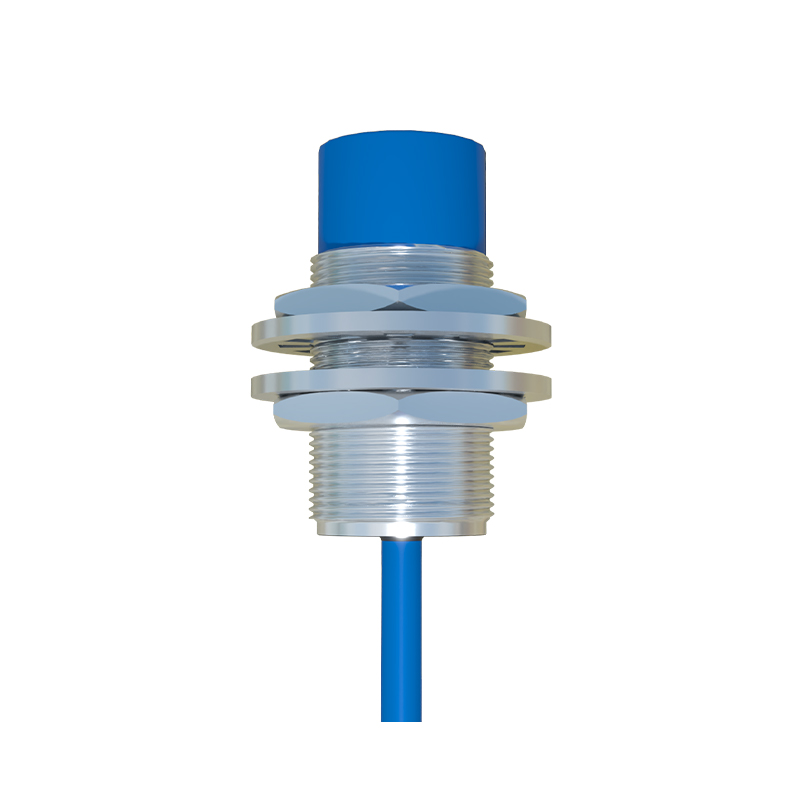
In industrial automation and control systems, proximity sensors are indispensable components for non-contact detection of objects. Among various types, capacitive and inductive proximity sensors are the two most widely used categories, each based on distinct operating principles and suited for specific applications. Understanding their classification, working mechanisms, and appropriate use cases is crucial for engineers and technicians in selecting the right sensor for a given task.
Inductive proximity sensors operate on the principle of electromagnetic induction. They generate an oscillating electromagnetic field from a coil wound around a ferrite core. When a metallic object enters this field, eddy currents are induced in the target, causing a change in the oscillation amplitude or frequency. This change is detected by the sensor's circuitry, triggering an output signal. Inductive sensors are primarily designed to detect ferrous and non-ferrous metals, such as steel, aluminum, copper, and brass. Their effectiveness depends on the target's material, size, and distance. Typically, they offer sensing ranges from a few millimeters up to about 60 millimeters, with factors like the target's shape and the sensor's diameter influencing the actual range. Common classifications of inductive sensors include shielded (flush-mountable) and unshielded (non-flush) types. Shielded sensors can be embedded in metal without affecting performance, while unshielded types provide longer sensing distances but require non-metallic surroundings. Output configurations include NPN, PNP, normally open (NO), and normally closed (NC), alongside two-wire, three-wire, or four-wire designs. They excel in harsh industrial environments, resisting dust, moisture, and vibration, and are extensively used in metal detection, position sensing, and counting applications in machinery and automotive systems.
Capacitive proximity sensors function by detecting changes in capacitance. The sensor's active surface forms one plate of a capacitor, with the target object acting as the other plate. An oscillator circuit generates an electric field between these plates. When an object enters the sensing zone, it alters the dielectric constant, increasing the capacitance. Once capacitance reaches a threshold, the sensor triggers an output. Unlike inductive sensors, capacitive types can detect both conductive and non-conductive materials, including liquids, plastics, glass, wood, and granular substances. This versatility makes them suitable for diverse applications, such as level detection of liquids or powders, material presence verification, and touch-sensitive controls. Sensing ranges vary, typically from a few millimeters to about 40 millimeters, and can be adjusted via potentiometers to compensate for environmental factors like humidity or material composition. Capacitive sensors are classified into standard types for general use and those with enhanced sensitivity for specific materials. They often feature shielding to minimize false triggers from background objects. However, they are more susceptible to environmental influences, such as temperature fluctuations and contamination, requiring careful installation. Common outputs mirror those of inductive sensors, with DC or AC variants available. Applications span packaging, food processing, pharmaceutical industries, and liquid level control in tanks.
Key differences between capacitive and inductive proximity sensors lie in their detection capabilities and environmental resilience. Inductive sensors are metal-specific, offering high precision and stability in dirty or wet conditions, with minimal interference from non-metallic objects. In contrast, capacitive sensors are material-agnostic but more prone to environmental noise, necessitating calibration for reliable operation. Selection criteria include target material, required sensing distance, environmental conditions (e.g., temperature, humidity, and contaminants), and electrical specifications like supply voltage and output type. For instance, in a metal machining line, inductive sensors reliably detect parts on a conveyor, while capacitive sensors monitor plastic bottle fill levels in a beverage plant.
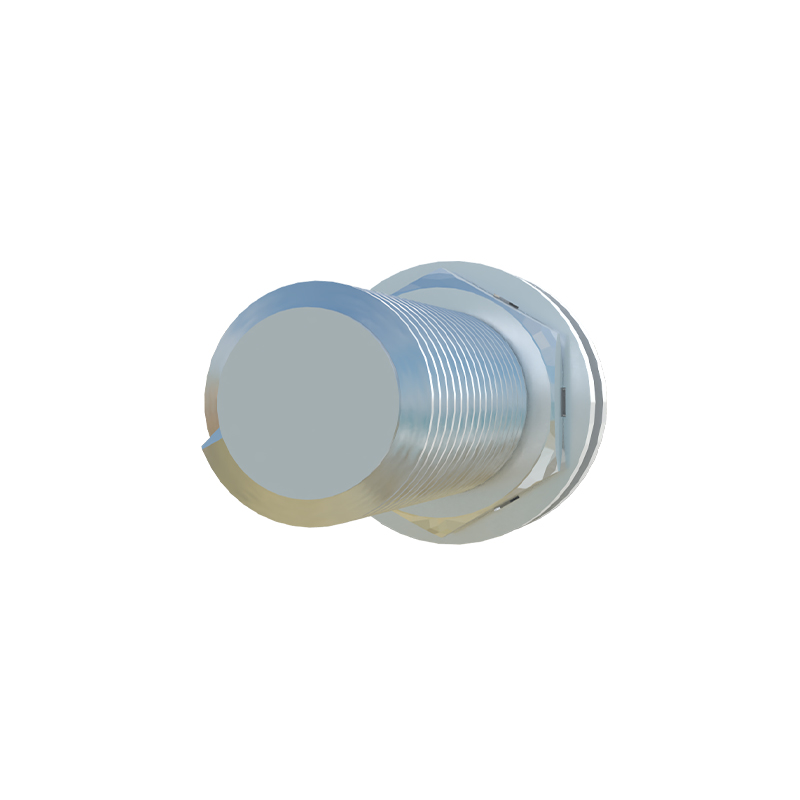
Advancements in sensor technology have led to hybrid and specialized designs, such as analog-output sensors for distance measurement and high-temperature variants for extreme conditions. Proper installation is vital: aligning the sensor perpendicular to the target, maintaining clean sensing surfaces, and avoiding metal proximity for capacitive types. Regular maintenance, like checking for wear or buildup, ensures longevity and accuracy.
In summary, capacitive and inductive proximity sensors serve complementary roles in automation. Inductive sensors are the go-to for metal detection in robust settings, whereas capacitive sensors offer flexibility for diverse materials. By grasping their classifications and principles, engineers can optimize system performance, enhance efficiency, and reduce downtime in industrial applications.