In the realm of industrial automation and machinery, the demand for compact, reliable, and high-performance sensing solutions is ever-present. The Flat Small Proximity Switch Sensor, commonly designated under series like E2S, represents a critical component in this landscape. This article provides a detailed technical examination of these sensors, their operational principles, key specifications, and typical application scenarios, adhering to industry-standard terminology and practices.
Proximity sensors, in essence, are non-contact devices designed to detect the presence or absence of an object within their sensing range without physical contact. The "flat small" form factor, exemplified by models such as the E2S series, is engineered specifically for installations where space is at a premium. Their low-profile, often rectangular or cylindrical but flattened, housing allows for mounting in tight locations where conventional sensors would be impractical. These sensors typically operate on the inductive principle, making them ideal for detecting metallic objects, primarily ferrous metals like iron and steel, though certain types can also sense non-ferrous metals.
The core technology behind an inductive proximity switch like the E2S involves an oscillator circuit that generates a high-frequency electromagnetic field at the active face of the sensor. When a metallic target enters this field, eddy currents are induced on the target's surface. This causes a change in the oscillation amplitude or frequency within the sensor's circuit. This change is detected, processed, and triggers a solid-state switching output. The absence of moving mechanical parts is a significant advantage, leading to exceptionally long operational life, high switching frequencies, and resistance to vibration and contamination.
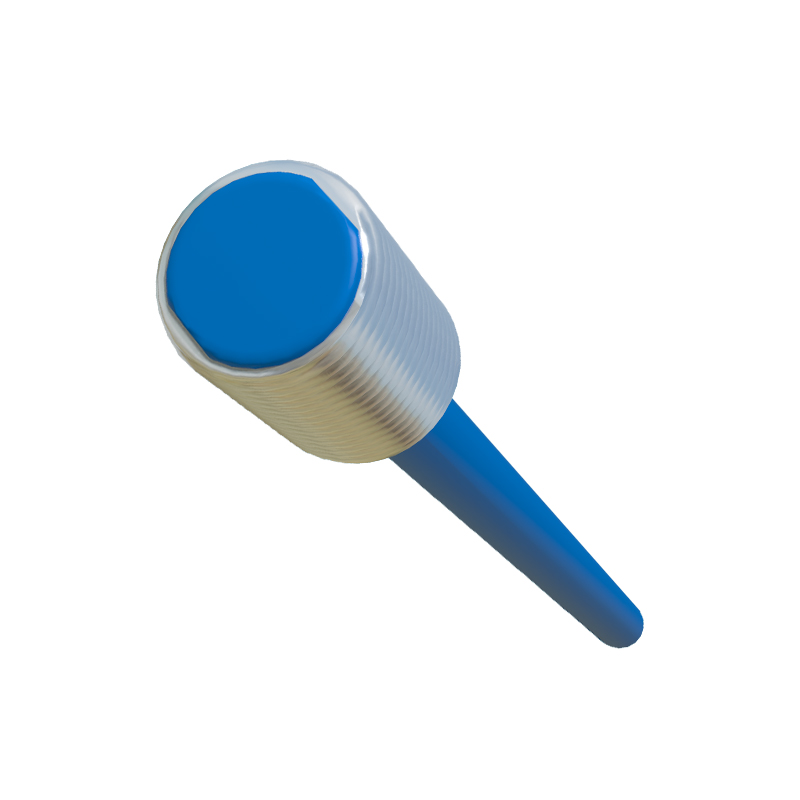
Key performance parameters for flat small proximity sensors, including the E2S type, require careful consideration during selection. The sensing distance, or nominal range, is a primary specification. For these compact units, typical sensing distances range from 0.8mm to 5mm, depending on the specific model and target material (standardized on mild steel). It is crucial to note the reduced sensing factor for non-ferrous metals like aluminum or copper, which can be as low as 30-60% of the rated ferrous distance. The housing material is often constructed from nickel-plated brass, stainless steel, or robust plastics like PBT, offering varying degrees of resistance to chemicals, oils, and physical impact.
Electrical characteristics are equally vital. Most E2S-style sensors operate on DC voltages (commonly 10-30V DC) or sometimes AC, with outputs being either NPN (sinking) or PNP (sourcing) transistor configurations. The output current rating, typically around 100-200mA, defines the load they can drive directly, such as PLC inputs, relays, or small solenoids. Switching frequency can reach several hundred Hz to over 1 kHz, enabling detection of very fast-moving parts on high-speed assembly lines. Additionally, features like short-circuit protection, reverse polarity protection, and LED status indicators (for power and output state) are standard in quality designs, enhancing reliability and easing troubleshooting.
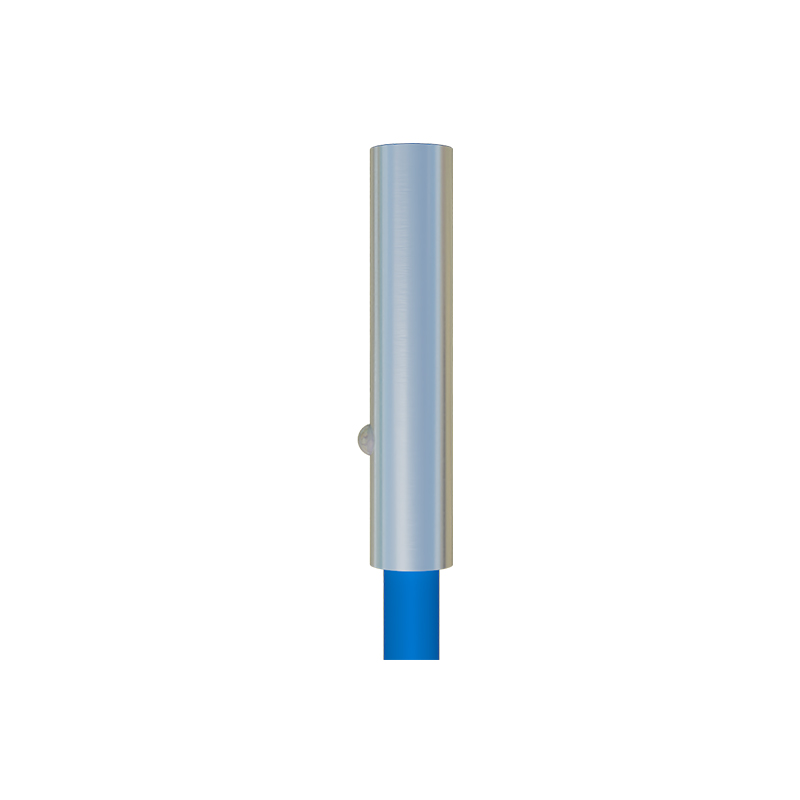
Installation and environmental considerations are paramount for reliable operation. The flat design often allows for flush or non-flush mounting. Flush-mounted sensors can be embedded in metal without affecting their sensing characteristics, while non-flush models offer a slightly longer sensing range but require a clear zone around the sensing face. Attention must be paid to the operating temperature range, usually between -25°C to +70°C, and the Ingress Protection (IP) rating (e.g., IP67), which certifies resistance to dust and temporary immersion, making them suitable for harsh industrial environments.
Application areas for flat small proximity sensors like the E2S are extensive. They are ubiquitous in:
Position Detection: Verifying the end position of a cylinder piston, confirming the closed state of a door or guard, or detecting the presence of a part in a fixture.
Counting and Sorting: On conveyor systems, they count bottles, packages, or machined components. Different output signals can trigger sorting mechanisms.
Speed Monitoring: By detecting teeth on a gear or marks on a rotating shaft, they can provide pulse signals for RPM calculation.
Machine Tooling: Used as tool breakage detectors or to confirm workpiece clamping in CNC machines.
Robotics: Employed in end-effectors to confirm gripper closure or part acquisition.
In conclusion, the flat small proximity switch sensor, typified by series such as E2S, is an indispensable workhorse in modern industrial control systems. Its compactness, solid-state reliability, and versatility in detecting metallic objects make it a preferred choice for engineers designing automated equipment. Successful implementation hinges on a thorough understanding of its specifications—sensing distance, electrical output, environmental ratings