In the realm of industrial automation and control systems, proximity sensors are indispensable components. They detect the presence or absence of objects without physical contact, ensuring reliability, longevity, and precision in various applications. This article explores five primary types of proximity sensors, detailing their operating principles, typical uses, and key advantages.
1. Inductive Proximity Sensors
Inductive proximity sensors are designed to detect metallic objects. They operate on the principle of electromagnetic induction. The sensor generates an oscillating electromagnetic field from its coil. When a metallic object enters this field, eddy currents are induced on the object's surface, causing a change in the oscillation amplitude. This change is detected by the sensor's circuitry, triggering an output signal. These sensors are highly robust, resistant to environmental factors like dust and moisture, and are ideal for harsh industrial settings. Common applications include position sensing in machinery, metal detection in conveyor systems, and part counting in manufacturing lines.
2. Capacitive Proximity Sensors
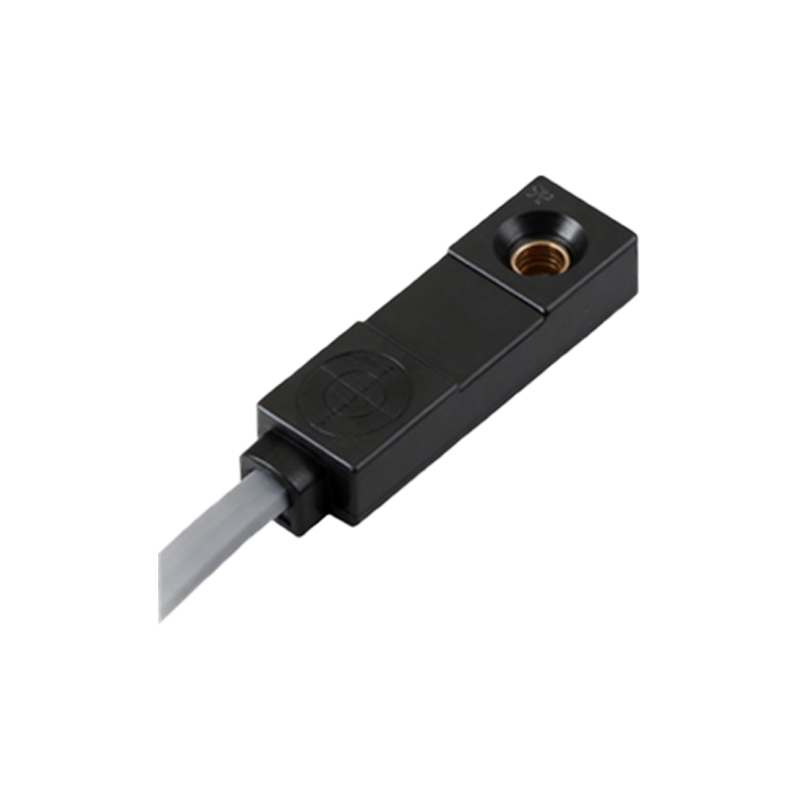
Capacitive proximity sensors can detect both metallic and non-metallic objects, including liquids, plastics, and wood. They function by measuring changes in capacitance. The sensor forms one plate of a capacitor, with the target object acting as the other plate. As an object approaches, the capacitance increases, altering the oscillator's frequency. Once a threshold is reached, the sensor activates its output. These sensors are versatile and suitable for level detection in tanks, material handling, and presence sensing of non-conductive materials. However, they can be sensitive to environmental changes like humidity.
3. Ultrasonic Proximity Sensors
Ultrasonic proximity sensors use sound waves beyond the human hearing range (typically above 20 kHz) to detect objects. They emit ultrasonic pulses and measure the time taken for the echo to return after hitting an object. By calculating the time-of-flight, the sensor determines the distance to the target. These sensors are effective for detecting objects of various materials, shapes, and colors, and they perform well in challenging conditions such as dust, smoke, or fog. Applications include distance measurement, object positioning, and liquid level control. They are commonly used in automotive assembly, packaging, and robotics.
4. Photoelectric Proximity Sensors
Photoelectric proximity sensors operate based on light beams. They consist of a light emitter (usually LED or laser) and a receiver. When an object interrupts or reflects the light beam, the receiver detects the change, triggering an output. These sensors are categorized into three main types: through-beam (separate emitter and receiver), retro-reflective (uses a reflector), and diffuse (reflects light off the object). They offer long sensing ranges and high speed, making them suitable for detecting small objects, transparent materials, and precise positioning. Industries like logistics, food processing, and electronics manufacturing rely on them for tasks such as counting, inspection, and automation control.
5. Magnetic Proximity Sensors
Magnetic proximity sensors detect the presence of magnetic fields, typically from permanent magnets. They often use reed switches or Hall effect elements. In reed switches, two ferromagnetic reeds sealed in a glass tube close when a magnetic field is applied, completing a circuit. Hall effect sensors generate a voltage proportional to the magnetic field strength. These sensors are compact, reliable, and immune to non-magnetic interference. They are widely used in position sensing for cylinders, door and window security systems, and speed detection in rotating machinery. Their simplicity and durability make them a cost-effective choice for many applications.
In conclusion, selecting the appropriate proximity sensor depends on factors such as target material, environmental conditions, required sensing range, and application specifics. Inductive and capacitive sensors excel in material-specific detection, ultrasonic sensors offer versatility in distance measurement, photoelectric sensors provide high precision for non-contact sensing, and magnetic sensors ensure reliability in magnetic field detection. Understanding these five types enables engineers to optimize automation systems for efficiency, safety, and performance. As technology advances, innovations in sensor design continue to enhance their capabilities, driving progress in smart manufacturing and Industry 4.0 initiatives.