Proximity sensors are fundamental components in modern industrial automation, providing non-contact detection of objects within a defined sensing range. Their operation hinges on the principle of generating an electromagnetic field or beam and detecting changes caused by the presence of a target object. Unlike mechanical limit switches, proximity sensors have no moving parts, leading to higher reliability, longer operational life, and faster response times. This article delves into the working mechanisms of the primary types of proximity sensors: inductive, capacitive, and photoelectric.
Inductive proximity sensors are the workhorses for detecting metallic objects. The core of an inductive sensor is a coil wound around a ferrite core, connected to an oscillator. When powered, the oscillator generates a high-frequency alternating electromagnetic field at the sensor's active face. When a metallic target enters this field, eddy currents are induced on the surface of the metal. These eddy currents draw energy from the oscillator, causing its amplitude to decrease. This change in oscillation is detected by a threshold circuit, which subsequently triggers a solid-state output switch (typically PNP or NPN). The sensing range depends on the material's properties; ferrous metals like iron and steel are detected at the nominal range, while non-ferrous metals like aluminum or copper have a reduced sensing distance. Common applications include detecting the position of a metal part on a conveyor, counting metal objects, or as an end-of-travel limit in machinery.
Capacitive proximity sensors can detect both metallic and non-metallic materials, including liquids, powders, plastics, and wood. They operate by generating an electrostatic field. The sensor's active face acts as one plate of a capacitor, with the target object acting as the other plate. The internal oscillator circuit is tuned so that it does not oscillate when no target is present. As a target approaches the active face, the capacitance between the sensor and the target increases. When the capacitance reaches a preset threshold, it allows the oscillator to begin oscillating. This change is processed, triggering the output switch. The sensitivity of capacitive sensors is often adjustable, allowing them to ignore certain materials or be tuned for specific applications, such as detecting the fill level of a liquid in a non-metallic tank or sensing the presence of a plastic bottle on a production line.
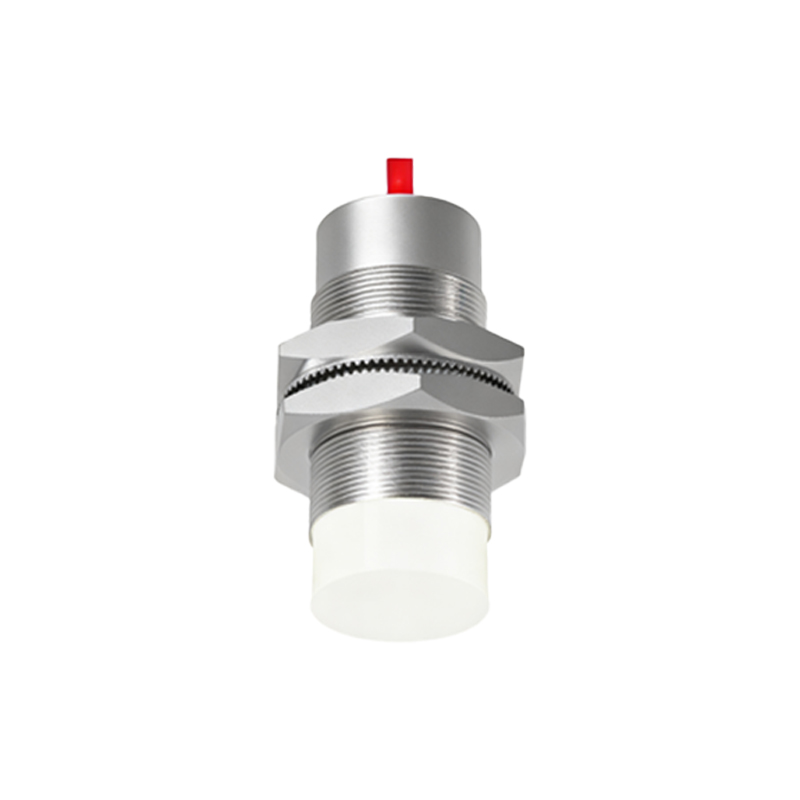
Photoelectric sensors utilize light to detect objects. They consist of a light emitter (usually an LED producing visible red, infrared, or laser light) and a receiver. There are three main operating modes. The through-beam (or opposed) mode has separate emitter and receiver units placed opposite each other. Detection occurs when the target object interrupts the light beam. This mode offers the longest sensing range and high reliability. The retro-reflective mode uses a single housing containing both emitter and receiver, along with a reflector. The emitted light beam is reflected back to the receiver by the reflector. A target is detected when it breaks this reflected beam. The diffuse (or proximity) mode also houses the emitter and receiver together, but it relies on light reflecting off the target itself. The sensor detects the target when the reflected light intensity, scattered back to the receiver, exceeds a threshold. Photoelectric sensors are versatile for detecting objects of various materials, colors, and sizes, used in packaging, material handling, and assembly automation.
Beyond these primary types, magnetic proximity sensors (reed switches or Hall-effect sensors) detect permanent magnets, and ultrasonic sensors use sound waves for distance measurement and presence detection. The output of most proximity sensors is a discrete on/off signal, though analog versions providing distance-proportional signals are also available.
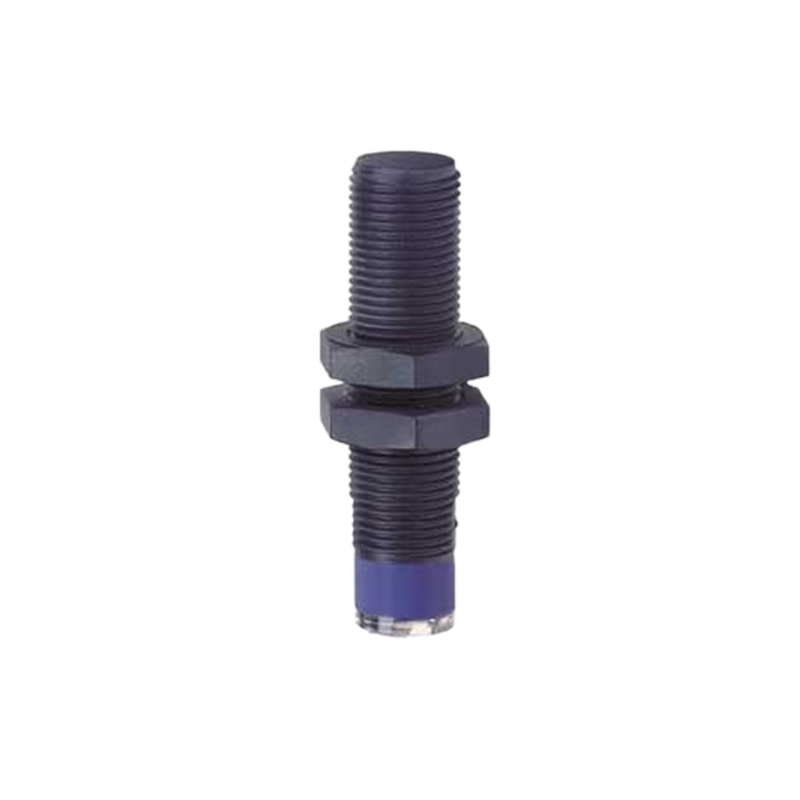
Selecting the right proximity sensor involves careful consideration of several factors. The target material is paramount: inductive for metals, capacitive for a wider range, and photoelectric for most solid objects. The required sensing distance, environmental conditions (presence of dust, moisture, or washdown requirements), electrical characteristics (AC/DC voltage, output type, and wiring), and mounting constraints all influence the choice. Proper installation is critical; sensors must be mounted securely, with adequate clearance from metal surroundings to prevent false triggering, especially for inductive types.
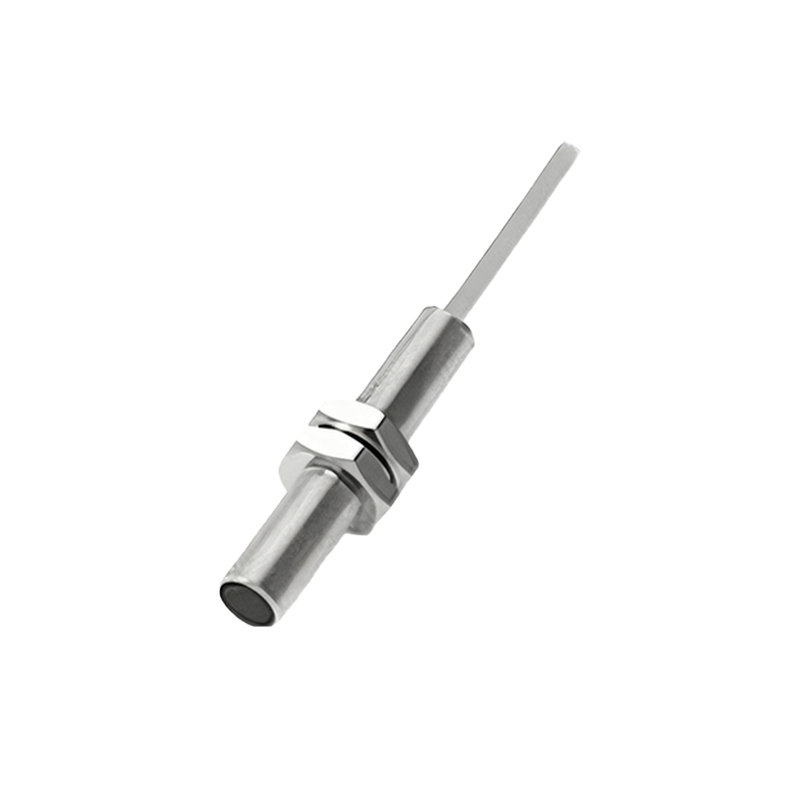
In conclusion, proximity sensors are indispensable for enabling precise, reliable, and maintenance-free object detection in automated systems. Understanding their distinct working principles—inductive, capacitive, and photoelectric—allows engineers and technicians to select and apply the optimal sensor for a given task, thereby enhancing system efficiency, safety, and productivity across countless industrial applications.