In the realm of industrial automation, precision, reliability, and durability are non-negotiable. Among the myriad of components that ensure seamless operations, proximity sensors stand as silent sentinels. The F8A series of proximity switch sensors represents a pinnacle in this category, engineered to meet the rigorous demands of modern manufacturing, packaging, material handling, and automotive assembly lines. This comprehensive guide delves into the technology, applications, and critical advantages of the F8A proximity sensor.
At its core, a proximity sensor is a non-contact device designed to detect the presence or absence of an object within its sensing range without physical contact. The F8A series typically utilizes inductive sensing technology, making it ideal for detecting metallic targets, primarily ferrous metals like steel and iron. The operating principle is elegant: the sensor generates an electromagnetic field. When a metallic object enters this field, it induces eddy currents within the target, causing a change in the oscillation amplitude within the sensor's circuit. This change is detected and converted into a solid-state output signal, either normally open (NO) or normally closed (NC), which can interface directly with programmable logic controllers (PLCs), relays, or other control systems.
The F8A series distinguishes itself through a host of refined features. Constructed with a robust stainless-steel housing or high-grade nickel-plated brass, these sensors are built to withstand harsh industrial environments characterized by oil, coolant, dust, and mechanical vibrations. Many models in the series offer IP67 or higher ingress protection ratings, ensuring reliable performance even when exposed to temporary immersion or high-pressure washdowns. A key specification is the sensing distance, or 'Sn'. The F8A sensors provide a stable and repeatable sensing range, often with a built-in LED indicator for visual status confirmation, simplifying installation and troubleshooting.
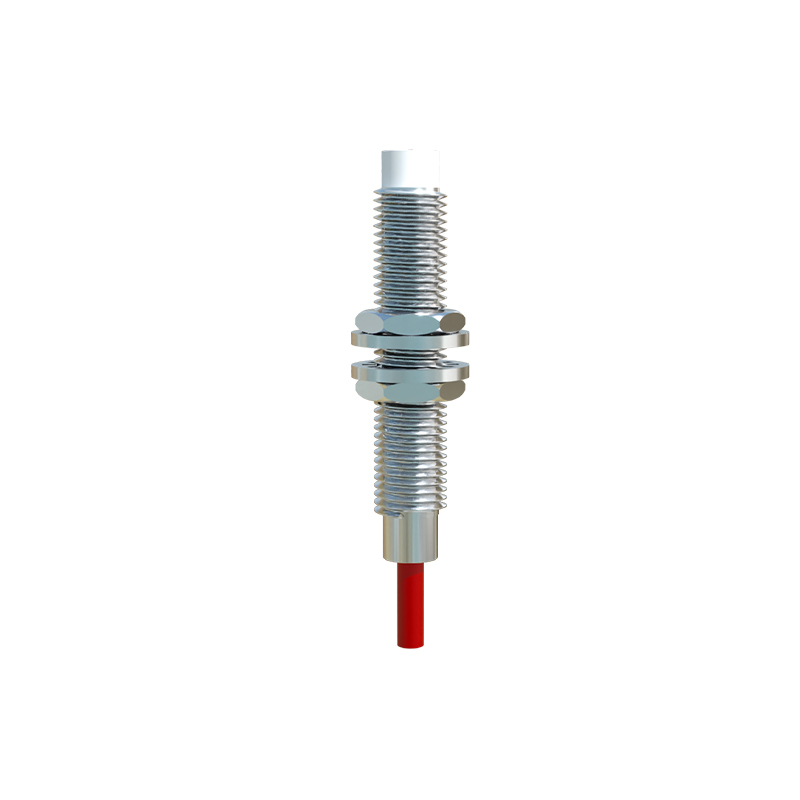
Electrical characteristics are paramount. The F8A sensors are commonly available in both DC (10-30V DC) and AC variants, with 2-wire, 3-wire, or 4-wire configurations to suit diverse wiring schemes. The 3-wire DC models, with their separate power, ground, and signal wires, are particularly popular for their simplicity and compatibility. Their switching frequency is notably high, allowing for the detection of rapidly moving objects on high-speed production lines without missing a beat. Furthermore, features like short-circuit protection, reverse polarity protection, and overload protection are standard, safeguarding both the sensor and the connected control circuitry from accidental damage.
The application spectrum for the F8A proximity switch sensor is vast. In automotive manufacturing, they are indispensable for part presence verification on conveyor systems, robotic arm end-effector positioning, and cylinder piston position feedback. In packaging machinery, they count products, control fill levels, and ensure proper label placement. Within metalworking and CNC machining centers, F8A sensors provide precise tool positioning, monitor spindle orientation, and act as limit switches. Their non-contact nature eliminates mechanical wear, granting them a significantly longer operational lifespan compared to mechanical limit switches, which translates to reduced maintenance costs and minimized unplanned downtime.
Selecting the right F8A sensor requires careful consideration of several parameters. First, identify the target material—inductive sensors like the F8A are for metals only. For non-metals, capacitive or ultrasonic sensors would be appropriate. Next, determine the required sensing distance, ensuring a 10-20% margin to account for installation tolerances and target variations. The housing style is crucial: tubular (threaded barrel) models like M8, M12, M18, or M30 are common for easy mounting, while rectangular or flat packages suit space-constrained applications. The output type (PNP vs. NPN) must match the input logic of your controller; PNP (sourcing) is prevalent in Europe and many modern systems, while NPN (sinking) is common in Asia and some legacy setups. Always consult the manufacturer's datasheet for precise electrical ratings, temperature operating ranges, and mounting instructions.
Installation and wiring, while straightforward, demand attention to detail. Ensure the sensor is mounted securely, with the sensing face parallel to the target approach path. Maintain the specified gap between the sensor face and the target to prevent physical damage. For threaded barrels, use the correct locknut. In electrically noisy environments, it is advisable to use shielded cables and keep sensor wiring separate from high-voltage power lines to prevent electromagnetic interference (EMI) from causing false triggers. Regular functional checks, perhaps during planned maintenance cycles, help ensure long-term reliability.
In conclusion, the F8A proximity switch sensor is more than just a component; it is a critical enabler of efficiency, safety, and intelligence in automated systems. Its blend of rugged construction, precise inductive sensing, and versatile electrical integration makes it a trusted choice for engineers and maintenance professionals worldwide. By understanding its