In the realm of industrial automation, the reliability and precision of sensing components are paramount. Among these, the M8 3-wire proximity sensor stands out as a versatile and widely adopted solution for object detection in constrained spaces and challenging environments. This article delves into the technical specifications, wiring configurations, operational principles, and key selection criteria for these essential devices.
Proximity sensors are non-contact devices designed to detect the presence or absence of a target object without physical contact. The M8 designation refers to the standardized thread size of the sensor housing—8mm in diameter. This compact form factor makes it ideal for applications where space is at a premium, such as in small machinery, robotic grippers, and assembly lines. The "3-wire" classification indicates the electrical connection type, which typically includes power supply (V+), ground (0V), and a switched output signal line. This configuration is more common and user-friendly compared to 2-wire models, as it allows for a straightforward connection to programmable logic controllers (PLCs) and other control systems without worrying about significant voltage drop or leakage current issues.
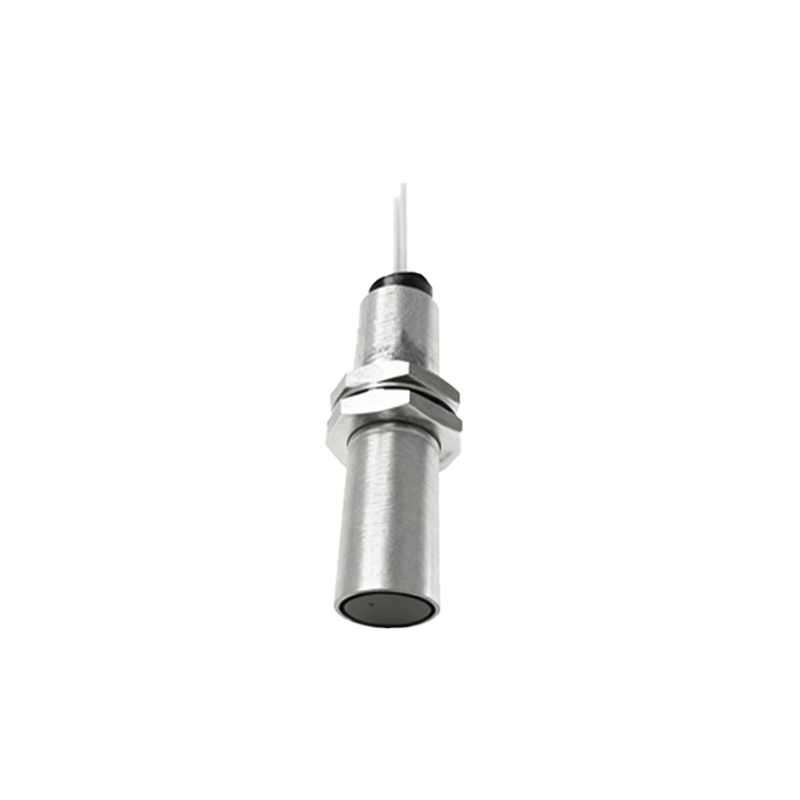
The core technology behind most M8 3-wire proximity sensors is inductive sensing. These sensors generate an electromagnetic field from a coil in the sensing face. When a metallic target (typically ferrous metals like steel or iron, though non-ferrous models are available) enters this field, eddy currents are induced in the target. This causes a change in the oscillation amplitude within the sensor's internal circuit. This change is detected and processed, triggering the solid-state output switch. For detecting non-metallic objects, capacitive M8 sensors operate on a similar principle but respond to changes in capacitance. The output of a 3-wire sensor can be either NPN (sinking) or PNP (sourcing), a critical distinction that must match the input requirements of the connected controller. NPN types switch the negative (0V) line, while PNP types switch the positive (V+) line.
Wiring an M8 3-wire sensor is a systematic process. The three wires are usually color-coded: brown for V+ (typically 10-30V DC), blue for 0V (ground), and black for the output signal. For a PNP sensor, when a target is detected, the black wire switches to provide the positive supply voltage to the load. For an NPN sensor, it switches to connect the load to ground. It is crucial to ensure the power supply voltage matches the sensor's rated voltage and to connect a protective load (like a relay or PLC input) in series with the output. Proper shielding and routing of cables away from high-power lines are recommended to prevent electrical noise interference, which is vital for maintaining signal integrity in industrial settings.
Selecting the right M8 3-wire sensor requires careful consideration of several parameters. Sensing distance, or the nominal range at which the sensor can reliably detect a standard target, is a primary factor. M8 inductive sensors commonly offer ranges from 1mm to 2mm. The target material and size also influence performance; sensors must be rated for the specific metal type. Environmental factors are equally important. Many M8 sensors feature an IP67 or IP68 ingress protection rating, making them resistant to dust and temporary immersion, suitable for washdown areas in food and beverage or pharmaceutical industries. Temperature range, housing material (often nickel-plated brass or stainless steel), and output current capacity are other vital specs. For high-speed applications, such as counting parts on a conveyor, the sensor's switching frequency (response time) becomes critical.
In practice, M8 3-wire proximity sensors are deployed across countless industries. They are used for position sensing of cylinders, detecting the presence of parts in fixtures, monitoring rotational speed, and ensuring safety in automated systems. Their robustness, long service life (due to the absence of mechanical contacts), and high repeatability make them a cornerstone of modern manufacturing and process control. Troubleshooting typically involves checking the power supply, verifying the target is within range and of correct material, inspecting for physical damage to the sensing face, and ensuring the load is functional and correctly connected.
In conclusion, the M8 3-wire proximity sensor is a fundamental building block in industrial automation. Its compact size, reliable performance, and simple integration empower engineers to create more efficient, precise, and intelligent systems. Understanding its technology, wiring, and application nuances is key to leveraging its full potential and ensuring seamless operation on the factory floor.