In industrial automation and process control, proximity switch sensors are indispensable components for detecting the presence or absence of objects without physical contact. Among the various types available, high-temperature proximity switch sensors with three-wire configurations stand out for their reliability and adaptability in demanding environments. This article delves into the technical aspects, operational principles, and practical applications of these sensors, providing insights for engineers and technicians in the electrical and automation fields.
High-temperature proximity switch sensors are specifically designed to operate in environments where ambient temperatures exceed standard limits, often ranging from 100°C to over 200°C. These sensors are commonly used in industries such as metal processing, glass manufacturing, automotive production, and power generation, where heat is a constant factor. The three-wire configuration is a prevalent design due to its balance of simplicity and functionality, offering distinct advantages over two-wire or four-wire setups.
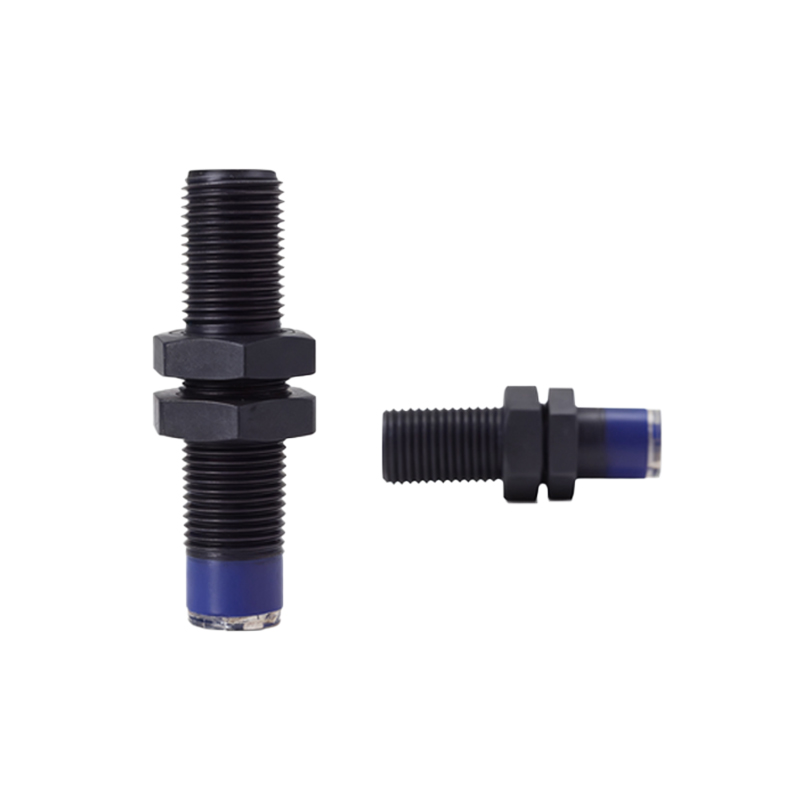
The three wires in these sensors typically consist of a positive supply voltage wire (usually brown or red), a negative or ground wire (blue or black), and a signal output wire (black, white, or another color depending on the manufacturer). This configuration allows for separate power and signal paths, reducing interference and enhancing signal integrity. Unlike two-wire sensors that share the same line for power and output, three-wire sensors provide a more stable and accurate detection signal, which is crucial in high-temperature applications where thermal drift can affect performance.
Operationally, high-temperature proximity switches function based on electromagnetic, inductive, or capacitive principles, with inductive types being the most common for metal detection. When an object enters the sensor's detection range, it alters the sensor's electromagnetic field, triggering a change in the output signal. The three-wire setup supports both normally open (NO) and normally closed (NC) output modes, allowing flexibility in control logic. For instance, in a NO configuration, the output wire switches to a high voltage when an object is detected, while in NC, it switches to low voltage. This adaptability makes these sensors suitable for diverse automation tasks, from simple presence detection to complex sequencing in machinery.
Key considerations when selecting a high-temperature three-wire proximity sensor include temperature rating, sensing distance, material compatibility, and environmental protection. Sensors are often rated with an IP (Ingress Protection) code, such as IP67 or IP69K, to indicate resistance to dust and moisture—a vital feature in harsh industrial settings. Additionally, the housing material, typically stainless steel or high-grade plastics, must withstand thermal expansion and corrosion. Engineers should also account for electrical specifications like supply voltage (commonly 10-30V DC) and output current to ensure compatibility with control systems like PLCs (Programmable Logic Controllers).
In practice, these sensors are deployed in scenarios like monitoring furnace doors, detecting hot metal parts on conveyor belts, or ensuring safety in high-heat machinery. For example, in a steel mill, a high-temperature proximity sensor might detect the position of red-hot billets, sending signals to a control unit to automate cutting or shaping processes. The three-wire design simplifies installation and maintenance, as the separate wires allow for easy troubleshooting with a multimeter. However, proper wiring is essential: the power supply must match the sensor's rating, and the output should be connected to an appropriate load, such as a relay or input module, to avoid damage.
Maintenance of high-temperature proximity sensors involves regular checks for thermal degradation, contamination, and wiring integrity. Over time, extreme heat can cause insulation breakdown or component failure, so periodic calibration and replacement are recommended. Advances in technology have led to sensors with built-in diagnostics, such as LED indicators for status monitoring, further enhancing reliability. As industries push toward Industry 4.0 and IoT (Internet of Things) integration, these sensors are evolving to include digital interfaces and smart features for predictive maintenance.
In summary, high-temperature proximity switch sensors with three-wire configurations are critical tools for robust industrial automation. Their ability to perform accurately under thermal stress, coupled with straightforward wiring and versatile output options, makes them a preferred choice for engineers. By understanding their design and application nuances, professionals can optimize system performance and ensure long-term operational efficiency in challenging environments.