Ultrasonic proximity sensors are widely used in industrial automation for non-contact detection of objects. These sensors operate by emitting high-frequency sound waves, typically above 20 kHz, which are inaudible to humans. The working principle is based on the time-of-flight (ToF) method. When the sensor emits an ultrasonic pulse, it travels through the air until it encounters an object. Upon hitting the object, the sound wave reflects back toward the sensor. The sensor's receiver then detects the echo, and an internal microcontroller calculates the distance to the object by measuring the time elapsed between emission and reception. The formula used is: Distance = (Speed of Sound × Time) / 2. The speed of sound in air is approximately 343 meters per second at 20°C, but it varies with temperature, humidity, and air pressure, so many advanced sensors include compensation algorithms for accuracy.
There are two main types of ultrasonic proximity sensors: diffuse and retro-reflective. Diffuse sensors rely on the reflection from the target object itself, making them suitable for detecting various materials, including liquids, transparent objects, and uneven surfaces. Retro-reflective sensors use a separate reflector; the sensor emits waves toward the reflector, and an object is detected when it interrupts the beam. This type offers longer sensing ranges and is ideal for consistent environments. Additionally, some sensors feature background suppression, which ignores objects beyond a set distance, reducing false triggers.
Key components include a piezoelectric transducer for generating and receiving ultrasonic waves, an oscillator circuit to produce the high-frequency signal, and a signal processor for analyzing echoes. The transducer vibrates at its resonant frequency when an electrical voltage is applied, creating sound waves. Conversely, when returning waves strike it, they generate a voltage that the sensor interprets. Modern sensors often integrate microprocessors for advanced functions like analog output, switching outputs, and communication via protocols such as IO-Link or PROFINET.
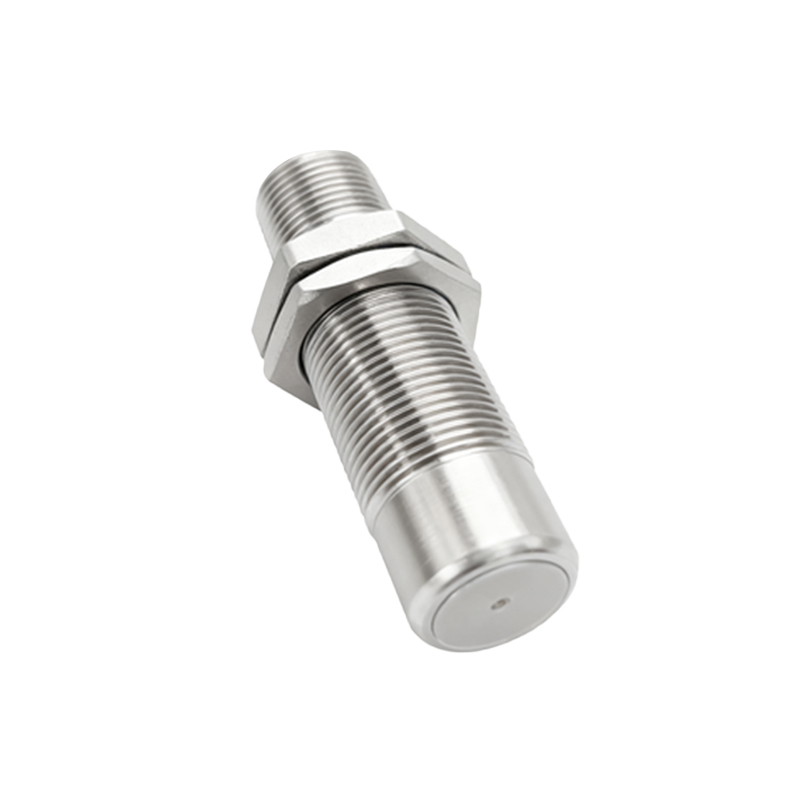
Applications span numerous industries. In manufacturing, ultrasonic sensors monitor fill levels in tanks, detect presence on conveyor belts, and control robotic arms. Their ability to ignore color, transparency, or material makes them versatile. In automotive assembly, they ensure precise part positioning. Logistics systems use them for pallet detection and warehouse automation. Environmental factors like dust, fog, or light conditions do not affect ultrasonic sensors, unlike optical alternatives, but they can be influenced by temperature gradients or wind. Regular maintenance, such as cleaning the transducer surface, ensures longevity.
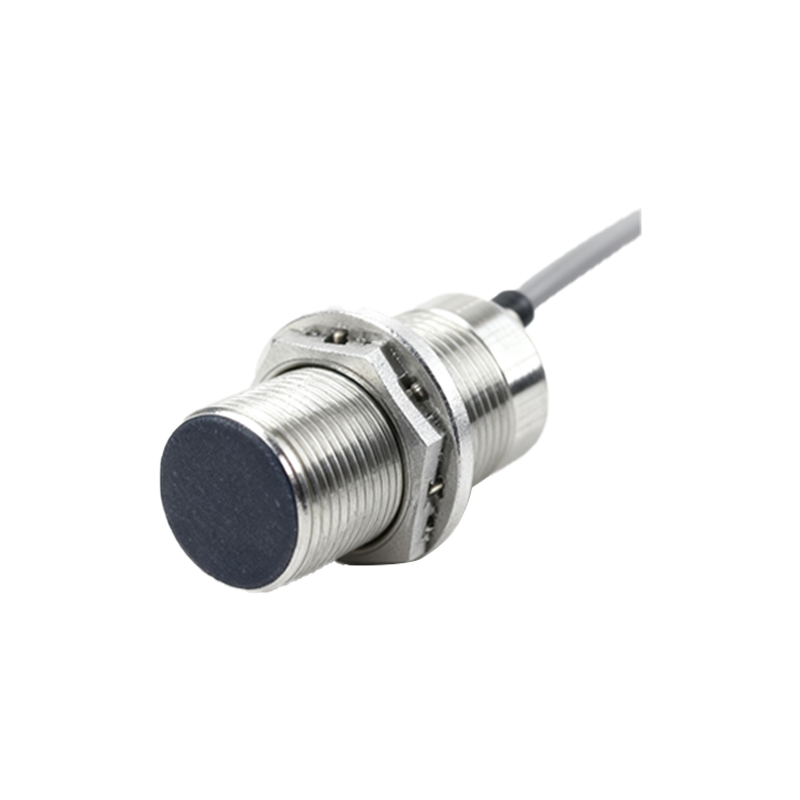
When selecting an ultrasonic proximity sensor, consider parameters like sensing range, beam angle, response time, and output type. Typical ranges vary from a few centimeters to several meters. Narrow beam angles provide precise detection, while wider angles cover larger areas. Response time depends on the sensor's update rate, with faster sensors suited for high-speed applications. Outputs include digital (PNP/NPN) for simple on/off control or analog (0-10V, 4-20mA) for continuous distance measurement. Installation should avoid obstacles in the sound path, and calibration may be needed for specific media.
Innovations in ultrasonic sensor technology focus on miniaturization, enhanced accuracy with AI algorithms, and integration into IoT systems. Smart sensors can self-diagnose and communicate data for predictive maintenance. As Industry 4.0 advances, ultrasonic proximity sensors remain critical for reliable, non-contact sensing in complex industrial environments.