Proximity switches, also known as proximity sensors, are fundamental components in modern industrial automation systems. They detect the presence or absence of an object without physical contact, relying on changes in an electromagnetic field or other sensing principles. The core function of a proximity switch is to convert the detected event into a usable electrical signal for control systems. Understanding the signal types these devices output is crucial for proper selection, integration, and troubleshooting in any application.
The most common output signal from a proximity switch is a simple digital or discrete signal. This is essentially an "ON" or "OFF" state, representing the detection or non-detection of a target. This binary output is typically used to trigger actions in a Programmable Logic Controller (PLC), relay, or other control device. For instance, when a metal part on a conveyor belt passes by an inductive proximity sensor, the sensor's output switches from 0V (OFF) to a specified voltage (ON), signaling the PLC to count the part or initiate the next step in the process. Discrete outputs come in several configurations, primarily defined by the type of switching element and the circuit wiring. The three primary types are NPN (sinking), PNP (sourcing), and Normally Open (NO) or Normally Closed (NC) configurations. NPN outputs switch the negative or ground side of the load, common in Asian and European designs, while PNP outputs switch the positive voltage side, often preferred in North America. The choice between NO (closes on detection) and NC (opens on detection) depends on the safety and logic requirements of the control circuit.
While discrete signals dominate, many advanced proximity sensors provide analog output signals. Instead of a simple on/off, these sensors generate a continuous voltage or current signal that is proportional to the distance between the sensor and the target. A common standard is a 4-20 mA current loop or a 0-10 VDC voltage output. For example, an analog inductive or capacitive sensor can measure the precise position of a piston in a hydraulic cylinder or the thickness of a material passing by. This analog value can be read by an analog input module on a PLC or a dedicated controller, enabling precise monitoring and control beyond mere presence detection. This is vital in applications requiring precision, such as fill level control, tensioning, or positioning.
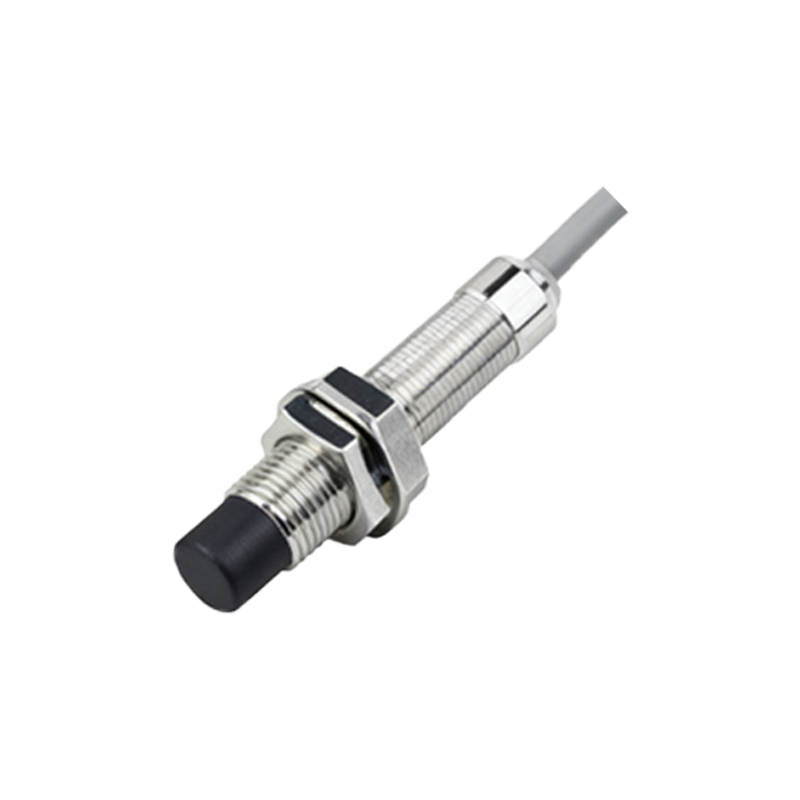
Another important signal type is the IO-Link digital communication signal. IO-Link is a point-to-point serial communication protocol that is becoming a standard in Industry 4.0 applications. A proximity switch with IO-Link capability does more than just provide a simple switch signal. It transmits a digital data stream that can include the sensor's status, diagnostic information (like overload warnings, temperature, or contamination alerts), parameter settings, and even the measured analog value. This allows for remote configuration, advanced diagnostics, and seamless integration into smart factory networks. The IO-Link signal is transmitted over a standard 3-wire cable alongside the traditional 24V DC power, simplifying wiring while vastly increasing data availability.
The choice of signal type depends entirely on the application's requirements. For simple object detection, counting, or limit switching, a standard discrete (PNP/NPN) output is perfectly adequate and cost-effective. For applications requiring precise distance measurement or continuous monitoring, an analog output is necessary. For systems demanding high data transparency, predictive maintenance capabilities, and easy configurability, especially in complex automated lines, IO-Link sensors represent the future-proof choice. Engineers must also consider factors like operating voltage (typically 10-30V DC), output current capacity, switching frequency (response speed), and environmental conditions (IP rating) when specifying a sensor. Properly matching the sensor's signal output to the input requirements of the controller is the final, critical step in ensuring reliable and efficient system operation. In summary, the "signal" from a proximity switch is its language; selecting the right one ensures clear communication within the automation ecosystem.