Inductive proximity sensors are fundamental components in modern industrial automation, renowned for their reliability, durability, and non-contact detection capabilities. Operating on the principle of electromagnetic induction, these sensors generate an oscillating electromagnetic field from a coil housed within their ferrite core. When a metallic target object enters this active field, eddy currents are induced on the target's surface. This causes a change in the oscillation amplitude within the sensor's LC tank circuit. An integrated evaluation circuit detects this amplitude change and triggers a switching signal—typically opening or closing a solid-state or relay output—without any physical contact with the target. This core operating principle makes them exceptionally resistant to wear and contamination, ideal for harsh industrial environments.
A key advantage of inductive sensors is their insensitivity to non-metallic materials. They detect only conductive metals, with sensing performance varying based on the target's material properties. Ferrous metals like iron and steel provide the longest sensing ranges due to their high magnetic permeability. Non-ferrous metals such as aluminum, copper, or brass have lower permeability, resulting in a reduced effective sensing distance, often necessitating a correction factor (typically 0.3 to 0.8 of the nominal range) during system design. This material dependency is a critical consideration for application engineers.
The industry offers several standard housing designs to suit diverse mounting and environmental needs. Cylindrical threaded barrels (e.g., M8, M12, M18, M30) are ubiquitous for easy installation in drilled holes. Rectangular or block-style housings provide flat sensing faces for specific mounting constraints. Furthermore, sensors are classified by their sensing face orientation: front-sensing (axial), side-sensing (lateral), and even omnidirectional types for specialized applications. Environmental sealing is paramount; most industrial-grade sensors meet IP67 or IP69K ratings, ensuring protection against dust ingress and high-pressure water jets, which is vital for washdown areas in food & beverage or pharmaceutical processing.
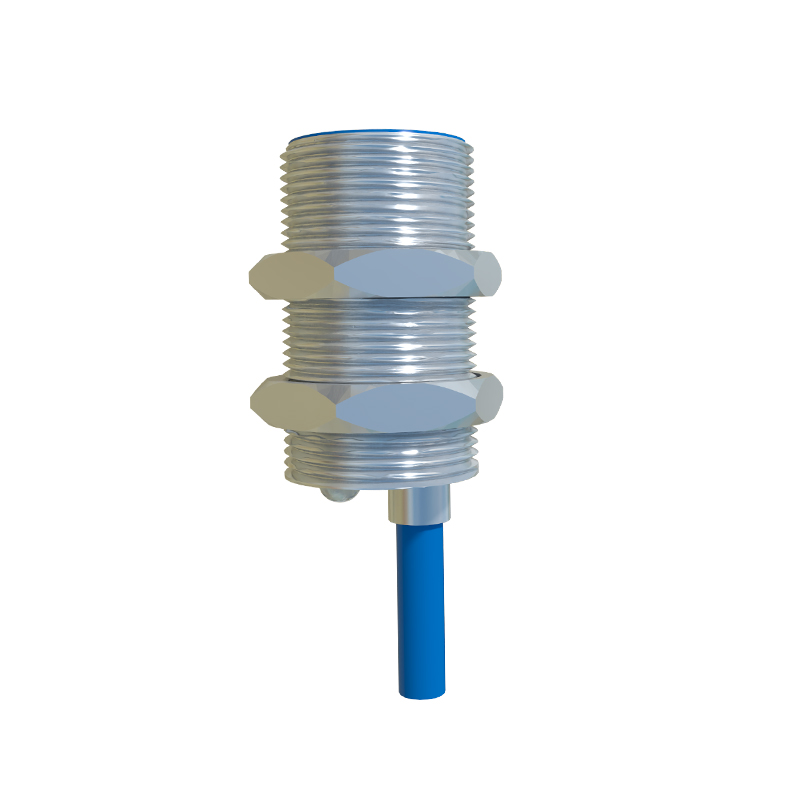
Output configurations are another vital selection parameter. Two-wire DC sensors simplify wiring by operating in series with the load but require a minimum leakage current. Three-wire DC sensors (PNP-sourcing or NPN-sinking) are more common, offering a clear signal line and separate power supply wires. AC versions and analog output types (4-20 mA, 0-10V) are also available for distance-proportional measurement tasks. The switching frequency, indicating how many on/off cycles per second the sensor can handle, is crucial for high-speed counting or positioning applications, with some models exceeding 5 kHz.
Application landscapes for inductive proximity switches are vast. They are the workhorses for position detection: verifying if a robotic gripper is open or closed, confirming the presence of a metal part in a fixture, or serving as end-of-travel limit switches on linear actuators. In automated assembly, they count metal parts on conveyors. In metalworking, they monitor tool presence or detect broken taps. Their robustness makes them suitable for dirty, oily, or vibratory conditions where optical sensors might fail.
Selecting the right inductive sensor requires a systematic approach. First, define the target material and the required nominal sensing distance (Sn), always consulting the manufacturer's datasheet for derating factors for non-ferrous metals. Second, consider the installation environment: required housing shape, size, and IP rating. Third, determine the electrical requirements: operating voltage (commonly 10-30V DC or 20-250V AC), output type, and current capacity. Fourth, assess mechanical needs: flush-mountable or non-flush mountable designs (non-flush models offer longer ranges but require lateral clearance). Finally, consider special features like weld-field immunity (for resisting interference from welding equipment), short-circuit protection, or IO-Link digital communication for Industry 4.0 smart factory integration.
In conclusion, the inductive proximity sensor remains a cornerstone of industrial sensing due to its simple, robust principle of operation. Its continued evolution integrates smarter diagnostics and connectivity, bridging reliable physical detection with the data-driven demands of modern manufacturing. Proper selection, grounded in a clear understanding of its operating principles and application constraints, ensures optimal performance and longevity in any automated system.