In the world of industrial automation, robotics, and precise measurement, 2D laser sensors have become indispensable tools. Unlike their single-point or 1D counterparts, these sensors capture a complete profile or cross-section of an object or environment along a single plane. This capability unlocks a vast array of applications, from ensuring product quality on a high-speed assembly line to enabling autonomous mobile robots to navigate complex spaces safely.
At its core, a 2D laser sensor operates on the principle of triangulation. The sensor projects a visible or infrared laser line onto a target surface. A receiver, typically a CMOS or CCD sensor array positioned at a known angle to the laser emitter, captures the reflection of this line. When the target surface is at a different distance or has a varying contour, the reflected laser line appears deformed or displaced on the receiver. Sophisticated onboard processors analyze this deformation pixel by pixel. By applying trigonometric calculations to the known baseline (the distance between the emitter and receiver) and the angle, the sensor's software constructs a precise two-dimensional profile consisting of thousands of individual height (Z-axis) measurements across the laser line's length (X-axis). This output is essentially a dense cloud of data points representing the target's cross-sectional shape.
The advantages of this technology are numerous. First and foremost is high precision and resolution. Modern 2D laser sensors can achieve micron-level accuracy, making them suitable for detecting minute defects, measuring tiny gaps, or verifying intricate part geometries. They offer non-contact measurement, which is crucial for inspecting delicate, hot, or moving objects without risk of damage or wear. Furthermore, their measurement speed is exceptionally high, often taking thousands of profiles per second. This allows for 100% inline inspection of every product on even the fastest production lines. The data output is digital and readily integrable with programmable logic controllers (PLCs), robotic controllers, and quality management systems, enabling real-time process control and feedback.
The applications of 2D laser sensors span numerous industries. In automotive manufacturing, they are used for gap and flush measurement on car body panels, weld seam inspection, and tire profile scanning. In electronics, they verify component coplanarity (e.g., BGA balls), measure solder paste height, and inspect connector pin alignment. In logistics and warehousing, they are mounted on Autonomous Mobile Robots (AMRs) and forklifts for pallet detection, rack profiling, and obstacle avoidance, creating a safety zone around the vehicle. In the metals industry, they perform crucial tasks like width measurement of rolled steel, height measurement of molten slag, and inspection of rail head profiles. They are also fundamental in volume measurement for bulk solids in silos or on conveyor belts.
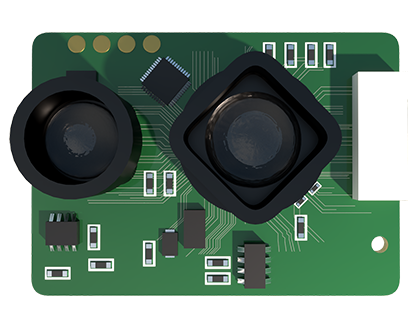
Selecting the right 2D laser sensor requires careful consideration of several key parameters. The measuring range defines the minimum and maximum distances over which the sensor can operate accurately. The resolution indicates the smallest detectable change in height, while linearity refers to the accuracy across the entire measuring range. The profile frequency (or scan rate), measured in Hertz, determines how many cross-sections are captured per second; a higher rate is needed for fast-moving objects. The laser line length must be sufficient to cover the entire width of the object to be inspected. Environmental factors are critical: sensors rated with a high Ingress Protection (IP) code are necessary for dusty or wet environments, and some models are built to withstand significant vibration and shock. Finally, the interface (e.g., Ethernet/IP, PROFINET, EtherCAT, analog) must be compatible with the existing control system.
When integrating a 2D laser sensor, proper installation is paramount. The sensor must be mounted stably to avoid vibrations that distort measurements. The angle relative to the target surface and the working distance must be within the sensor's specified limits. Lighting conditions can interfere; ambient sunlight or other strong light sources can sometimes overwhelm the sensor's receiver, so using sensors with modulated laser light or installing protective shrouds may be necessary. Regular cleaning of the protective window is also essential to maintain accuracy.
Looking ahead, the evolution of 2D laser sensor technology continues. Trends include miniaturization for integration into tighter spaces, increased scan rates and resolutions for even more demanding applications, and the development of more robust designs for extreme industrial environments. Furthermore, enhanced onboard intelligence and data processing capabilities are moving towards edge computing, where preliminary analysis and decision-making happen within the sensor itself, reducing the load on central systems and enabling faster response times.
In conclusion, 2D laser sensors are powerful, versatile instruments that provide critical dimensional data for automation, quality control, and navigation. By understanding their operating principle, key advantages, and diverse applications, engineers and system integrators can effectively harness their capabilities. A methodical approach to selection based on technical specifications and environmental needs ensures successful implementation, leading to improved product quality, enhanced operational safety, and greater overall process efficiency.