In the realm of precision measurement and industrial automation, the synergy between laser sensors and Charge-Coupled Device (CCD) lenses is fundamental. As an electrical engineer specializing in industrial systems, a deep understanding of CCD lens technology is crucial for optimizing sensor performance. This guide delves into the operational principles, key specifications, and application considerations for CCD lenses within laser sensing systems.
At its core, a CCD is a light-sensitive integrated circuit that converts photonic energy into electrical charge. The role of the lens in front of this sensor is to accurately project the laser's reflected or diffused pattern onto the CCD's pixel array. Unlike standard camera lenses, CCD lenses for laser sensors are engineered for specific wavelengths, often in the visible red or near-infrared spectrum common to industrial lasers. Their primary function is not aesthetic imaging but precise spatial data capture. The lens must form a sharp, high-contrast image of the laser line or point on the sensor to enable accurate triangulation or time-of-flight calculations for distance, profile, or presence detection.
Several critical optical parameters define a CCD lens's suitability for a laser sensing application. Focal length determines the field of view and working distance. A shorter focal length provides a wider field of view but may introduce more distortion, while a longer focal length offers a narrower, more magnified view for detailed inspection. The f-number or aperture controls the amount of light reaching the CCD. In high-speed or low-light applications, a lens with a lower f-number (larger aperture) is essential to maintain a strong signal-to-noise ratio. However, this can reduce depth of field, a trade-off that must be carefully managed. Resolution, often expressed in line pairs per millimeter (lp/mm), must be matched to the CCD's pixel pitch to avoid aliasing and ensure the system captures all necessary detail from the laser pattern. Chromatic and geometric aberrations must be minimized through sophisticated lens design, as any distortion directly translates to measurement error.
Material selection and coating technology are paramount. Lenses are typically made from specialized optical glass like BK7 or fused silica, chosen for their low dispersion and high transmission at the target laser wavelength. Anti-reflective (AR) coatings are meticulously applied to lens surfaces. These coatings are not generic; they are designed for a specific wavelength range (e.g., 650nm or 850nm) to maximize light transmission—often to 99.5% or higher—and to eliminate ghost images and flare caused by internal reflections. This ensures that the maximum amount of the often low-power reflected laser light reaches the CCD, enhancing sensitivity and accuracy.

Integration into a laser sensor system requires careful mechanical and environmental consideration. The lens must be securely mounted with precise alignment to the CCD chip's plane. Even minor tilt or de-centering can cause significant focus issues across the image field. For applications involving vibration, thermal fluctuation, or harsh environments, lenses are housed in robust barrels, and focus may be locked with thread-locking compounds. Some advanced systems incorporate motorized or liquid lenses for dynamic focus adjustment, allowing the sensor to adapt to varying target distances without mechanical movement.
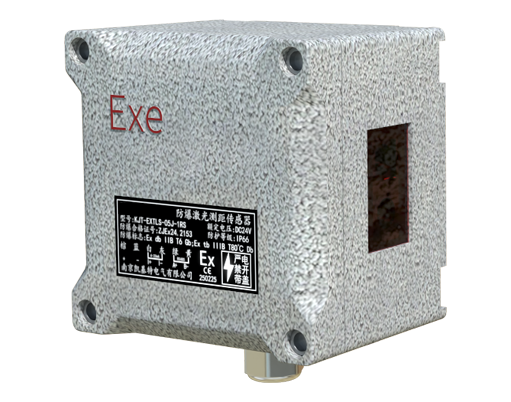
The choice of CCD lens directly impacts system performance in real-world applications. In 3D laser profiling for quality control, a lens with minimal distortion and high resolution is required to accurately reconstruct complex surface geometries. For high-speed sorting on a production line, a lens with a large aperture and fast response is critical to capture clear images of rapidly moving objects illuminated by a laser scanner. In contrast, applications like long-range LiDAR may use telecentric lens designs to maintain a constant magnification over a range of distances, simplifying data processing.
Future trends point toward further miniaturization and intelligence. Lenses with integrated micro-optics and diffractive elements are enabling more compact sensor designs. Furthermore, the fusion of advanced lens systems with machine learning algorithms is creating "smart" sensors that can not only capture data but also pre-process images to compensate for optical imperfections or varying ambient conditions in real-time.
In conclusion, the CCD lens is far from a passive component; it is an active enabler of precision in laser sensing. Selecting and specifying the correct lens involves a holistic analysis of optical performance, mechanical robustness, and environmental compatibility. By mastering these fundamentals, engineers can design and deploy laser sensor systems that deliver reliable, high-precision data, forming the backbone of modern automated inspection, robotics, and metrology solutions.