In the world of automation and smart technology, proximity sensors stand as silent, indispensable sentinels. These devices detect the presence or absence of an object within a specific range without any physical contact. Their operation is based on the emission of an electromagnetic field or a beam of radiation, and the sensor looks for changes in the field or return signal. The object being detected is often referred to as the sensor's target. The fundamental principle is elegantly simple: when a target enters the sensing zone, it causes a detectable change—be it in an electromagnetic field, capacitance, or light beam—which the sensor converts into an electrical signal to trigger an action.
The applications are vast and deeply integrated into modern life. On a factory floor, inductive proximity sensors, which detect metallic objects, ensure robotic arms position components with micron-level precision. In your smartphone, a capacitive sensor deactivates the touchscreen when you hold it to your ear during a call, preventing accidental inputs. At a supermarket entrance, photoelectric sensors activate automatic doors, offering convenience and improving accessibility. Automotive systems rely heavily on them for parking assistance, blind-spot monitoring, and collision avoidance, creating safer driving environments. From consumer electronics and security systems to industrial machinery and medical devices, proximity sensing is a foundational technology enabling efficiency, safety, and intuitive user interaction.
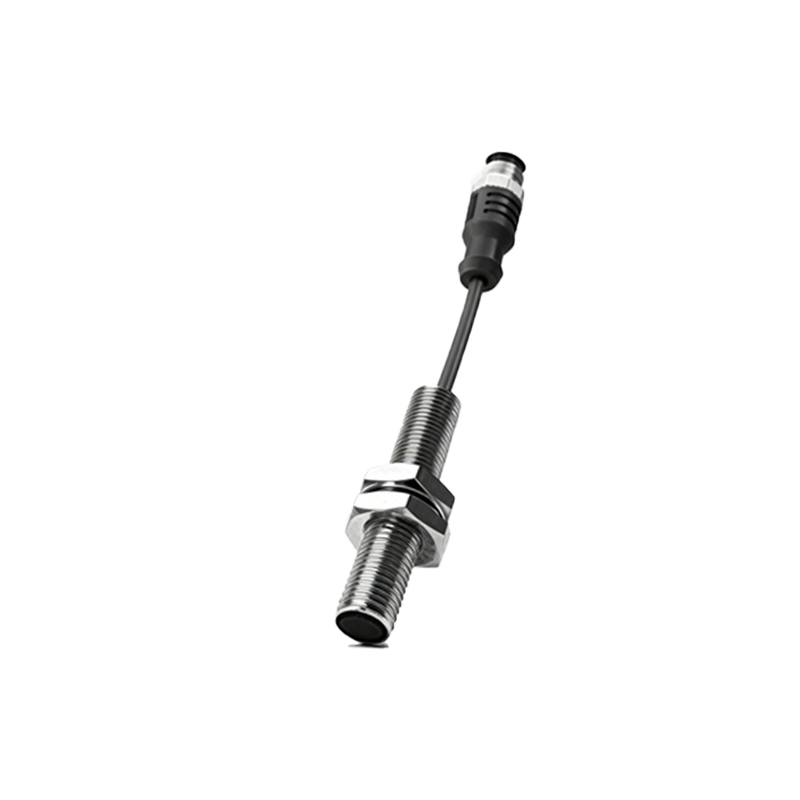
Several key types dominate the market, each with unique strengths. Inductive Proximity Sensors are the workhorses for metal detection. They generate an oscillating electromagnetic field. When a metallic target enters this field, it induces eddy currents, causing a change in oscillation amplitude that is detected. They are robust, resistant to environmental factors like dust and oil, and ideal for harsh industrial settings. Capacitive Proximity Sensors can detect both metallic and non-metallic materials—liquids, plastics, wood, and even granular substances. They function by measuring changes in capacitance between the sensor and the target. This makes them perfect for level detection in tanks or detecting filled packages on a conveyor belt.
Photoelectric Sensors use light, typically infrared or laser, to detect objects. They come in three main configurations: through-beam (separate emitter and receiver), retro-reflective (bounces light off a reflector), and diffuse (reflects light directly off the target). They offer the longest sensing ranges and can detect virtually any material, but their performance can be affected by environmental conditions like dust, fog, or highly reflective targets. Ultrasonic Sensors emit high-frequency sound waves and measure the time for the echo to return. They excel at detecting objects of any material, color, or transparency, and are excellent for distance measurement and level sensing in challenging conditions where other sensors might fail.
Selecting the right sensor requires careful consideration of several parameters. Sensing Range is the maximum distance at which the sensor can reliably detect a standard target. Environmental factors are critical; will the sensor face extreme temperatures, moisture, corrosive chemicals, or heavy vibration? The Target Material dictates the sensor type—metal, plastic, liquid, etc. Output Type is another key decision; sensors provide digital (ON/OFF) or analog (proportional to distance) signals, interfacing with PLCs, relays, or controllers. Finally, physical characteristics like size, shape, and mounting style must fit the application's spatial constraints.
The future of proximity sensing is driven by miniaturization, enhanced intelligence, and integration. Sensors are becoming smaller, more energy-efficient, and more affordable, enabling their proliferation in IoT devices. The integration of microprocessors allows for smart sensors with self-diagnostic capabilities, adjustable sensing ranges, and digital communication protocols like IO-Link, which provide detailed device data for predictive maintenance. Furthermore, sensor fusion—combining data from proximity sensors with vision systems, inertial measurement units, or other sensors—is creating more sophisticated and context-aware systems for advanced robotics and autonomous vehicles.
In conclusion, proximity sensors are far more than simple switches. They are sophisticated components that bridge the physical and digital worlds, providing the essential data that automated systems need to function intelligently. Their evolution continues to push the boundaries of what's possible in manufacturing, transportation, safety, and daily convenience, making them a cornerstone of our increasingly automated world.