In the realm of industrial automation and precision engineering, the evolution of sensing technology has consistently pushed the boundaries of what is measurable and controllable. Among the most significant advancements in recent years is the development and deployment of ultra-fine laser sensors. These sophisticated devices represent a leap forward from conventional photoelectric or proximity sensors, offering unparalleled resolution, speed, and accuracy for applications where micron-level precision is non-negotiable.
At their core, ultra-fine laser sensors operate on the principle of laser triangulation or time-of-flight measurement, emitting a highly focused, coherent beam of light towards a target. The reflected light is captured by a sensitive receiver, and advanced onboard processors analyze the data to determine precise distance, displacement, or profile characteristics. What distinguishes the "ultra-fine" variant is its exceptional beam quality and spot size. Utilizing specialized optics and often blue or violet laser diodes, these sensors can generate a laser spot diameter as small as a few micrometers. This minuscule spot size allows for the detection of extremely fine features, edges, or surface defects that would be entirely invisible to sensors with larger, diffuse beams.
The technical advantages are profound. Firstly, the resolution can reach the sub-micron range, enabling measurements with extreme fidelity. This is critical in industries like semiconductor manufacturing, where the thickness of coatings or the placement of microscopic circuits must be verified with absolute certainty. Secondly, the high response speed, often in the kilohertz range, allows for real-time, in-line inspection on high-speed production lines, such as in the printing of electronic circuits or the assembly of miniature medical devices. Thirdly, the coherent, focused beam minimizes interference from ambient light and reduces the impact of surface color or reflectivity variations, leading to more stable and reliable readings compared to traditional diffuse reflection sensors.
Key application domains showcase the transformative impact of these sensors. In precision machining, they are indispensable for non-contact tool wear monitoring and workpiece alignment, ensuring tolerances are held within strict specifications. In the electronics sector, they facilitate the inspection of solder paste height, component coplanarity, and the detection of hairline cracks on PCBs. The pharmaceutical industry employs them for verifying fill levels in tiny vials or inspecting the integrity of micro-needle arrays. Furthermore, in robotics and automated guided vehicles (AGVs), ultra-fine laser sensors provide critical feedback for precise positioning and obstacle avoidance in complex, confined spaces.
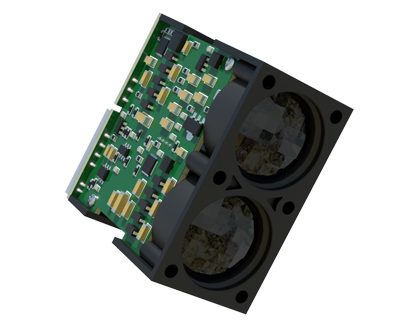
However, implementing ultra-fine laser sensors is not without its considerations. Their high precision demands careful integration. Factors such as sensor mounting stability, environmental vibrations, thermal fluctuations, and the cleanliness of optical surfaces must be meticulously managed to prevent measurement drift. The choice of sensor model must align with the specific material properties of the target—highly reflective or transparent surfaces may require sensors with specialized algorithms or different wavelength lasers to ensure optimal performance. Additionally, while the cost per unit is higher than standard sensors, the return on investment is justified through reduced scrap rates, minimized downtime, and enhanced product quality, ultimately driving overall equipment effectiveness (OEE).
Looking ahead, the trajectory for ultra-fine laser sensor technology points toward even greater integration with Industry 4.0 frameworks. Future iterations will likely feature enhanced connectivity via IO-Link or advanced industrial Ethernet protocols, enabling seamless data streaming to cloud platforms for predictive analytics and digital twin applications. Advances in embedded artificial intelligence could allow the sensors to perform complex classification tasks—such as distinguishing between different types of surface defects—at the edge, further speeding up decision-making loops.
In conclusion, ultra-fine laser sensors are not merely incremental improvements but foundational tools enabling a new echelon of manufacturing intelligence and quality control. By delivering non-contact measurement capabilities at previously unattainable scales, they empower engineers to control processes with unprecedented granularity. As industries continue to demand higher precision, miniaturization, and efficiency, the role of these sensors will only become more central, solidifying their status as a cornerstone technology in the smart factories of today and tomorrow. Their ability to "see" and measure the infinitesimally small is, in essence, redefining the very limits of industrial perception and capability.