In the rapidly evolving landscape of industrial automation and precision measurement, laser antenna sensors have emerged as a cornerstone technology, driving advancements across diverse sectors from manufacturing to telecommunications. These sophisticated devices combine the principles of laser optics and antenna theory to deliver unparalleled accuracy, speed, and reliability in sensing applications. At their core, laser antenna sensors function by emitting a focused laser beam that interacts with a target object. The reflected or scattered light is then captured by an integrated antenna system, which processes the signal to extract critical data such as distance, displacement, velocity, or surface characteristics. This fusion of technologies enables non-contact measurement, a key advantage in environments where physical probes could cause contamination, damage, or inefficiency.
One of the primary roles of laser antenna sensors is in dimensional metrology and quality control. In automotive and aerospace manufacturing, for instance, they are deployed to inspect component tolerances with micron-level precision. By scanning surfaces at high speeds, these sensors detect deviations in real-time, allowing for immediate corrective actions and reducing waste. Similarly, in electronics assembly, they ensure the precise placement of microchips on circuit boards, enhancing product reliability. The non-invasive nature of laser sensing also makes it ideal for monitoring delicate materials like semiconductors or biomedical samples, where even minimal contact could alter properties.
Beyond manufacturing, laser antenna sensors play a pivotal role in structural health monitoring. Civil engineers utilize them to assess vibrations, deformations, and cracks in bridges, buildings, and pipelines. By providing continuous, remote surveillance, these sensors help predict failures and extend infrastructure lifespan, contributing to public safety. In the energy sector, they are employed in wind turbine blade inspection and oil pipeline integrity checks, where harsh conditions demand robust, accurate tools. The ability to operate over long distances—thanks to the directional focus of laser beams—further expands their utility in large-scale installations.
Telecommunications and data transmission represent another critical domain for laser antenna sensors. In free-space optical communication systems, they facilitate high-bandwidth, secure data links between satellites, drones, or ground stations. By modulating laser signals, these sensors enable faster information transfer compared to traditional radio frequencies, with reduced interference. This technology is increasingly vital for 5G networks and beyond, supporting the growing demand for low-latency connectivity in smart cities and autonomous vehicles. Additionally, in LiDAR (Light Detection and Ranging) applications, laser antenna sensors are integral to mapping, navigation, and obstacle detection for robotics and self-driving cars, where real-time environmental perception is essential.
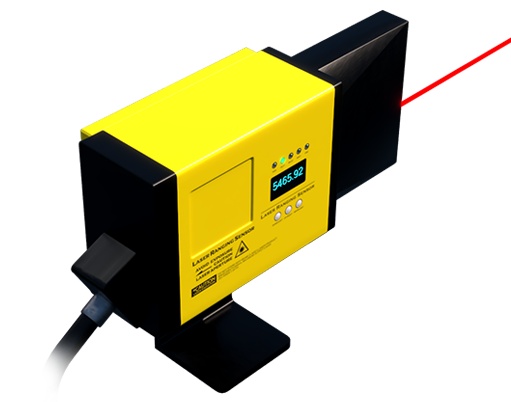
The operational advantages of laser antenna sensors stem from their design innovations. Modern versions incorporate advanced materials like gallium arsenide for efficient laser diodes and metamaterials for enhanced antenna performance. Signal processing algorithms, often powered by artificial intelligence, filter noise and improve resolution, even in challenging conditions such as low visibility or high temperatures. Moreover, miniaturization trends have led to compact, portable sensors that can be integrated into IoT devices, enabling widespread adoption in smart agriculture for crop monitoring or in healthcare for non-invasive diagnostics.
Despite their benefits, challenges remain, including cost barriers for small-scale users and sensitivity to environmental factors like fog or dust. Ongoing research focuses on overcoming these limitations through adaptive optics and multi-sensor fusion. As industries push toward greater automation and precision, the role of laser antenna sensors is set to expand, with emerging applications in quantum sensing and space exploration. By delivering exact, real-time data without physical contact, they not only optimize current processes but also unlock new possibilities for innovation, solidifying their status as indispensable tools in the modern technological toolkit.
