In the realm of industrial automation and precision measurement, laser sensors have become indispensable tools. Among the various options available, the LS Series laser sensors stand out for their robust design, high accuracy, and versatile applications. This article delves into the technical specifications, operational principles, and key use cases of these advanced sensing devices, providing a comprehensive overview for engineers and industry professionals.
The core technology behind LS Series laser sensors is based on the principle of laser triangulation. A laser diode emits a focused beam of light onto a target surface. The reflected light is then captured by a high-resolution CMOS or CCD receiver at a specific angle. By calculating the displacement of the reflected light spot on the receiver, the sensor can precisely determine the distance to the target. This method allows for non-contact measurement with micron-level resolution, making it ideal for applications where physical contact could damage the target or affect measurement accuracy.
Key features of the LS Series include exceptional measurement speed, often reaching into the kilohertz range, enabling real-time monitoring of fast-moving processes. They offer a wide measuring range, from a few millimeters to several meters, depending on the specific model. Advanced models incorporate environmental compensation algorithms to mitigate the effects of ambient light, temperature fluctuations, and varying surface colors or textures. The housing is typically constructed from durable metals like stainless steel or aluminum, ensuring reliable operation in harsh industrial environments characterized by dust, moisture, and vibration.
Communication and integration are streamlined through standard industrial interfaces such as analog outputs (0-10V, 4-20mA), digital I/O (NPN/PNP), and serial protocols like RS-232 or RS-485. Many models also support industrial Ethernet protocols, including EtherNet/IP and PROFINET, facilitating seamless integration into Industry 4.0 and IoT frameworks. Configuration is often managed via intuitive software, allowing users to set parameters like measurement windows, response times, and output logic with ease.
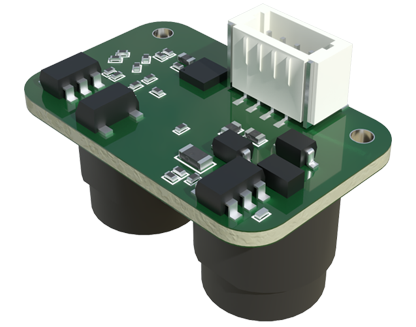
The application spectrum for LS Series laser sensors is remarkably broad. In automotive manufacturing, they are used for gap and flush measurement on vehicle body panels, ensuring perfect alignment. In electronics assembly, they verify component placement height and solder paste thickness on PCBs. The packaging industry relies on them for precise fill-level detection, label positioning, and thickness control of materials like paper and film. Furthermore, in robotics, these sensors provide critical feedback for guidance and positioning, enabling precise pick-and-place operations and weld seam tracking.
When selecting an LS Series sensor, engineers must consider several factors: the required measurement range and resolution, the target's surface properties (e.g., glossy, matte, transparent), the environmental conditions, and the necessary response speed. Proper installation is also crucial; factors like mounting stability, angle relative to the target, and avoidance of optical interference must be addressed to achieve optimal performance. Regular maintenance, primarily involving lens cleaning, ensures long-term accuracy and reliability.
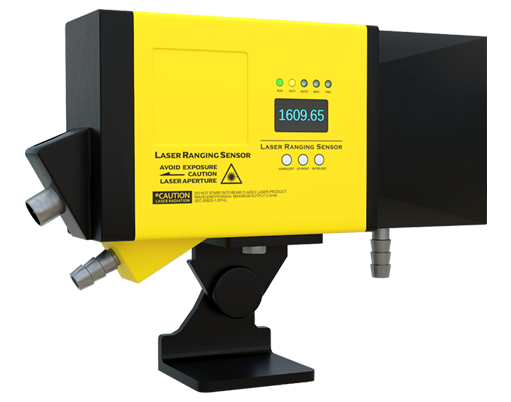
In conclusion, LS Series laser sensors represent a pinnacle of non-contact measurement technology. Their combination of precision, speed, and durability makes them a cornerstone in modern industrial automation. As manufacturing processes demand ever-greater accuracy and efficiency, the role of these sophisticated sensors will only continue to expand, driving innovation and quality across countless sectors.