In the realm of industrial automation and control systems, proximity switches are indispensable components for non-contact detection of objects. Among the various configurations available, the 220V two-wire proximity switch stands out for its simplicity and direct integration into standard AC power circuits. This article delves into the operational principles, key advantages, installation considerations, and typical applications of these robust sensors, providing essential insights for electrical engineers and system designers.
A 220V two-wire proximity switch is fundamentally a sensor that operates on a 220-volt alternating current (AC) supply. Unlike three-wire or four-wire models that have separate power, ground, and signal lines, the two-wire variant integrates the load (often a relay coil, contactor, or PLC input) directly in series with the power supply and the switch itself. When a target object enters the sensor's detection range, its internal solid-state switching element (like a triac or a bidirectional thyristor) changes state, allowing current to flow through the entire series circuit and thus activating the connected load. This design eliminates the need for a separate control power source, simplifying wiring and reducing installation costs.
The core technology behind these switches is typically based on inductive, capacitive, or sometimes ultrasonic principles. Inductive types are most common for detecting metallic objects. They contain an oscillator circuit that generates a high-frequency electromagnetic field. When a conductive metal target enters this field, eddy currents are induced, causing a change in the oscillation amplitude. This change is detected by the sensor's circuitry, which then triggers the output switch. Capacitive types can detect both metallic and non-metallic materials by sensing changes in capacitance, making them versatile for applications involving liquids, plastics, or granular materials.
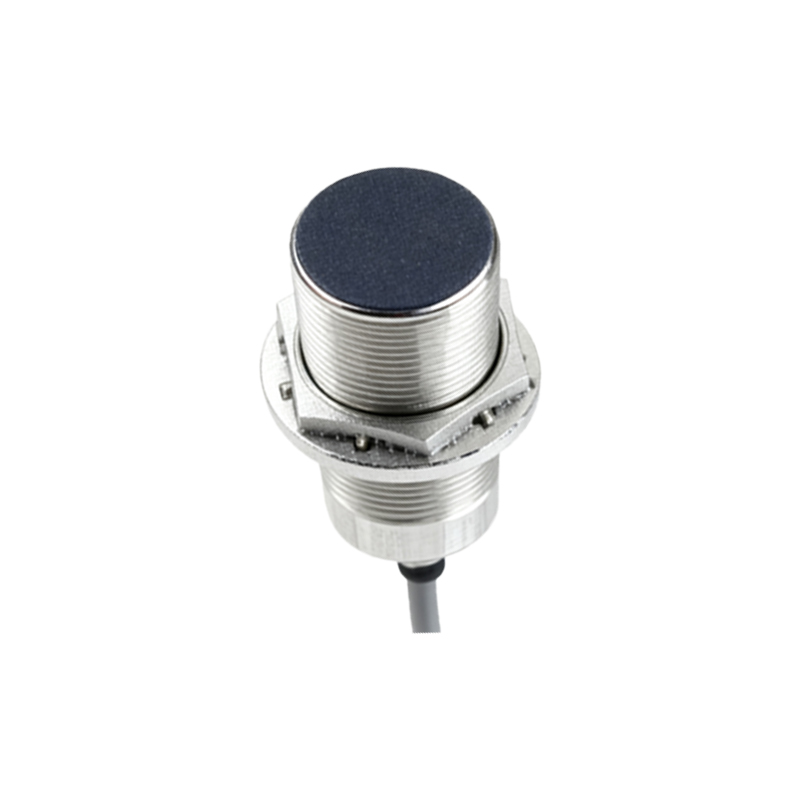
One of the primary advantages of the 220V two-wire design is its straightforward installation. It can be wired directly into an AC control circuit much like a traditional mechanical limit switch. The typical wiring involves connecting one wire to the live (L) 220V AC line and the other wire to one terminal of the load; the other terminal of the load is then connected to the neutral (N) line. This series loop is simple and reduces the number of conductors needed in control panels. Furthermore, these sensors often feature a small leakage current (residual current) when in the "off" state. Engineers must account for this by ensuring the connected load has a minimum current requirement to prevent false triggering or ensuring PLC digital inputs are compatible with this leakage.
Robustness is another hallmark. Designed for industrial environments, they commonly feature housings rated at IP67 or higher, providing excellent protection against dust and temporary immersion. They are built to withstand electrical noise, vibration, and temperature variations common in manufacturing plants. When selecting a 220V two-wire proximity switch, key specifications to consider include: sensing distance (rated operating distance), switching frequency (response speed), housing material (e.g., nickel-plated brass or stainless steel), output type (normally open or normally closed), and the presence of built-in protection like short-circuit or overload safeguards.
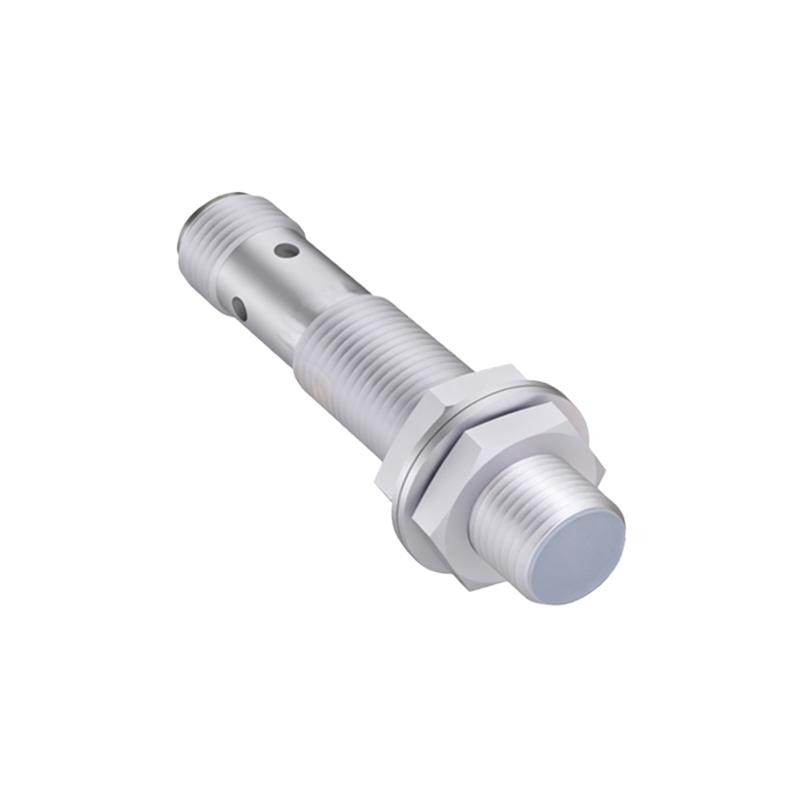
Application areas are vast. They are routinely used in machine tools for position sensing, in material handling systems to detect the presence of packages on conveyors, in automated assembly lines for part verification, and in packaging machinery for counting or monitoring fill levels. Their ability to interface directly with high-voltage control circuits makes them ideal for directly driving pilot lights, contactors, or solenoid valves without the need for intermediate relays in many cases, though load compatibility must always be verified.
Installation and maintenance best practices are crucial for reliable operation. Mounting should be secure to prevent misalignment, and adequate clearance around the sensing face must be maintained to avoid interference from surrounding metal (the so-called "flush-mountable" or "non-flush" mounting specifications). Regular checks for accumulated debris on the sensing face and verification of the supply voltage stability are recommended. Troubleshooting often involves checking for the correct voltage across the load, measuring the leakage current, and verifying that the target object is within the specified sensing range and material type.
In conclusion, the 220V two-wire proximity switch offers a reliable, cost-effective, and simple solution for object detection in AC-powered control systems. Its direct integration capability reduces system complexity, while its rugged construction ensures longevity in demanding conditions. For engineers designing or maintaining industrial automation systems, a thorough understanding of its operating characteristics, wiring requirements, and application limits is fundamental to achieving optimal performance and system reliability. As technology advances, newer models continue to offer improved performance, such as longer sensing distances and enhanced noise immunity, solidifying their role as a cornerstone of modern industrial sensing.