In the rapidly evolving landscape of smart building automation and industrial safety systems, human presence sensors with advanced proximity and departure detection capabilities have become indispensable. These sophisticated devices, often leveraging technologies such as passive infrared (PIR), microwave, ultrasonic, or a fusion of these, are engineered to not only detect the mere existence of a human within a monitored zone but to intelligently interpret movement patterns—specifically, approach and retreat behaviors. This nuanced functionality transcends basic motion detection, enabling a new tier of energy efficiency, security, and user-centric automation.
The core principle behind proximity (approach) detection involves the sensor identifying a gradual increase in signal strength or a specific pattern change as a person moves toward the monitored area. For instance, a dual-element PIR sensor can detect the change in infrared radiation across its segments, while a microwave sensor observes the Doppler shift frequency increasing as a target closes in. Upon confirming an approach event, the system can trigger predefined actions: gradually brightening corridor or office lights to welcome the occupant, automatically unlocking doors, activating welcome displays, or preparing workstations in smart office environments. This creates a seamless and responsive interface between the built environment and its users.
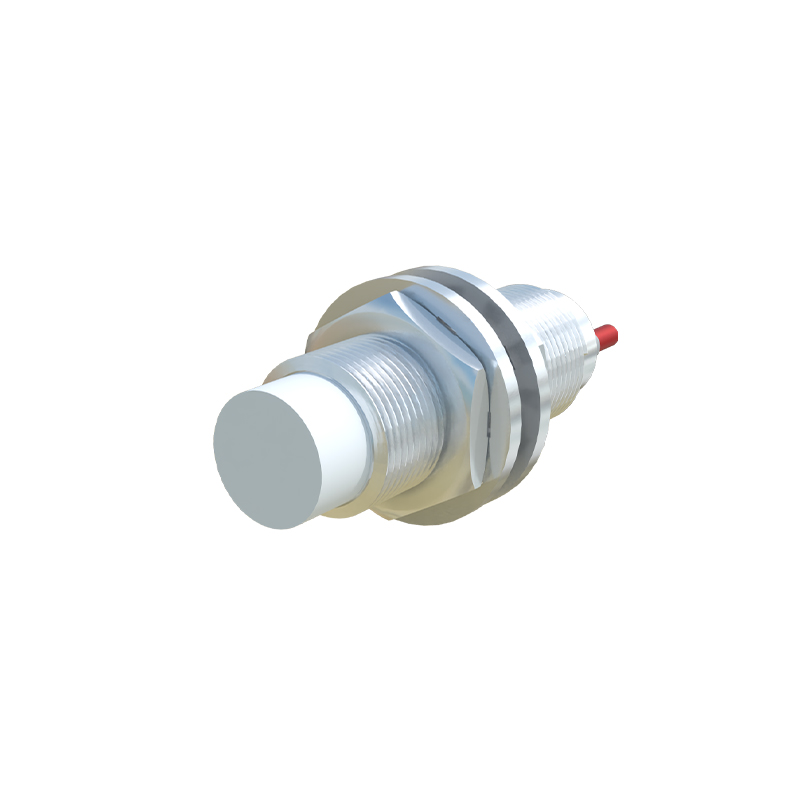
Conversely, departure (retreat or vacate) detection is equally critical. The sensor must reliably determine when the last occupant has left a space, a challenge more complex than it appears. Advanced algorithms differentiate between minor movements within a room (like working at a desk) and a genuine exit. This is often achieved through time-delay settings combined with motion tracking logic. Once a sustained absence is verified, the system can execute energy-saving protocols: dimming or switching off lights, adjusting HVAC setpoints to an energy-saving mode, powering down non-essential equipment, and arming security zones. In industrial settings, this can ensure machinery safely powers down when workers leave a hazardous cell.
The implementation of these features demands careful consideration of several technical parameters. Detection Range and Coverage Pattern: Sensors must be selected and positioned to cover the entire entry and exit pathways without blind spots. The range for reliable approach detection might differ from the optimal range for monitoring occupancy within the space. Sensitivity and Anti-False Triggering: Settings must be fine-tuned to ignore small pets, moving curtains, or HVAC airflow while remaining sensitive to human presence. Advanced sensors employ signal processing to filter out such noise. Response Time: For proximity-based welcome scenarios, a sub-second response is often desirable. For departure-based energy savings, a delay of several minutes (e.g., 5-15 minutes) is typical to avoid nuisance switching. Integration and Logic: Standalone sensors can control local loads, but their full potential is unlocked when integrated into a broader Building Management System (BMS) or IoT platform. Here, logic can be created—for example, "if departure is detected in Conference Room A AND approach is detected in Conference Room B, transfer the HVAC load accordingly."
Looking forward, the integration of machine learning and sensor fusion is pushing boundaries. Cameras with low-resolution, privacy-preserving algorithms can add a layer of verification for departure detection. Millimeter-wave radar sensors provide exceptional spatial resolution, capable of detecting subtle chest movements to confirm presence even of a stationary person, drastically reducing false "departure" signals. This is pivotal for applications like restroom light control or private office management, where a person may remain still for extended periods.
In conclusion, the proximity and departure detection functions of modern human presence sensors represent a significant leap from binary motion sensing. They form the cornerstone of intuitive, efficient, and safe automated environments. By intelligently responding to human trajectories—greeting our approach and conserving resources upon our departure—these systems foster sustainability, enhance comfort, and redefine our interaction with the spaces we inhabit. For engineers and specifiers, a deep understanding of these capabilities is essential for designing the next generation of responsive and responsible built environments.