In the realm of modern sensing technology, the convergence of optical sensors and laser technology represents a significant frontier. While not all optical sensors are lasers, the integration of laser principles into optical sensing systems has revolutionized measurement, detection, and control across numerous industries. This article delves into the core principles, diverse applications, and emerging trends of laser-based optical sensors, providing an engineer's perspective on this critical technology.
Fundamentally, an optical sensor detects light or other electromagnetic radiation and converts it into an electrical signal. A laser (Light Amplification by Stimulated Emission of Radiation), on the other hand, is a device that emits coherent, monochromatic, and highly directional light. When we refer to an optical sensor "as a laser," we typically mean a sensing system where a laser source is an integral component of the sensor itself or where the sensing mechanism is based on laser phenomena. The key attributes of laser light—coherence, high intensity, and narrow spectral width—enable sensing capabilities far beyond those of conventional broadband light sources.
The operational principles of laser-based optical sensors are diverse. A common configuration involves using a laser as the illumination source. The sensor then detects how this laser light interacts with a target. This interaction can be through reflection, scattering, absorption, or interference. For instance, in Laser Triangulation Sensors, a laser spot is projected onto a target surface. A lens images this spot onto a position-sensitive detector. As the target's distance changes, the position of the spot on the detector shifts, allowing for precise, non-contact distance and displacement measurements with micron-level resolution. This principle is paramount in automated manufacturing for part inspection and robotic guidance.
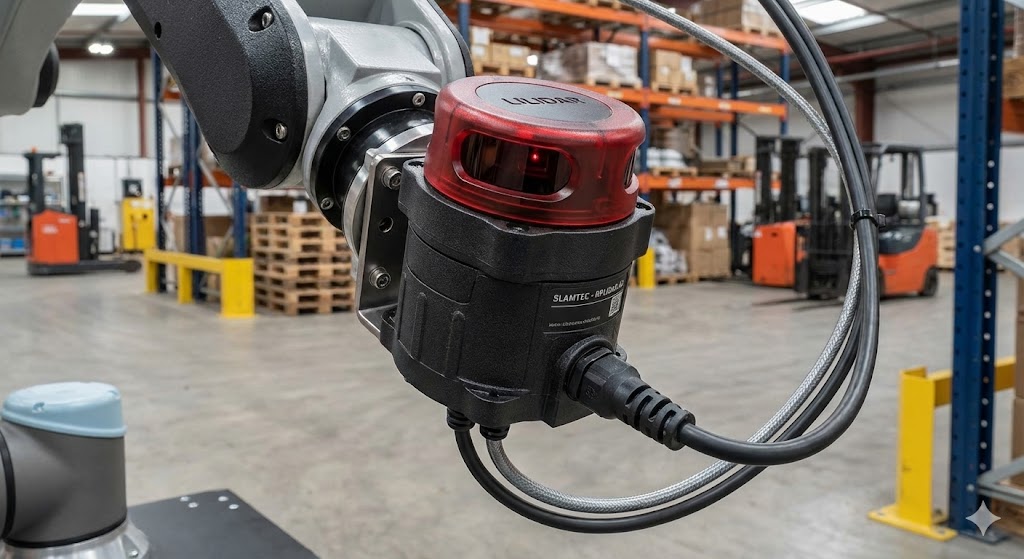
Another major category is Laser Interferometry. Here, the coherent nature of laser light is exploited. A laser beam is split into a reference beam and a measurement beam. The measurement beam reflects off a target, recombines with the reference beam, and creates an interference pattern. Minute changes in the target's position (on the order of nanometers) alter this pattern, enabling ultra-high-precision measurements of displacement, vibration, and surface topography. This technology is indispensable in semiconductor lithography, precision machining, and scientific research.
Fiber optic sensors often incorporate laser technology. In these systems, a laser source injects light into an optical fiber. Parameters such as strain, temperature, or pressure affect the light's properties (intensity, phase, wavelength) as it travels through or reflects from the fiber. By analyzing these changes with sophisticated detectors, distributed sensing over long distances becomes possible. Applications range from structural health monitoring of bridges and pipelines to downhole sensing in oil and gas wells.
Laser Doppler Vibrometry (LDV) is a specialized technique for measuring vibration velocity and displacement without physical contact. It relies on the Doppler effect: the frequency of laser light scattered from a moving surface shifts proportionally to its velocity. LDVs are critical in analyzing mechanical components, from turbine blades to micro-electromechanical systems (MEMS), identifying resonant frequencies and structural defects.
The applications of laser-based optical sensors are vast and growing. In industrial automation, they enable robotic vision, precise part alignment, and real-time quality control on high-speed production lines. In the automotive sector, they are the core of Light Detection and Ranging (LiDAR) systems for autonomous vehicles, creating high-resolution 3D maps of the environment. In aerospace, they monitor structural integrity and perform non-destructive testing. In the medical field, laser sensors are used in diagnostic imaging, flow cytometry, and surgical guidance systems. Environmental monitoring utilizes laser-based sensors for detecting trace gases, pollutants, and particulate matter through techniques like Tunable Diode Laser Absorption Spectroscopy (TDLAS).
Current industry trends are pushing the boundaries further. The miniaturization of laser diodes and photonic integrated circuits (PICs) is leading to smaller, more robust, and cost-effective sensors. The development of new laser materials and wavelengths (e.g., quantum cascade lasers for mid-infrared sensing) opens new application spectra. There is a strong drive towards smarter sensors with embedded processing capabilities, leveraging Artificial Intelligence and Machine Learning to interpret complex sensor data directly at the edge, reducing latency and bandwidth requirements. Furthermore, the integration of multiple sensing modalities (e.g., combining LiDAR with cameras and radar) is enhancing system reliability and data richness for advanced applications like fully autonomous systems and Industry 4.0 smart factories.
In conclusion, the fusion of laser technology with optical sensing principles has created a powerful class of instruments that deliver unparalleled precision, speed, and versatility. For engineers, understanding the underlying physics, the system configurations, and the evolving landscape of components is crucial for selecting, implementing, and innovating with these systems. As laser sources become more accessible and photonic integration advances, laser-based optical sensors will continue to be a cornerstone of technological progress, driving efficiency and enabling new capabilities across virtually every engineering discipline. The future points towards even more compact, intelligent, and multifunctional sensing solutions that will redefine the limits of measurement and perception.