In the world of industrial automation and safety systems, precision, reliability, and speed are non-negotiable. Among the myriad of sensing technologies available, the laser through-beam sensor stands out for its exceptional performance in demanding applications. Often referred to as a "fork" or "opposed" sensor, this device operates on a deceptively simple yet highly effective principle, offering capabilities that other sensor types struggle to match.
A laser through-beam sensor consists of two separate units: a transmitter and a receiver. The transmitter emits a focused, coherent beam of laser light, typically in the visible red or infrared spectrum. The receiver, positioned directly opposite the transmitter, is dedicated to detecting this specific light beam. The core operating principle is interruption. When an object passes between the two units, it breaks the laser beam. The receiver detects this loss of signal and sends a corresponding output signal, usually a switching signal, to a connected control system like a PLC. This binary "beam present" or "beam broken" state forms the basis for detection.
The advantages of this opposed setup are profound. First and foremost is its exceptional sensing range. Through-beam sensors can reliably detect objects over distances that dwarf those achievable by diffuse-reflective or retro-reflective sensors, often spanning from a few centimeters up to several hundred meters. This makes them ideal for large-scale applications. Secondly, they offer very high precision. The focused laser beam allows for the detection of extremely small objects or precise edges, as the detection point is exactly where the beam is interrupted. Sensitivity is also a key strength; they are largely immune to the color, reflectivity, or surface finish of the target object. A transparent, shiny, or dark object will break the beam just as effectively as any other.
Furthermore, laser through-beam sensors exhibit excellent stability and resistance to environmental optical interference. Since the receiver is tuned to the specific light from its paired transmitter, it generally ignores ambient light from factory lamps or sunlight. This results in a highly reliable signal with minimal false triggers.

The applications for laser through-beam sensors are vast and varied across industries. In material handling and packaging, they are used for precise object counting on high-speed conveyor belts, detecting the presence of items in cartons, or controlling the fill level in bottles by sensing the height of the contents. Within the automotive manufacturing sector, they ensure parts are correctly positioned for robotic assembly, verify the presence of components, and provide safety curtains for hazardous areas like welding cells or press brakes.
The electronics and semiconductor industries rely on their precision for wafer handling, lead frame counting, and detecting minute components. In the printing and paper industry, they monitor web breaks, control loop tension, and register marks with extreme accuracy. Security systems also utilize long-range laser beams to create invisible intrusion detection barriers around perimeters of sensitive facilities.

Selecting the right laser through-beam sensor requires careful consideration of several parameters. The required sensing distance is the primary factor, determining the necessary power output of the laser. The size of the target object dictates the needed beam diameter and the receiver's response speed; detecting a thin wire requires a finer, more precise beam than detecting a large box. The operating environment is critical. Models are available with robust housings (IP67/IP69K ratings) for washdown areas, resistant to dust, oils, and coolants. For outdoor use, models with special coatings to resist sunlight interference are essential.
Other specifications include the response time, which must be fast enough for high-speed production lines, the type of electrical output (PNP/NPN, relay, analog), and the power supply voltage. Safety is paramount, especially when using visible laser beams. Most industrial sensors are classified as Class 1 or Class 2 laser products, which are safe under normal operating conditions and do not require special protective measures.
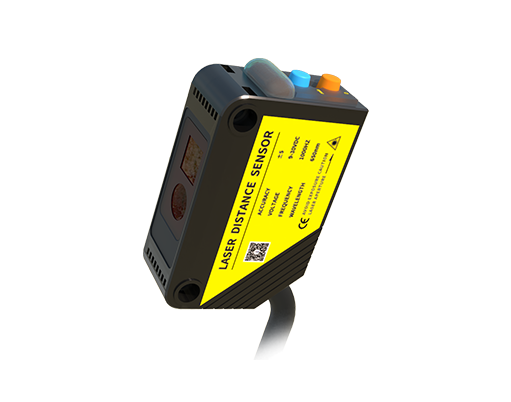
Installation and alignment, while straightforward in concept, demand attention to detail. The transmitter and receiver must be precisely aligned to ensure the beam hits the receiver's detection element. Many modern sensors feature visual alignment aids like a bright visible beam or LED indicators that show signal strength, simplifying setup. Proper mounting on stable surfaces is necessary to prevent vibration from misaligning the units over time.
In summary, laser through-beam sensors are a cornerstone technology for non-contact detection where long range, high precision, and unwavering reliability are required. Their simple principle of interrupted light belies their sophistication and critical role in enabling efficient, safe, and automated industrial processes. By understanding their operating principles, strengths, and key selection criteria, engineers and technicians can effectively deploy these powerful sensors to solve complex detection challenges.