Proximity sensors are fundamental components in modern industrial automation systems, providing non-contact detection of objects within a specified range. Their operation relies on precise logic commands that dictate how the sensor interacts with machinery and control systems. Understanding these logic commands is crucial for engineers and technicians to design, troubleshoot, and optimize automated processes effectively.
At its core, a proximity sensor generates a discrete electrical signal—typically a voltage change—when an object enters its detection field. This signal is interpreted by a programmable logic controller (PLC) or other control unit. The logic command defines the relationship between this signal and the subsequent action of the machine. The most basic logic command is a simple binary switch: the sensor output is either ON (object detected) or OFF (no object detected). This output can be configured as normally open (NO) or normally closed (NC). In a NO configuration, the circuit remains open until an object is detected, closing the circuit to send a signal. Conversely, an NC configuration maintains a closed circuit that opens upon detection.
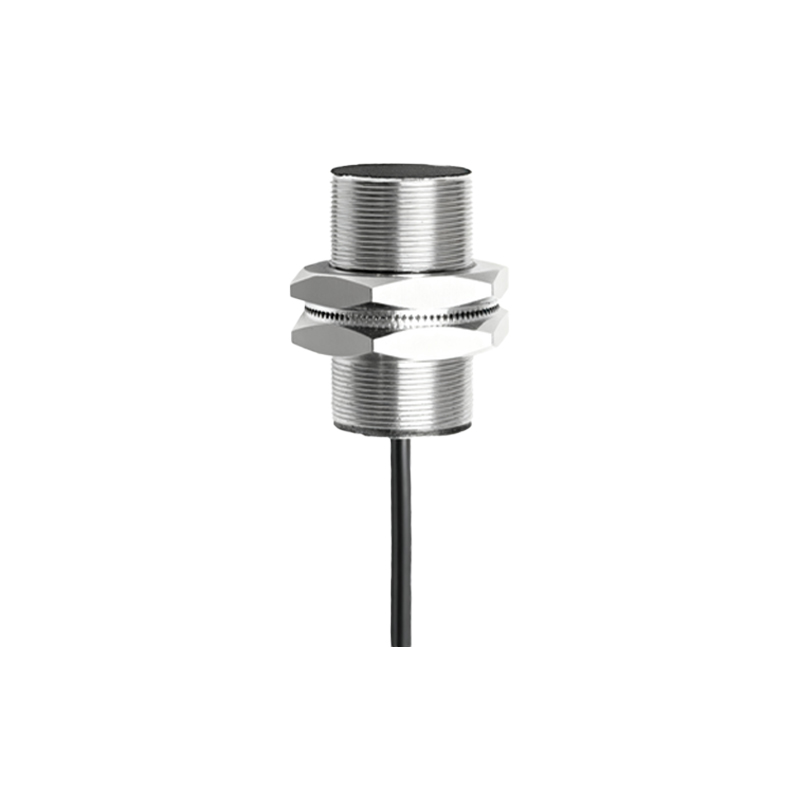
The application dictates the required logic. For example, in a conveyor belt system, a proximity sensor might be placed at a loading station. A NO logic command could be programmed so that when a package is detected (sensor ON), the conveyor motor stops, allowing for loading. After a timer delay, the motor restarts. This is a straightforward "detect-and-stop" command. More complex scenarios involve multiple sensors and conditional logic. Consider a safety interlock on a machine guard door. Two NC proximity sensors might be used. The logic command could be: "IF Sensor_A is ON (door closed) AND Sensor_B is ON (safety latch engaged), THEN enable machine operation." This AND logic ensures both conditions are met before allowing a potentially hazardous process to begin.
Another critical logic function is the latching command. A sensor might detect a transient event, but the control system needs to maintain a state until reset. For instance, in fault detection, a sensor might identify a jam. The logic command latches the fault signal ON, illuminating an alarm light and halting the line, even if the jam clears momentarily. The system then requires a manual reset command to clear the latched state. Timing commands are also integral. Commands like ON-delay or OFF-delay instruct the system to wait a predefined period before acting on the sensor's signal. An ON-delay might be used to confirm an object is stably present, not just briefly passing by, before initiating a welding cycle.
The implementation of these commands occurs within the control software. Ladder Logic, a common PLC programming language, visually represents these commands using relay-based symbology. A proximity sensor is represented as a contact. Programmers wire these contacts in series (for AND logic) or parallel (for OR logic) with other conditions to create the desired control rung. Structured Text, another IEC standard language, uses imperative statements like "IF Sensor_Input THEN Output_Coil := TRUE;" offering more flexibility for complex algorithms.
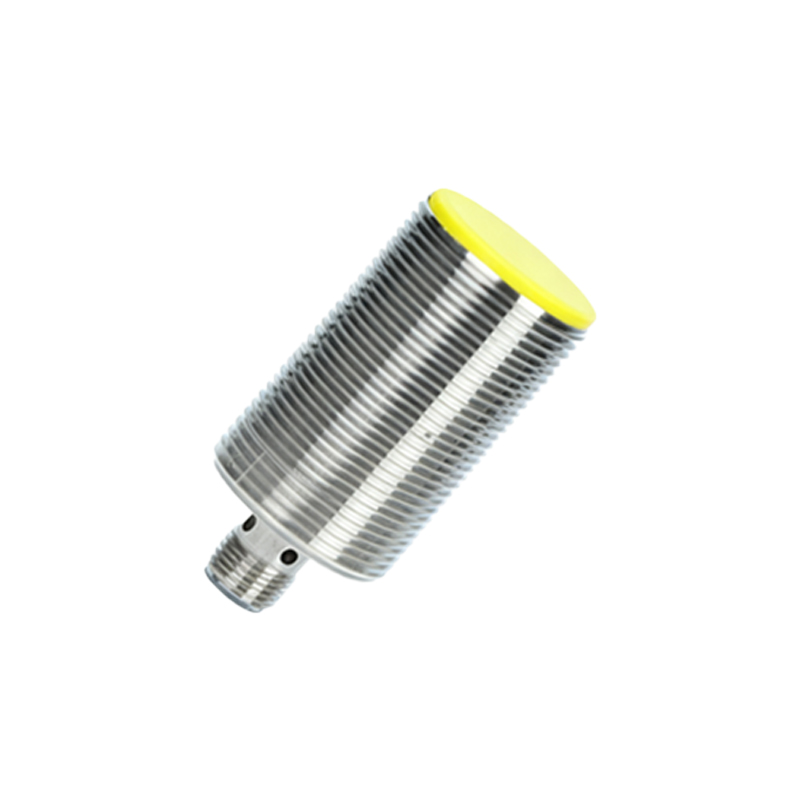
Selecting the correct logic command directly impacts system reliability and efficiency. An incorrectly configured NC/NO setting can cause a machine to behave oppositely to the intended design, leading to safety risks or production errors. Similarly, improper use of timing functions can result in missed detections or inefficient cycle times. Best practices involve thorough documentation of the sensor's role in the process flow, clear labeling of its configured state (NO/NC) on electrical diagrams, and rigorous testing during commissioning. Technicians must verify not only that the sensor detects an object but also that the resulting logic command triggers the correct sequence of machine operations under all expected conditions.
As systems evolve with Industry 4.0, the logic governing proximity sensors is becoming more sophisticated. Sensors with integrated IO-Link communication can transmit not just a binary state but also parametric data like detection range or temperature. This allows for adaptive logic commands that can adjust machine behavior based on sensor health or environmental changes, paving the way for predictive maintenance and more flexible automation. Ultimately, mastering proximity sensor logic commands is less about the hardware itself and more about crafting the precise set of digital instructions that transform a simple detection event into a reliable, intelligent, and safe automated action.