In the demanding world of bulk material handling and industrial processing, conveyor belts are the indispensable arteries, transporting everything from mined ores and aggregates to packaged goods and food products. Their continuous, reliable operation is paramount to productivity and profitability. However, one of the most catastrophic and costly failures a conveyor system can experience is a longitudinal belt tear. Left undetected, a small rip can rapidly propagate, leading to extensive belt damage, massive material spillage, prolonged downtime, and significant safety hazards. This is where the laser belt tear sensor emerges as a non-negotiable component of modern conveyor protection schemes, offering a sophisticated and highly reliable solution for early fault detection.
Unlike traditional mechanical or contact-based tear detection methods, which often suffer from wear, misalignment, and limited sensitivity, laser sensors operate on a non-contact principle. The core technology typically involves a line laser generator and a high-resolution CMOS or CCD receiver. The laser projects a precise, focused line of light across the full width of the belt's underside, directly onto the carrying surface or a dedicated reflector strip. The receiver, positioned to capture the reflected laser line, continuously monitors its pattern and intensity.
Under normal operating conditions with an intact belt, the reflected laser line appears as a consistent, unbroken image to the receiver. The moment a longitudinal tear occurs, it creates a physical gap in the belt material. This gap disrupts the path of the laser line. For sensors working on a "loss-of-light" principle, the tear causes a complete interruption of the reflected beam at the tear location. More advanced systems utilize profile analysis, where the sensor's onboard processor analyzes the exact shape and continuity of the laser line. A tear manifests as a distinct deviation or break in the line profile. This change in the optical signal is instantly detected by the sensor's intelligent electronics.
Upon detection, the sensor triggers a high-integrity alarm output, typically a relay change-of-state, which is wired directly into the conveyor's emergency stop (E-stop) circuit. This immediate action halts the conveyor drive, preventing the tear from worsening and minimizing further damage. The speed of response is critical; modern laser sensors can detect a tear and initiate a stop signal within milliseconds, often long before the damage passes the sensor's location.
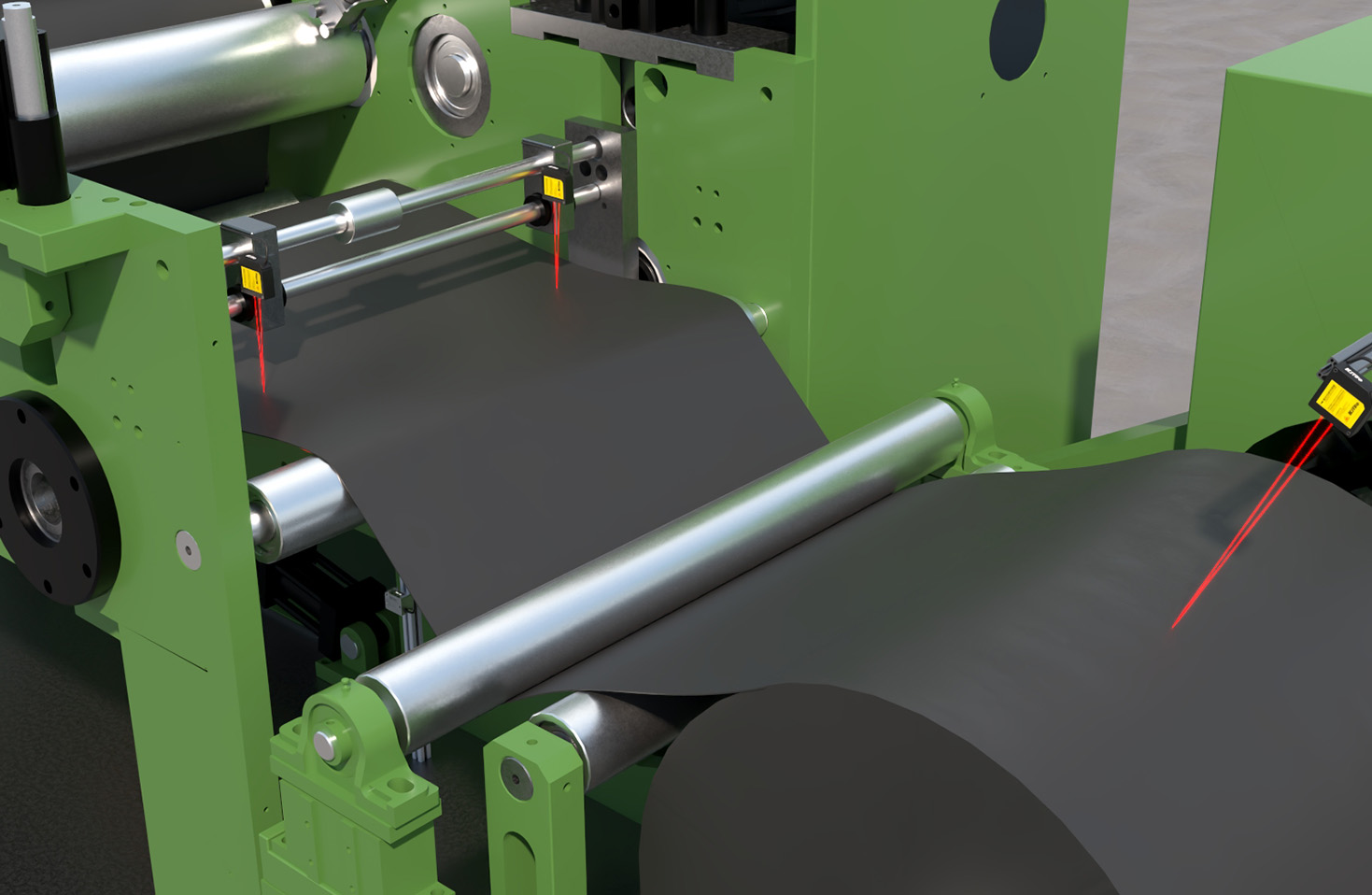
The advantages of implementing a laser-based tear detection system are substantial. First and foremost is reliability. With no moving parts and no physical contact with the belt, laser sensors are immune to the wear, dust buildup, and mechanical damage that plague contact probes or pendulum switches. Their non-contact nature also means there is zero added friction or wear on the belt itself. Sensitivity is another key benefit. These systems can reliably detect very narrow tears, often as small as 1-2 millimeters in width, providing the earliest possible warning. This high sensitivity is maintained consistently, unaffected by belt vibration or slight misalignment.
Furthermore, laser tear sensors offer exceptional immunity to environmental interference. Designed for harsh industrial settings, high-quality units feature robust, IP67-rated enclosures that resist dust, moisture, and mechanical impact. The laser wavelength and optical filters are selected to reject ambient light from plant lighting or sunlight, ensuring stable operation. Advanced models include continuous self-monitoring functions, checking for lens contamination, laser diode health, and alignment status, thereby ensuring high system availability and reducing nuisance trips.
Integration into broader control systems is seamless. Beyond the primary safety relay output, most sensors provide configurable analog or digital communication outputs (e.g., 4-20mA, Modbus, PROFIBUS, Ethernet/IP) to transmit status and diagnostic data to the plant's PLC or SCADA system. This allows for remote monitoring, historical data logging, and integration with predictive maintenance programs. The precise location of the tear along the belt can often be inferred from the sensor's position and conveyor encoder data, aiding in faster repair.
Installation and setup require careful planning. The sensor is mounted in a protected location, typically under the conveyor, just after the discharge point where the belt becomes taut and the carrying side is accessible. Alignment is crucial; the laser line must be perpendicular to the belt's direction of travel and correctly focused. Modern sensors often include alignment aids like visible pilot lasers or digital setup interfaces to simplify this process. Regular maintenance is minimal but essential, primarily involving periodic cleaning of the optical windows to ensure optimal performance.
In conclusion, the laser belt tear sensor represents a significant technological leap in conveyor protection. By providing fast, reliable, and maintenance-free detection of longitudinal rips, it acts as a critical guardian of conveyor belt integrity. Its implementation is a strategic investment that directly safeguards capital assets, enhances operational safety, prevents catastrophic downtime, and protects against enormous costs associated with extended repairs and cleanup. For any operation reliant on conveyor systems, incorporating a laser tear detection system is not merely an upgrade—it is a fundamental best practice for responsible and efficient material handling.