In the realm of industrial automation, the reliable detection of objects without physical contact is a cornerstone of efficiency and safety. Among the myriad of solutions available, the E2S-02 proximity sensor stands out as a robust and versatile component. This article provides a comprehensive technical examination of the E2S-02, detailing its operating principles, key specifications, and typical application scenarios to aid engineers and technicians in selection and deployment.
The E2S-02 is an inductive proximity sensor, a type widely favored for its durability and non-contact sensing of metallic objects. Its fundamental operation is based on the principle of electromagnetic induction. The sensor's active face contains an oscillator circuit that generates a high-frequency electromagnetic field. When a conductive metal target enters this field, eddy currents are induced on the target's surface. These eddy currents draw energy from the oscillator, causing a measurable change in its amplitude. An internal detection circuit monitors this change and triggers a solid-state output switch, signaling the presence of the object. This entire process occurs without any mechanical wear, granting the E2S-02 a significant advantage in longevity over mechanical limit switches.
Key technical specifications define the performance envelope of the E2S-02. Its sensing distance, typically rated as a nominal range (e.g., 2mm), is a critical parameter. It is essential to note that this "rated operating distance" is standardized for a reference target of mild steel. For other metals like stainless steel, aluminum, or copper, the effective sensing range will differ due to variations in conductivity and permeability; a derating factor must be applied. The sensor's housing is invariably constructed from nickel-plated brass or stainless steel, offering excellent resistance to oils, coolants, and minor physical impacts commonly found in industrial environments like machining centers, assembly lines, and material handling systems.
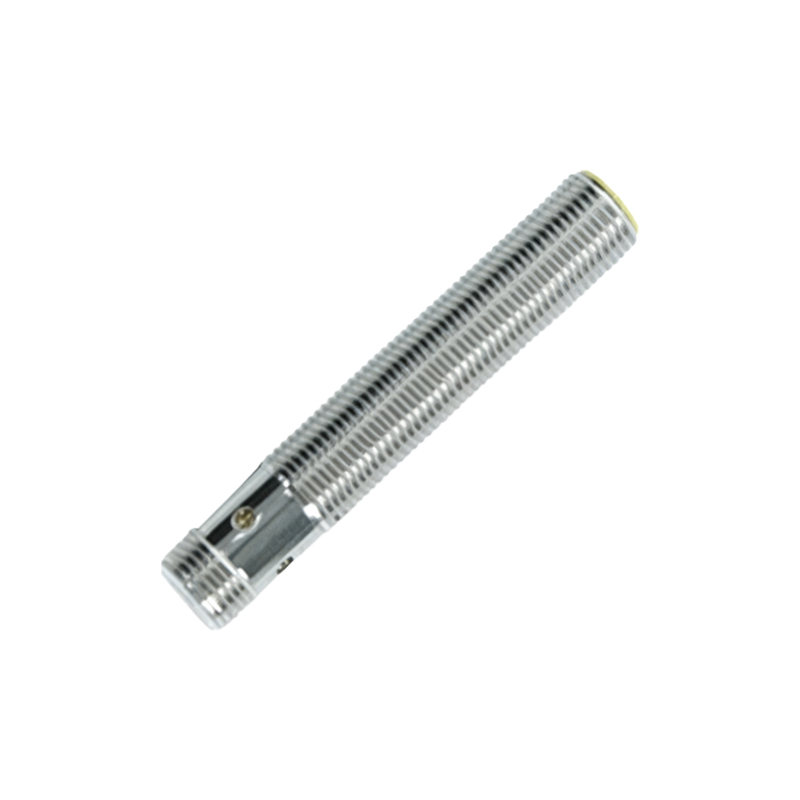
Output configuration is another vital consideration. The E2S-02 is commonly available in both NPN (sinking) and PNP (sourcing) transistor output types, allowing seamless integration with a wide range of programmable logic controllers (PLCs) and control systems. The output is typically in a normally-open (NO) or normally-closed (NC) configuration. Furthermore, many models feature a built-in LED status indicator, providing immediate visual confirmation of the switching state, which is invaluable for troubleshooting and commissioning.
Electrical characteristics are equally important. The operating voltage range, often spanning from 10-30V DC, ensures compatibility with standard industrial power supplies. Attention must be paid to the load current rating to prevent overloading the sensor's output stage. Additionally, features like short-circuit protection, reverse polarity protection, and minimal leakage current are standard in quality units, enhancing system reliability and protecting downstream components.
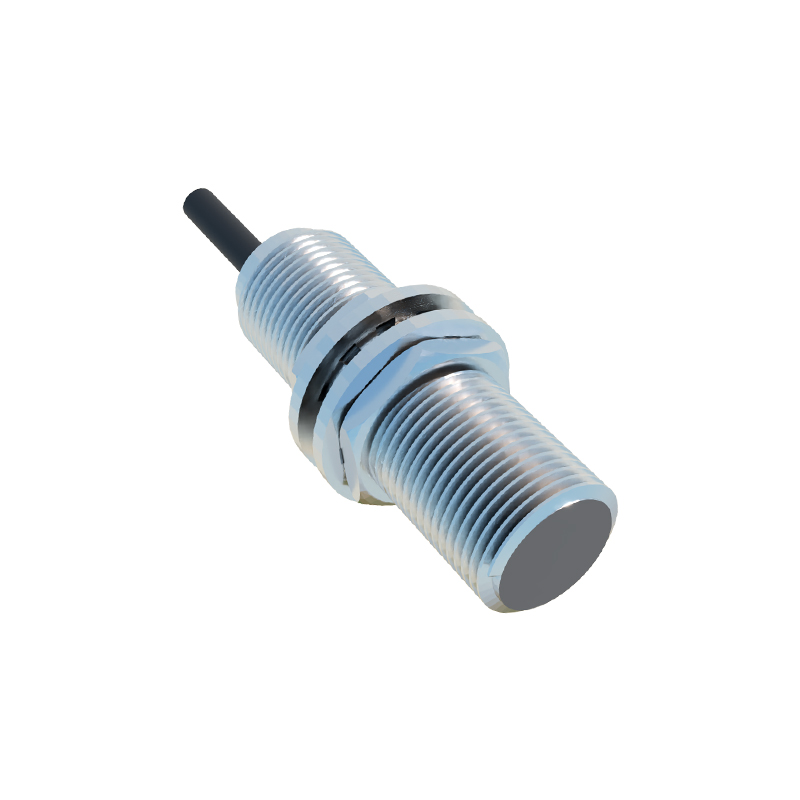
When integrating the E2S-02, several practical factors must be addressed. Mounting is straightforward, often utilizing its threaded barrel design for easy installation. However, engineers must respect the concept of "flush-mountability." Shielded (flush-mountable) models can be installed embedded in metal without affecting their sensing field, while unshielded types require a clear non-metallic zone around the sensing face to operate correctly. Environmental factors such as ambient temperature, presence of welding spatter, or strong electromagnetic interference can influence performance and may necessitate the selection of specialized variants with higher temperature ratings or weld-field immunity.
Typical applications for the E2S-02 are extensive. It is perfectly suited for position verification—confirming a cylinder has fully extended or retracted. It serves as a reliable part detector on conveyor systems, counting metallic components as they pass. In rotary applications, it can detect the teeth of a gear for speed monitoring. Its robustness makes it ideal for harsh machine tool environments where coolant and metal chips are prevalent.
In conclusion, the E2S-02 proximity sensor embodies a mature and highly effective technology for non-contact metallic object detection. Its success in application hinges on a thorough understanding of its inductive sensing principle, careful review of its specifications against the application requirements, and proper installation practices. For engineers designing or maintaining automated systems, mastering the details of components like the E2S-02 is fundamental to building reliable, efficient, and safe industrial operations. Always consult the manufacturer's specific datasheet for the exact model in use, as specifications can vary between product series and suppliers.