In the realm of industrial automation and precision measurement, German-engineered laser sensors stand as a benchmark for excellence. Renowned for their meticulous craftsmanship, innovative design, and unwavering reliability, these sensors are integral to modern manufacturing, quality control, and research applications worldwide. The foundation of this superiority lies in a deep-seated engineering culture that prioritizes precision, durability, and advanced functionality.
German laser sensors typically utilize time-of-flight (ToF), triangulation, or interferometric principles to achieve sub-micron accuracy. Companies like Sick AG, Keyence (with significant German R&D influence), and Micro-Epsilon have pioneered technologies that ensure stable performance even in challenging environments characterized by dust, extreme temperatures, or vibrations. A key innovation is the integration of sophisticated signal processing algorithms directly into the sensor hardware. This allows for real-time data analysis, filtering out ambient light noise and compensating for surface variations, thereby delivering consistently accurate distance, displacement, or profile measurements.
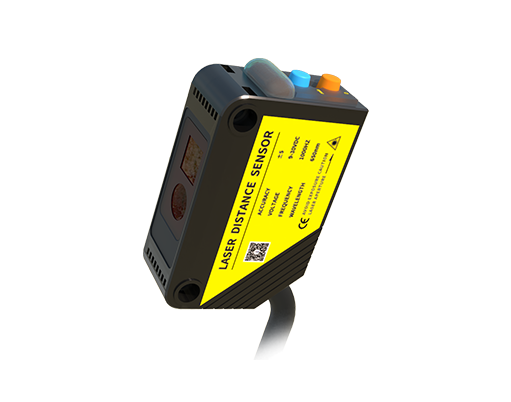
The application spectrum is vast. In automotive manufacturing, German laser sensors perform critical tasks such as robotic guidance for welding and assembly, 100% inline inspection of body panel gaps with incredible precision, and monitoring tire tread depth. The logistics sector relies on them for high-speed parcel dimensioning, palletizing, and automated guided vehicle (AGV) navigation. Furthermore, in semiconductor production, these sensors enable non-contact wafer alignment and thickness measurement, where even nanometer-level deviations are unacceptable.

Beyond traditional industrial settings, German laser sensor technology is pushing boundaries in emerging fields. In autonomous mobile robots (AMRs), advanced LiDAR sensors, often developed with core German optical and electronic expertise, create detailed 3D environment maps for safe navigation. Agricultural machinery employs them for precise planting and harvesting, while medical device manufacturers use them for ultra-precise component inspection and assembly.
The design philosophy emphasizes not just performance but also user-centric integration. Modern German laser sensors feature intuitive setup via software interfaces, robust industrial communication protocols (e.g., IO-Link, PROFINET, EtherCAT), and compact, rugged housings (often with IP67 or higher ratings). This reduces integration time and ensures long-term operational stability, minimizing total cost of ownership.
Looking ahead, the trend is toward greater miniaturization, increased intelligence at the edge, and enhanced connectivity for Industry 4.0. Future German laser sensors will likely incorporate more AI-driven functions for predictive maintenance and anomaly detection directly at the point of measurement. The fusion of laser measurement with spectroscopic analysis for material identification also presents a promising frontier.
In conclusion, German laser sensors represent the pinnacle of electro-optical measurement technology. Their development is driven by a relentless pursuit of accuracy, robustness, and innovation, making them indispensable tools for industries that cannot compromise on quality or efficiency. The continuous evolution of this technology promises to further automate and refine processes, solidifying Germany's role as a global leader in high-end sensor solutions.