In the realm of industrial automation and process control, accurate level measurement is a critical parameter for ensuring operational efficiency, safety, and product quality. Among the diverse technologies available, the laser level sensor has emerged as a premier solution for applications demanding high precision, non-contact measurement, and reliability in challenging environments. This article delves into the operational principles, key advantages, and typical applications of laser level sensors, providing a comprehensive overview for engineers and technical decision-makers.
At its core, a laser level sensor operates on the time-of-flight (ToF) principle, specifically utilizing pulsed laser technology. The sensor emits short, focused pulses of laser light towards the target surface—be it a liquid, solid, or slurry. The light is reflected back to the sensor's receiver. An internal high-speed clock precisely measures the time interval between the emission and reception of the laser pulse. Since the speed of light is a known constant, the sensor's microprocessor can accurately calculate the distance to the target using the formula: Distance = (Speed of Light × Time of Flight) / 2. This calculated distance is then used to determine the level, often presented as a percentage of span, volume, or specific engineering units via analog (4-20 mA, 0-10 V) or digital (HART, Profibus, IO-Link) outputs.
The advantages of laser level measurement are substantial and address many limitations of traditional methods like float switches, capacitive probes, or ultrasonic sensors. Firstly, laser sensors offer exceptional accuracy and resolution, often within millimeter ranges, making them ideal for applications in small tanks or where precise level control is paramount. Secondly, as a non-contact technology, the sensor does not physically interact with the medium. This eliminates issues related to material buildup, corrosion, mechanical wear, and contamination, thereby reducing maintenance needs and extending service life. Thirdly, the highly focused laser beam is largely unaffected by process conditions that plague other technologies. It is minimally influenced by dust, vapor, changing pressure, temperature variations, or even the dielectric constant, density, or conductivity of the medium. This makes lasers suitable for measuring aggressive chemicals, hot liquids (like molten metals), and materials in vacuum or high-pressure environments. Finally, laser sensors provide excellent performance for applications with obstructions, narrow vessel openings, or complex internal structures, as the small beam spot can be precisely aimed.
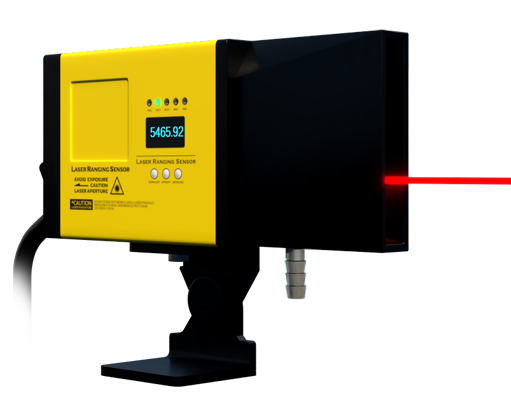
Typical industrial applications for laser level sensors are vast and varied. In the chemical and pharmaceutical industries, they are deployed to monitor levels of corrosive acids, solvents, and viscous polymers in storage and reaction vessels. The food and beverage sector utilizes them for hygienic level control of ingredients in mixing tanks and silos, thanks to their clean, non-invasive operation. In water and wastewater treatment, lasers accurately measure sludge blanket levels in clarifiers. Perhaps one of the most demanding applications is in the metals industry, where laser sensors reliably measure the level of molten steel in continuous casting molds and furnaces, withstanding extreme temperatures. Furthermore, they are increasingly used for inventory management of bulk solids like plastic pellets, grains, and powders in silos, where their ability to ignore dust is a significant benefit.
When selecting a laser level sensor, several factors must be considered. The choice of laser class (typically Class 2 for visible red lasers) is important for safety, though most industrial sensors are eye-safe. The material and design of the housing (often stainless steel or specialized plastics) must be compatible with the installation environment, considering factors like IP/NEMA ratings for ingress protection. The maximum measuring range, beam angle, and the minimum blind zone are critical specifications. Additionally, modern sensors come with sophisticated software for configuration, diagnostics, and compensation, often accessible via Bluetooth or integrated web servers, simplifying setup and integration into Industrial IoT (IIoT) networks.

In conclusion, laser level sensors represent a sophisticated and highly effective measurement solution at the forefront of industrial instrumentation. Their combination of pinpoint accuracy, robust non-contact operation, and resilience to harsh process conditions makes them an indispensable tool for engineers seeking to optimize control loops, enhance safety, and reduce operational downtime. As industrial processes become more automated and data-driven, the role of precise, reliable sensors like laser level devices will only continue to grow in importance, solidifying their position as a key enabling technology for modern industry.