In the rapidly evolving landscape of consumer electronics and smart toys, laser distance sensors have transitioned from high-end industrial tools to accessible components for educational and recreational projects. As an electrical engineer with extensive experience in sensor integration, I find the miniaturization and cost reduction of these modules particularly fascinating. This article delves into the operational principles, key specifications, and practical implementation of toy-grade laser distance sensors, providing a technical yet accessible overview for fellow engineers and advanced hobbyists.
At its core, a toy laser distance sensor operates on the Time-of-Flight (ToF) principle, a simplified version of technologies used in automotive LiDAR and surveying equipment. The module emits a modulated infrared laser pulse towards a target. A photodetector on the sensor then captures the reflected light. An internal microcontroller calculates the distance by measuring the phase shift between the emitted and received signals. It's crucial to understand that these are typically Class 1 laser products, meaning they are eye-safe under normal operating conditions, a non-negotiable safety standard for any toy application.
When selecting a sensor for a project, several key parameters demand scrutiny. First is the measuring range. Toy sensors commonly offer ranges from a few centimeters up to 2-5 meters, sufficient for indoor robotic navigation or interactive displays. Accuracy and resolution are next; expect accuracies in the range of ±1% to ±5% of the reading. For instance, a sensor rated for 2 meters might have an error margin of ±2cm to ±10cm. Update rate, or sampling frequency, is critical for dynamic applications. Rates from 10Hz to 100Hz are typical, allowing for real-time obstacle avoidance in simple robots.

The interface is where engineering decisions come into play. The majority of these compact modules communicate via I2C or UART serial protocols, making them exceptionally easy to interface with popular microcontrollers like Arduino, Raspberry Pi Pico, or ESP32. A standard 3.3V or 5V power supply is usually sufficient. The physical package is often a small PCB, sometimes as compact as 20mm x 20mm, designed for easy mounting on mobile platforms.
Practical implementation involves more than just wiring. Signal integrity is paramount. Engineers must consider ambient light interference, as strong infrared sources (like sunlight) can saturate the receiver. Many modules incorporate optical filters and sophisticated algorithms to mitigate this. The reflectivity and color of the target surface also significantly affect performance. A matte black surface absorbs much of the laser light, reducing the maximum effective range, while a white or reflective surface yields the best results. Calibration against a known distance is a recommended step in any serious project to account for module-to-module variances.
From an application perspective, the possibilities are vast. Beyond simple distance measurement, these sensors enable advanced functionalities. They can be used for gesture recognition in interactive toys by tracking hand movements in one dimension. In educational robotics, they form the backbone of slam mapping algorithms, allowing a robot to build a rudimentary map of its environment. They are also integral to creating "invisible" touchless interfaces, where a wave of the hand triggers an action.
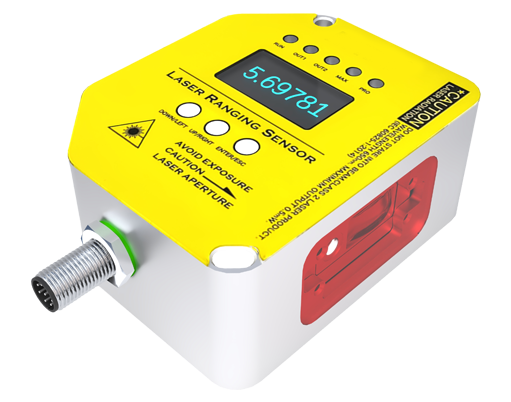
However, engineers must be aware of limitations. The narrow beam, while precise, means the sensor only measures a single point. For area coverage, an array or a scanning mechanism is required. Performance degrades in direct sunlight, and transparent surfaces like glass can cause erroneous readings as the laser may pass through or reflect from an unexpected depth.
In conclusion, toy laser distance sensors represent a remarkable democratization of precise measurement technology. Their low cost, ease of integration, and respectable performance open doors for innovation in prototyping, STEM education, and consumer gadgetry. For the practicing engineer, they offer a quick path to integrating robust ranging capabilities. For the hobbyist, they provide a gateway into the world of active sensing. As these modules continue to improve in performance and drop in price, we can expect them to become as ubiquitous in maker projects as the humble ultrasonic sensor is today, but with far greater precision and reliability for specific use cases.