In the realm of industrial automation, power generation, aerospace, and advanced materials processing, the demand for reliable temperature measurement in extreme environments has never been greater. Traditional contact sensors, such as thermocouples or resistance temperature detectors (RTDs), often face limitations in harsh conditions involving high temperatures, corrosive atmospheres, or moving components. This is where high-temperature laser sensors, specifically laser pyrometers or infrared thermometers, emerge as a critical technological solution. These non-contact devices measure temperature by detecting the thermal radiation emitted from a target surface, offering unparalleled precision and durability where conventional methods falter.
The fundamental principle behind laser high-temperature sensors is based on Planck's radiation law. All objects with a temperature above absolute zero emit infrared radiation. The intensity and spectral distribution of this radiation are directly correlated to the object's temperature. A laser pyrometer focuses on a specific point or area using a visible laser sighting beam for targeting. It then collects the infrared energy emitted from that spot through its optical system. The sensor's detector, typically a photodiode or thermopile, converts this radiant energy into an electrical signal. This signal is processed using sophisticated algorithms that account for the target's emissivity—a material-specific property defining how efficiently it emits thermal radiation—to calculate and display the precise temperature. The integrated laser ensures accurate targeting, which is crucial for measuring small or specific features on a component.
The advantages of utilizing laser-based sensors for high-temperature applications are substantial. Firstly, the non-contact nature eliminates sensor degradation, contamination, or damage from the measured surface. This is vital in applications like monitoring molten metal in foundries, where temperatures can exceed 1500°C, or measuring turbine blades in jet engines during operation. Secondly, they provide extremely fast response times, often in milliseconds, enabling real-time process control and early detection of thermal anomalies that could lead to equipment failure. Furthermore, they can measure moving objects, such as rotating kiln shells or conveyor belts carrying hot materials, without any physical interference. Their ability to measure small or inaccessible targets through viewing windows adds another layer of operational flexibility.

Key specifications define the performance of a high-temperature laser sensor. The temperature range is paramount, with advanced models capable of measuring from approximately 250°C up to 3000°C or higher. Spectral response is another critical factor; sensors are designed for specific wavelength bands (e.g., short-wave, medium-wave) to optimize accuracy for certain materials and temperature ranges. Optical resolution, defined by the distance-to-spot-size ratio (e.g., 100:1), determines how small a target can be accurately measured from a given distance. Emissivity adjustment, either fixed or variable, is essential for compensating the material properties of the target. Robust housing with air or water cooling purging systems is often required to protect the sensor's electronics from ambient heat in furnace or hot cell installations.
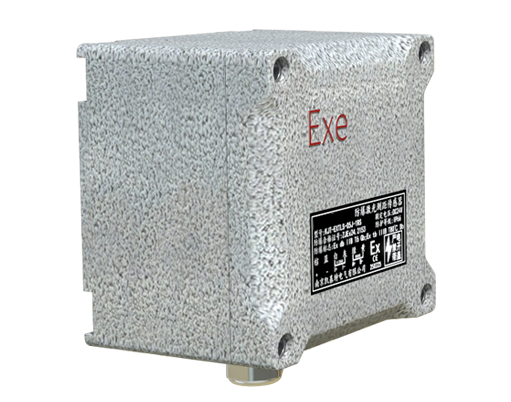
In practical industrial settings, these sensors are indispensable. In the steel industry, they continuously monitor the temperature of slabs, billets, and rolls to optimize rolling processes and ensure product quality. In semiconductor manufacturing, they provide precise wafer temperature control during rapid thermal processing. In aerospace research and testing, they map the temperature distribution on rocket nozzle throats and heat shield materials. In glass manufacturing, they control the temperature of molten glass in forehearths to ensure proper viscosity and forming. The data provided by these sensors are integral to automated control systems, enhancing energy efficiency, improving product consistency, and ensuring operational safety.
Despite their robustness, successful implementation requires careful consideration. Accurate measurement depends on a clear line of sight to the target. Atmospheric absorption due to steam, dust, or smoke can attenuate the infrared signal, potentially requiring specialized filters or purging. As mentioned, correct emissivity setting is non-negotiable for accuracy; unknown or varying emissivity remains a primary source of error. Regular maintenance, including lens cleaning and verification checks against a reference source, is necessary to sustain long-term performance. Modern sensors often come with sophisticated software for data logging, analysis, and integration into plant-wide networks.
The future of high-temperature laser sensing is geared towards greater intelligence and integration. Developments include two-dimensional thermal imaging pyrometers for area temperature profiling, multispectral sensors that self-compensate for emissivity variations, and enhanced connectivity for Industry 4.0 applications via Industrial Internet of Things (IIoT) protocols. These advancements will further solidify the role of laser pyrometers as the eyes of industry in the most punishing thermal environments, driving innovation in manufacturing and materials science. Their ability to deliver accurate, non-contact temperature data in real-time is not merely a convenience but a cornerstone of modern industrial efficiency and safety protocols in extreme-condition applications.