In the realm of industrial automation, robotics, and consumer electronics, proximity sensing plays a pivotal role in enabling devices to interact with their environment without physical contact. Among the various technologies employed for this purpose, infrared (IR) proximity sensors stand out for their reliability, cost-effectiveness, and versatility. This article delves into the fundamental working principle of infrared proximity sensors, exploring their components, operational modes, and key considerations for application.
At its core, an infrared proximity sensor operates by emitting an infrared light beam and detecting its reflection from a nearby object. Infrared light, with wavelengths typically in the range of 850 nm to 950 nm, is invisible to the human eye but can be efficiently generated and detected by semiconductor components. The basic system comprises three essential elements: an IR emitter (usually an infrared Light Emitting Diode or IR LED), an IR detector (typically a photodiode or phototransistor), and supporting signal processing circuitry.
The operational principle can be broken down into a straightforward sequence. First, the IR emitter is driven by a modulated current, causing it to emit pulses of infrared light. Modulation, often at a specific frequency (e.g., 38 kHz), is crucial. It allows the sensor to distinguish the reflected signal from ambient infrared noise, such as sunlight or indoor lighting, which generally contains constant or differently modulated IR components. The emitted IR radiation propagates through the air. If an object is present within the sensor's detection range, a portion of this radiation is reflected back towards the sensor.
The IR detector, positioned adjacent to the emitter, is responsible for capturing this reflected light. Photodiodes are commonly used for their fast response and linearity. When infrared photons strike the active area of the photodiode, they generate a small photocurrent. This current is extremely weak, especially for distant objects or low-reflectivity surfaces. Therefore, the subsequent signal processing stage is critical. The signal from the detector is first amplified. Then, using filters tuned to the modulation frequency of the emitter, the circuit isolates the reflected signal from background noise. The strength of this processed signal is proportional to the intensity of the reflected IR light.
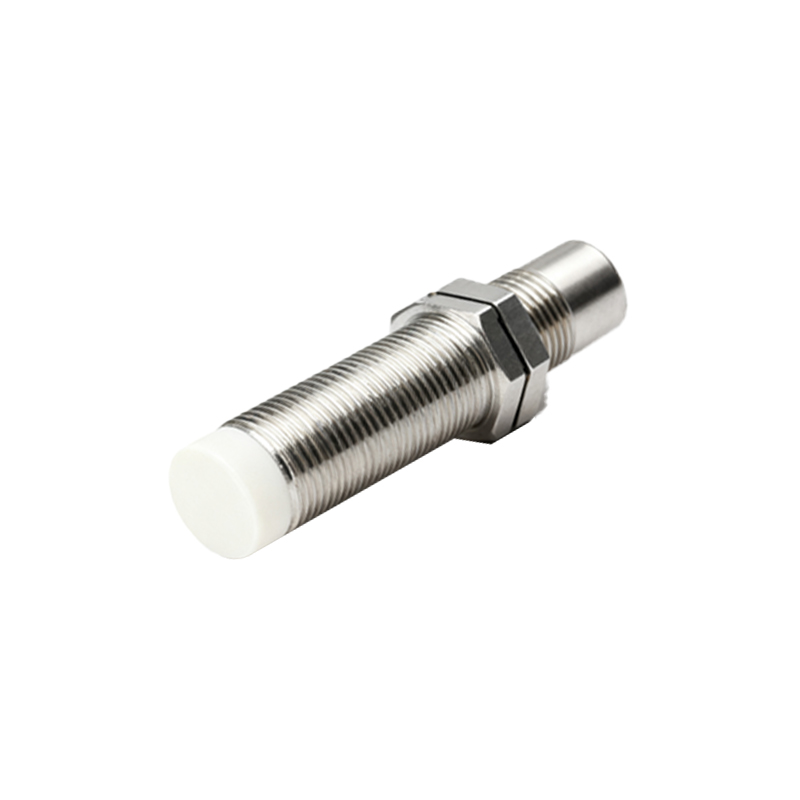
This intensity is inversely related to the distance to the target object, following an inverse-square law approximation: the received signal strength decreases roughly with the square of the distance. Furthermore, it is directly affected by the object's reflectivity (albedo). A white, reflective surface will return a much stronger signal than a dark, absorptive one at the same distance. The final output of the sensor can be an analog voltage proportional to distance/reflectivity or a digital signal that triggers when the reflected signal exceeds a certain threshold, indicating the presence of an object within a predefined range.
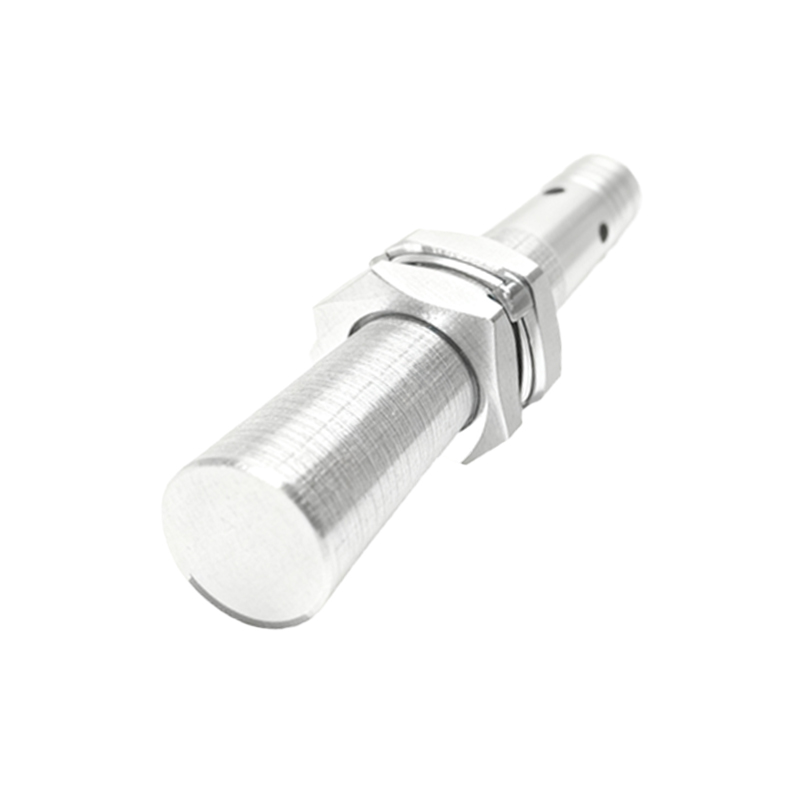
There are two primary configurations for the placement of the emitter and detector. In the diffuse (or reflective) mode, which is the most common for proximity sensing, both emitter and detector are housed on the same face of the sensor. They rely on the reflection from the target object. In the thru-beam (or opposed) mode, the emitter and detector are placed opposite each other. Detection occurs when an object breaks the beam between them. While thru-beam offers longer range and is less sensitive to object color, the diffuse mode is more compact and simpler to install for proximity detection applications.
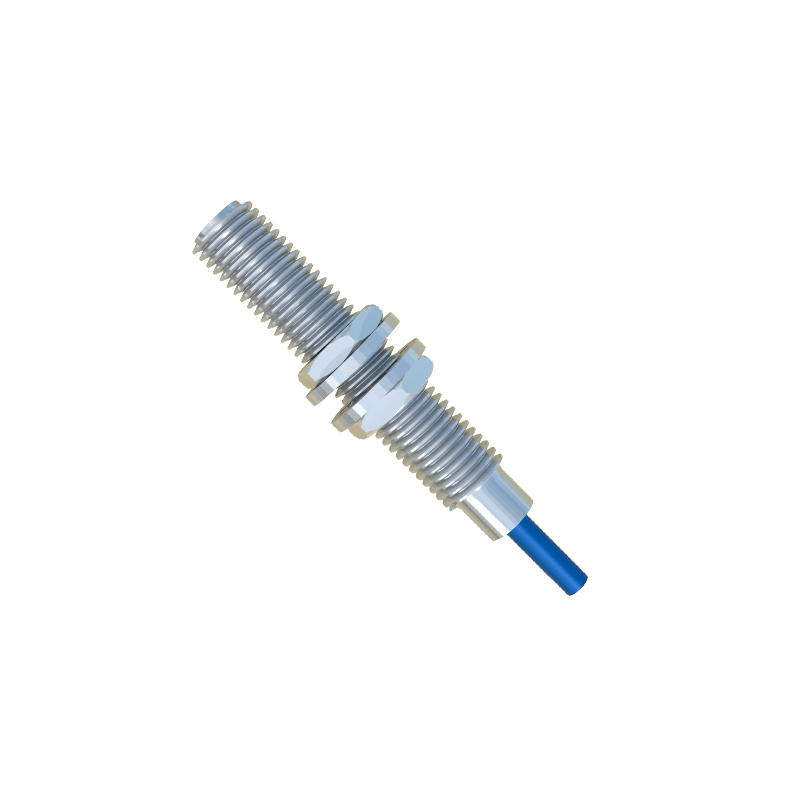
Key performance parameters for infrared proximity sensors include detection range, response time, and beam pattern. The range is influenced by the power of the IR LED, the sensitivity of the detector, and the target's reflectivity. Response time is typically very fast, in the order of milliseconds. The beam pattern, determined by lenses or apertures, defines the sensing field's shape and angle; a narrow beam is used for precise detection, while a wider beam is suitable for area presence sensing.
Despite their advantages, IR proximity sensors have limitations. They can be affected by highly absorptive materials (like black rubber) and environmental factors such as dust, fog, or direct sunlight interference, although modulation techniques mitigate the latter. They also cannot typically distinguish between different objects or provide precise dimensional data like a laser rangefinder.
In conclusion, the infrared proximity sensor is a robust and elegant solution for non-contact detection. Its principle of modulated emission and synchronous detection of reflected infrared light provides a effective means to sense presence, approximate distance, or count objects. From automatic faucets and hand dryers to obstacle avoidance in robots and screen blanking in smartphones, understanding this fundamental technology is key to selecting and implementing the right sensor for countless engineering applications across diverse industries.