In modern industrial automation, precision hole detection is a critical process that directly impacts manufacturing quality, efficiency, and safety. Laser sensors have emerged as the leading solution for this task, offering unparalleled accuracy, speed, and reliability compared to traditional mechanical or vision-based methods. This article delves into the core principles, key advantages, and practical applications of laser sensor technology in hole detection, providing a comprehensive overview for engineers and industry professionals.
At its core, a laser sensor for hole detection operates by emitting a focused beam of coherent light toward the target surface. When this beam encounters an edge, such as the perimeter of a hole, it generates a distinct signal based on the interruption or reflection pattern. Advanced models utilize triangulation or time-of-flight principles to measure distance and profile with micron-level precision. For instance, a triangulation sensor projects a laser spot onto the surface, and a receiver lens captures the reflected light at an angle; the position of the spot on the receiver shifts when the beam crosses a hole boundary, enabling precise edge detection. This method is highly effective for detecting holes in materials ranging from metals and plastics to composites, even in challenging environments with vibration or variable surface finishes.
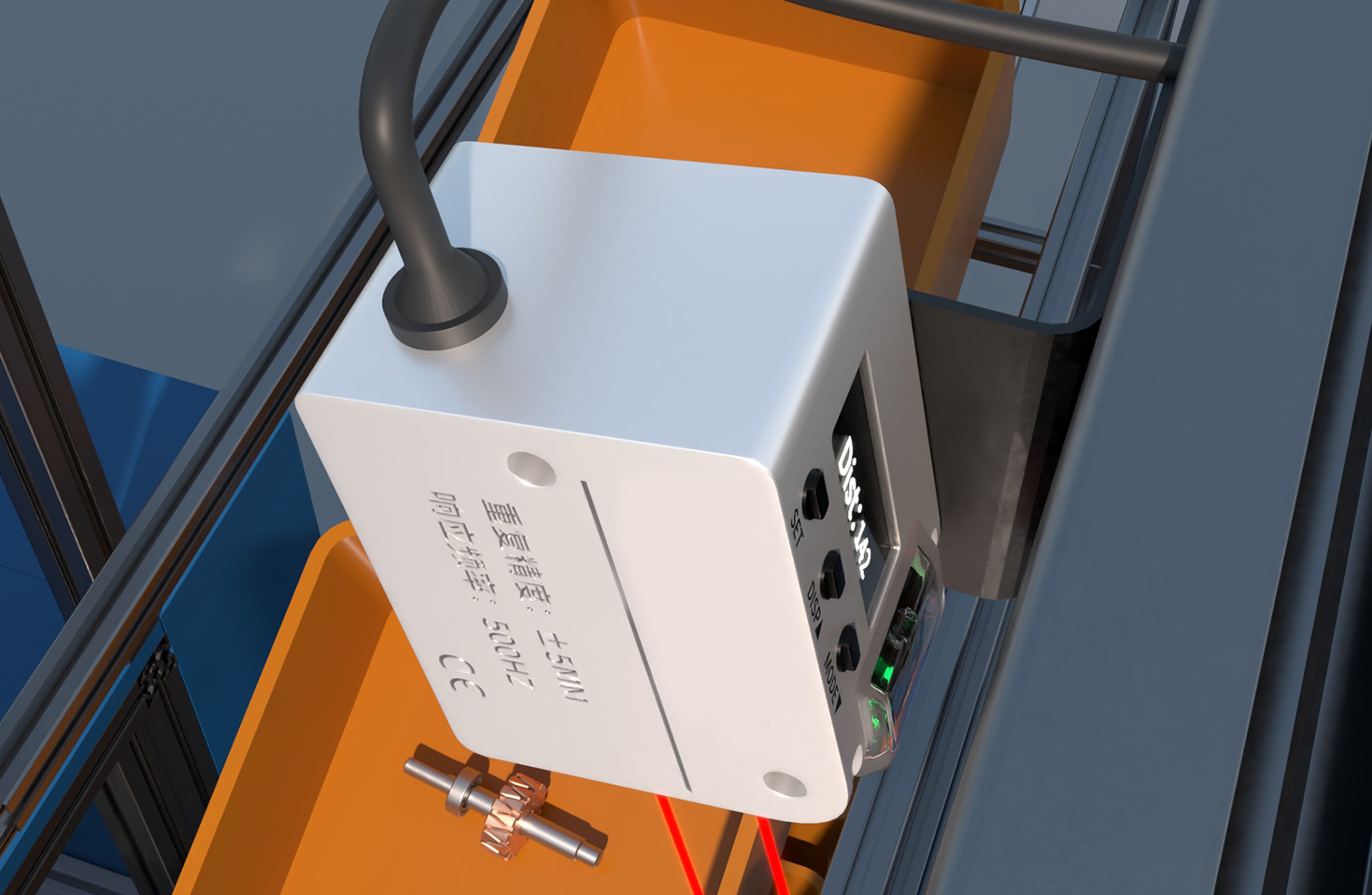
The advantages of laser sensors in this domain are manifold. First, they offer non-contact measurement, eliminating wear and tear and preventing damage to delicate workpieces. This is particularly vital in industries like aerospace or electronics, where surface integrity is paramount. Second, laser sensors provide extremely high resolution and repeatability, capable of detecting holes as small as a few micrometers in diameter. They can operate at high speeds, making them suitable for inline inspection in fast-paced production lines—such as automotive assembly or semiconductor manufacturing—where thousands of parts are processed hourly. Third, these sensors are versatile, adaptable to various hole types including through-holes, blind holes, and complex geometries. With integrated software algorithms, they can differentiate between holes, slots, or other features, reducing false positives and enhancing overall system robustness.
Environmental resilience is another standout feature. Many industrial laser sensors are designed with IP67 or higher ratings, ensuring reliable performance in dusty, humid, or oily conditions. They are often immune to ambient light interference, thanks to modulated laser signals and advanced filtering. This makes them ideal for harsh settings like metal stamping plants or outdoor construction equipment fabrication. Additionally, modern sensors come with user-friendly interfaces and connectivity options (e.g., IO-Link, Ethernet/IP) for seamless integration into Industry 4.0 frameworks, enabling real-time data logging, predictive maintenance, and process optimization.
Practical applications span numerous sectors. In automotive manufacturing, laser sensors verify the presence and dimensions of bolt holes in engine blocks or chassis components, ensuring proper assembly and structural safety. In electronics, they inspect microvia holes in printed circuit boards (PCBs) for defects like misalignment or insufficient plating. The packaging industry uses them to detect perforations in films or containers, while in heavy machinery, they monitor wear holes in hydraulic systems. Case studies show that implementing laser-based hole detection can reduce scrap rates by up to 30% and increase throughput by 20%, delivering a rapid return on investment.
When selecting a laser sensor for hole detection, engineers should consider factors such as hole size, material reflectivity, required accuracy, and environmental conditions. For small, high-precision holes, a blue laser sensor may be preferred due to its shorter wavelength and better focus. For larger holes or uneven surfaces, a sensor with a larger spot size and adaptive thresholding might be optimal. Calibration and alignment are crucial; regular maintenance ensures long-term stability. Emerging trends include the integration of artificial intelligence for adaptive learning and multi-sensor arrays for 3D hole mapping, pushing the boundaries of what's possible in industrial metrology.
In conclusion, laser sensor technology represents a transformative tool for precision hole detection, driving quality and efficiency across industries. By leveraging its non-contact nature, high speed, and adaptability, manufacturers can achieve tighter tolerances and smarter production processes. As innovation continues, these sensors will play an even greater role in enabling autonomous, data-driven factories of the future.