In the rapidly evolving landscape of industrial automation and precision measurement, laser sensors have become indispensable tools. Their applications span from quality control and object detection to distance measurement and alignment, driving demand for high-performance, reliable units. For engineers, system integrators, and procurement specialists, the critical question often is: which company produces the best laser sensors? The answer is nuanced, as "best" is highly dependent on specific application requirements, environmental conditions, and budget constraints. This guide provides a professional analysis of leading manufacturers, key selection criteria, and industry trends to inform your decision.
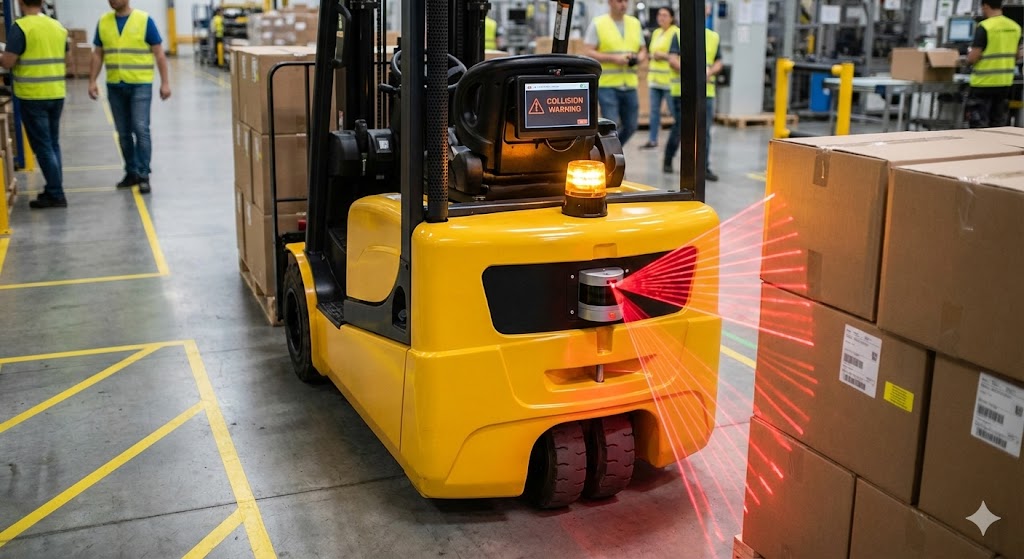
Several established companies dominate the laser sensor market, each with distinct strengths. Keyence Corporation is frequently cited for its innovation and user-friendly design. Their laser displacement sensors, such as the LJ-V series, offer exceptional accuracy, high-speed response, and robust software for data analysis. Keyence excels in providing comprehensive solutions with strong technical support, making them a top choice for complex inspection tasks in electronics and automotive manufacturing. SICK AG is another powerhouse, renowned for its ruggedness and reliability in harsh industrial environments. SICK's laser sensors are engineered for durability, with high ingress protection ratings and resistance to vibration, temperature fluctuations, and ambient light interference. Their portfolio is vast, covering safety scanners, distance sensors, and measurement devices, ideal for logistics, material handling, and heavy industry.
Omron Corporation offers a compelling blend of precision and integration capabilities. Omron's laser sensors are often praised for their seamless connectivity within broader factory automation ecosystems. Their E3Z-LS and FQ2 series provide stable detection and precise measurement, supported by intuitive setup tools. For applications demanding extreme precision, such as semiconductor fabrication or scientific research, Micro-Epsilon is a standout. This German manufacturer specializes in high-end, non-contact measurement technology, delivering sub-micrometer accuracy with their laser triangulation and confocal chromatic sensors. While often at a higher price point, their performance in challenging measurement scenarios is unparalleled.
Panasonic Corporation and Banner Engineering also command significant market share. Panasonic's laser sensors are known for consistent performance and value, suitable for a wide range of standard applications. Banner Engineering, particularly its Q4X series, is celebrated for its versatility and toughness in dirty or wet conditions, often used in packaging and food processing industries. Emerging players and specialized firms continue to innovate, offering competitive alternatives in niche segments.
Selecting the "best" company requires a methodical evaluation of technical parameters. First, define the core need: Is it for precise displacement measurement, simple presence detection, profile scanning, or safety guarding? Key specifications include measurement range, resolution, repeatability, linearity, and response time. Environmental factors are equally critical; consider the operating temperature range, potential exposure to dust, water, oils, or intense ambient light. The sensor's housing material and IP rating must match the installation environment.
Integration and communication protocols are vital for modern smart factories. Evaluate compatibility with existing PLCs, industrial networks (EtherNet/IP, PROFINET, EtherCAT), and the ease of data acquisition and configuration. Software support, including diagnostic tools and programming interfaces, can significantly reduce commissioning time and lifecycle costs. Furthermore, assess the supplier's technical support, global service network, and lead times for replacement parts. A sensor with slightly superior specs but poor local support can become a liability.
The industry is witnessing trends toward miniaturization, increased intelligence, and enhanced connectivity. Sensors with integrated IO-Link functionality are gaining traction, enabling detailed parameter setting, condition monitoring, and predictive maintenance data directly from the device. Multi-point measurement and profile scanning capabilities are also advancing, allowing single sensors to perform tasks that previously required arrays.
In conclusion, there is no single "best" company for all laser sensor applications. Keyence leads in advanced, high-performance inspection systems. SICK is the go-to for robustness in demanding environments. Micro-Epsilon sets the benchmark for ultra-high precision. Omron and Panasonic excel in integrated automation solutions, while Banner offers reliable versatility. The optimal choice emerges from a careful analysis of your technical specifications, operational environment, and total cost of ownership. Engaging with distributors for product demos and sample testing under real conditions remains the most reliable path to selecting the ideal laser sensor partner for your project.