In the realm of industrial manufacturing, laser cutting stands as a pinnacle of precision and efficiency. However, the consistency and accuracy of laser cutting processes heavily rely on the integration of sophisticated sensor contact systems. These systems, often overlooked, serve as the critical interface between the laser equipment and the workpiece, ensuring optimal performance and minimizing material waste. This article delves into the technical intricacies of sensor contacts in laser cutting applications, exploring their design, functionality, and impact on overall operational excellence.
Sensor contacts in laser cutting primarily function to detect the precise position of the material surface. This detection is paramount for maintaining the correct focal distance of the laser beam. A deviation of even a few micrometers can lead to suboptimal cuts, increased energy consumption, and potential damage to both the material and the laser optics. Modern sensor contacts employ technologies such as capacitive, inductive, or optical sensing to achieve high-resolution measurements. Capacitive sensors, for instance, are highly effective for non-conductive materials like plastics or composites, while inductive sensors excel with metallic substrates. Optical sensors, leveraging laser triangulation or confocal chromatic principles, offer exceptional accuracy for complex surfaces and reflective materials.
The design of these sensor contacts must account for harsh industrial environments. Factors such as high temperatures generated during cutting, airborne particulates (like metal dust or vapor), and electromagnetic interference from nearby machinery can degrade sensor performance. Engineers address these challenges by incorporating robust housing materials, such as ceramic or specialized alloys, and implementing advanced signal filtering algorithms. Furthermore, the integration of self-cleaning mechanisms or protective air curtains helps maintain sensor integrity over prolonged operation, reducing maintenance downtime and ensuring consistent data acquisition.
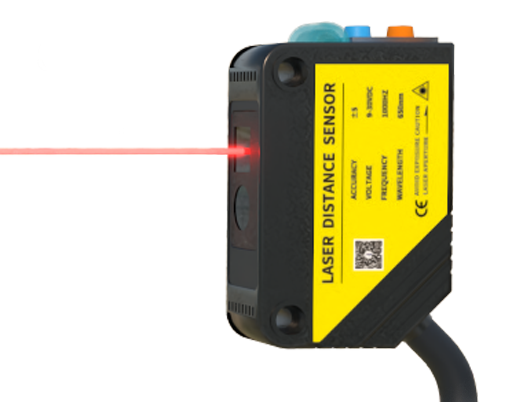
A key advancement in sensor contact technology is the development of real-time adaptive control systems. These systems continuously monitor sensor feedback and dynamically adjust laser parameters, such as power output and cutting speed, to accommodate material inconsistencies or thermal distortions. For example, when cutting thick or warped metal sheets, the sensor detects variations in surface height and instantly recalibrates the laser head's trajectory. This capability not only enhances cut quality but also extends the lifespan of consumable components like nozzles and lenses by preventing collisions or excessive thermal stress.
The implementation of Industry 4.0 principles further elevates the role of sensor contacts. By connecting sensors to networked platforms via protocols like IO-Link or Ethernet/IP, manufacturers can collect vast datasets on cutting performance. This data enables predictive maintenance models, where algorithms analyze sensor trends to forecast potential failures before they occur. Additionally, machine learning algorithms can optimize cutting paths based on historical sensor data, reducing cycle times and material usage. Such smart sensor ecosystems contribute to sustainable manufacturing practices by minimizing energy waste and scrap generation.
In practice, selecting the appropriate sensor contact involves a thorough analysis of application-specific requirements. Factors to consider include material type, thickness, desired cutting speed, and environmental conditions. For high-speed cutting of thin sheets, a fast-response optical sensor might be ideal, whereas for heavy-duty plate cutting, a ruggedized inductive sensor with high immunity to interference may be preferable. Collaboration between sensor manufacturers and laser system integrators is essential to tailor solutions that meet these diverse needs, often involving custom calibration and testing under simulated production scenarios.
Looking ahead, emerging trends such as the integration of artificial intelligence for anomaly detection and the use of quantum sensing for nanometer-level precision promise to redefine the capabilities of laser cutting sensors. As materials become more advanced and tolerances tighter, the evolution of sensor contact technology will remain a cornerstone of innovation in the electrical and manufacturing sectors. By prioritizing robust, intelligent sensor systems, industries can achieve unprecedented levels of accuracy, efficiency, and reliability in laser cutting operations, driving forward the next generation of smart fabrication.