Infrared (IR) proximity sensors have become indispensable components in modern industrial automation, consumer electronics, and safety systems. Their ability to detect the presence, absence, or distance of an object without physical contact makes them a versatile and reliable solution across numerous sectors. This article explores the core applications and emerging trends of these sensors, highlighting their operational principles and industry-specific implementations.
At their core, IR proximity sensors function by emitting an infrared light beam and measuring the reflection. An IR LED transmits light, which, upon striking an object within its detection range, is reflected back to a photodiode or phototransistor receiver. The sensor's circuitry then analyzes the intensity or time-of-flight of the returned signal to determine proximity. This non-contact detection method is crucial for applications requiring hygiene, precision, or where physical wear is a concern.
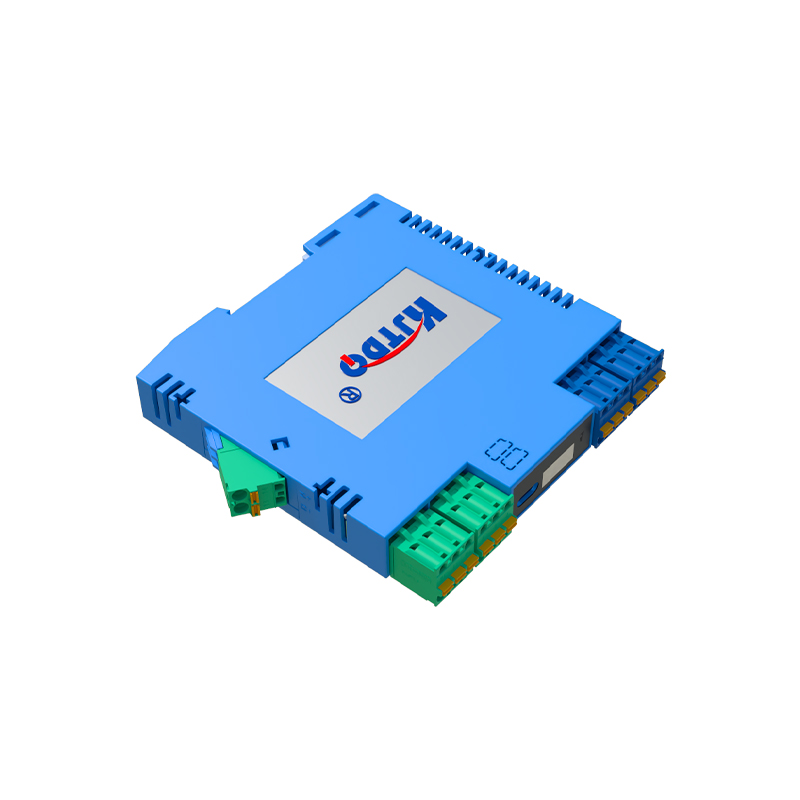
In the realm of Industrial Automation and Robotics, IR proximity sensors are fundamental. They are deployed for precise object detection on assembly lines, ensuring components are correctly positioned for robotic arms. In automated guided vehicles (AGVs) and mobile robots, these sensors provide essential collision avoidance, allowing for safe navigation in dynamic warehouse environments. They are also used for counting products on conveyor belts and detecting jams, contributing to seamless production flow and predictive maintenance.
The Consumer Electronics industry heavily relies on miniaturized IR proximity sensors. The most ubiquitous example is in smartphones and tablets, where a sensor detects when the device is held to a user's ear during a call, automatically turning off the display to save power and prevent accidental touch inputs. Similarly, in smart home devices like automatic soap dispensers, faucets, and hand dryers, IR sensors enable touch-free operation, promoting hygiene and convenience. They are also integral to interactive displays and gesture recognition systems in gaming consoles and smart TVs.
Automotive Safety and Comfort systems have integrated IR proximity sensors to enhance driver and pedestrian safety. They are key components in blind-spot detection (BSD) and rear cross-traffic alert (RCTA) systems, warning drivers of approaching vehicles. Inside the cabin, they can monitor driver alertness by detecting head position or enable gesture control for infotainment systems, reducing distraction. Advanced driver-assistance systems (ADAS) use IR arrays for more complex object and pedestrian detection, especially in low-light conditions.
Security and Surveillance applications benefit from the discreet nature of IR detection. Motion-activated security lights and alarms use passive infrared (PIR) sensors to detect the heat signature of an intruder, triggering a response. In access control systems, IR sensors can detect a person approaching a secure door, activating a keypad or camera. They are also used in perimeter protection systems to create an invisible detection field.
Emerging and niche applications continue to expand the sensor's utility. In the Healthcare and Medical field, IR sensors are used in liquid level detection for infusion pumps, contactless thermometers, and patient monitoring systems to detect movement or presence without intrusion. Building Automation utilizes them for occupancy sensing in lighting and HVAC systems, significantly improving energy efficiency by turning off lights and adjusting climate control in unoccupied rooms. Even in Agriculture, they assist in automated machinery for crop monitoring and sorting.
The future of IR proximity sensing is being shaped by several key innovations. The integration of Time-of-Flight (ToF) technology allows for highly accurate distance measurement over longer ranges, enabling more sophisticated 3D imaging and spatial awareness. Multi-element sensor arrays provide wider fields of view and the ability to map environments. Furthermore, advancements in signal processing algorithms and the fusion of IR data with other sensor inputs (like ultrasonic or vision systems) are creating more intelligent, context-aware systems that can distinguish between object types and reduce false triggers.
In conclusion, the application landscape for infrared proximity sensors is vast and continually evolving. From ensuring the smooth operation of a factory floor to enabling the intuitive interface of a smartphone, their role is critical. As technology advances towards greater miniaturization, intelligence, and integration, IR proximity sensors will undoubtedly remain at the forefront of enabling smarter, safer, and more efficient automated systems across all industries. Engineers and designers must consider factors like detection range, environmental immunity (to ambient light), response time, and packaging to select the optimal sensor for each unique application challenge.