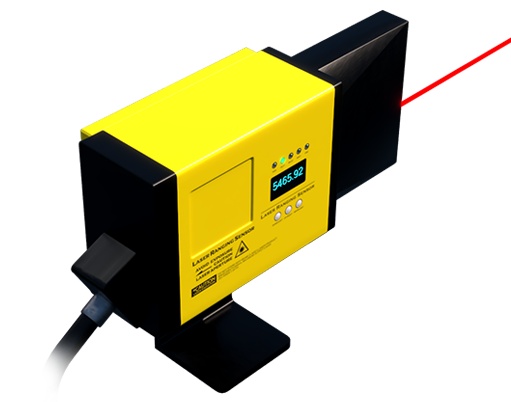
In the realm of industrial automation, precision is paramount. Among the myriad of technologies enabling this precision, Laser XYZ Alignment Sensors stand out as critical components for ensuring accuracy in manufacturing, assembly, and quality control processes. These sophisticated devices utilize laser technology to measure and correct deviations in the position of objects along three axes: X (horizontal), Y (vertical), and Z (depth). This article delves into the principles, applications, and benefits of these sensors, providing insights for engineers and industry professionals.
At their core, Laser XYZ Alignment Sensors operate on triangulation or time-of-flight principles. In triangulation-based systems, a laser diode projects a focused beam onto a target surface. The reflected light is captured by a position-sensitive detector, such as a CCD or CMOS sensor. By analyzing the displacement of the laser spot on the detector, the sensor calculates the exact distance and angle of the target relative to a reference point. For XYZ measurements, multiple laser emitters and detectors are often integrated into a single unit or coordinated in an array to capture spatial data in three dimensions. Time-of-flight sensors, alternatively, measure the round-trip time of a laser pulse to determine distance with high speed, suitable for dynamic environments.
The applications of these sensors are vast and varied. In automotive manufacturing, they ensure precise alignment of body panels, engine components, and welding robots, reducing errors and enhancing safety. In electronics assembly, they guide the placement of microchips on circuit boards, where micron-level accuracy is essential. Packaging lines rely on them to verify the position of labels, caps, and products on conveyor belts, preventing misalignments that could lead to waste or operational downtime. Additionally, in robotics, Laser XYZ Alignment Sensors provide real-time feedback for robotic arms, enabling adaptive movements and improving task repeatability.
Key advantages include non-contact measurement, which eliminates wear and tear on both the sensor and the target object. This feature is particularly beneficial for delicate or high-speed applications where physical contact could cause damage or inaccuracies. High resolution and fast response times allow for continuous monitoring and immediate corrections, boosting production efficiency. Moreover, these sensors are often designed with robust housings to withstand harsh industrial environments, including dust, vibrations, and temperature fluctuations. Integration with programmable logic controllers (PLCs) and industrial networks, such as Ethernet/IP or PROFINET, facilitates seamless data exchange and automation control.

When selecting a Laser XYZ Alignment Sensor, engineers must consider factors like measurement range, accuracy, repeatability, and environmental conditions. For instance, long-range sensors might be needed for large-scale machinery, while compact models suit confined spaces. Calibration and maintenance are also crucial; regular checks ensure consistent performance, and many modern sensors feature self-diagnostic capabilities to alert users to potential issues. As Industry 4.0 advances, these sensors are increasingly incorporating smart features, such as IoT connectivity and AI-driven analytics, enabling predictive maintenance and optimized process flows.
In conclusion, Laser XYZ Alignment Sensors are indispensable tools in modern industrial settings. By providing precise, real-time spatial data, they enhance quality, reduce costs, and drive innovation. As technology evolves, their capabilities will expand, further solidifying their role in the automation landscape. For professionals in electrical engineering and automation, staying abreast of these developments is key to leveraging their full potential.