In the realm of industrial automation, precision, reliability, and durability are non-negotiable. Among the myriad of sensing technologies available, magnetic proximity sensors stand out for their ability to detect the presence or absence of ferromagnetic objects without physical contact, even in harsh environments filled with dirt, oil, or moisture. As we navigate through 2024, the demand for smarter, more robust, and energy-efficient solutions has intensified. This article presents a curated ranking of the top five magnetic proximity sensors currently dominating the market, based on critical performance metrics such as sensing range, switching frequency, environmental resilience, integration capabilities, and overall value proposition.
Leading our list is the Turck Q5 Series. Renowned for its exceptional robustness, this sensor features an all-stainless-steel housing (AISI 303/304) and is rated IP68/IP69K, making it virtually impervious to high-pressure washdowns, extreme temperatures, and corrosive chemicals common in food & beverage or pharmaceutical applications. Its extended sensing range, up to 25mm for standard ferrous targets, and high switching frequency make it ideal for high-speed counting and positioning tasks. The Q5 also supports IO-Link communication, providing valuable diagnostic data and enabling parameterization on the fly, which is a cornerstone of Industry 4.0 connectivity.
Securing the second position is the Pepperl+Fuchs ML5-8-H-30-RT/92/115. This cylindrical sensor is a benchmark for versatility and precision. Its key strength lies in its teach-in capability, allowing users to set the switching point directly at the installation site, simplifying setup and adaptation to various target materials. With a consistent 8mm switching distance and a robust M12 connector, it excels in hydraulic cylinder position feedback and general machinery applications. Its high electromagnetic compatibility (EMC) and vibration resistance ensure stable operation in electrically noisy and mechanically demanding environments.
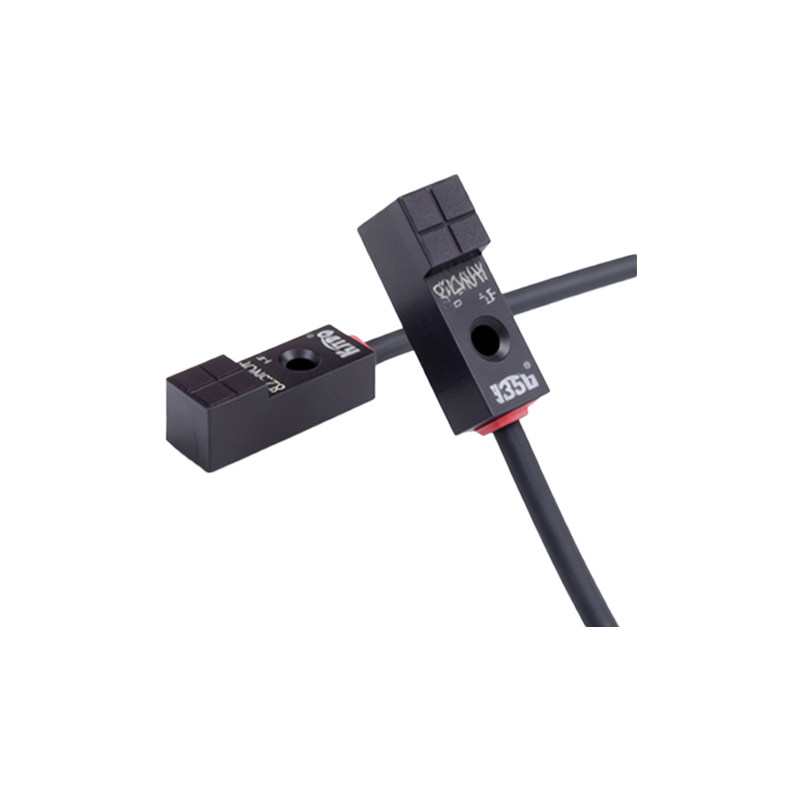
The Sick MM12 takes the third spot, celebrated for its compact design and high functional density. Despite its small M12 housing, it delivers a reliable 4mm switching distance. Its true innovation is in its multi-voltage capability (10-30V DC) and complementary output types (NO/NC), which offer unparalleled flexibility in circuit design and inventory management. The Sick MM12 is particularly favored in space-constrained applications like robotics and small assembly modules, where its plug-and-play simplicity and LED status indication significantly reduce commissioning time.
In fourth place, we find the Balluff BMF 308K. This sensor is a specialist in long-range detection. Utilizing magnetoresistive technology, it can detect standard magnets at distances up to 60mm, far exceeding the range of typical inductive or reed-based sensors. This makes it the go-to choice for safety applications, such as monitoring guard door positions, or in large-stroke pneumatic cylinders where other sensors would fail. Its plastic housing is resistant to many coolants and its programmable output logic adds a layer of customization for complex control sequences.
Rounding out the top five is the Omron E2B-M. This series is a testament to cost-effectiveness without compromising core performance. Offering a wide variety of housing styles (cylindrical, rectangular), connection types (pre-wired, connector), and output configurations, it provides an economical solution for standard machine automation tasks. Its consistent 5mm sensing distance and robust construction against oil and coolant splashes make it a reliable workhorse for CNC machines, conveyor systems, and material handling equipment where budget constraints are a key consideration.
Selecting the right magnetic proximity sensor is a strategic decision that impacts machine uptime, maintenance costs, and system intelligence. While the Turck Q5 leads with its unparalleled ruggedness and smart features, the final choice must align with the specific application's requirements for range, speed, environment, and connectivity. The ongoing trends point towards sensors with integrated diagnostics, standardized digital interfaces like IO-Link, and enhanced materials for even tougher conditions. By investing in a top-tier sensor from this ranking, engineers and system integrators can build a foundation for more resilient, efficient, and data-driven automated systems.