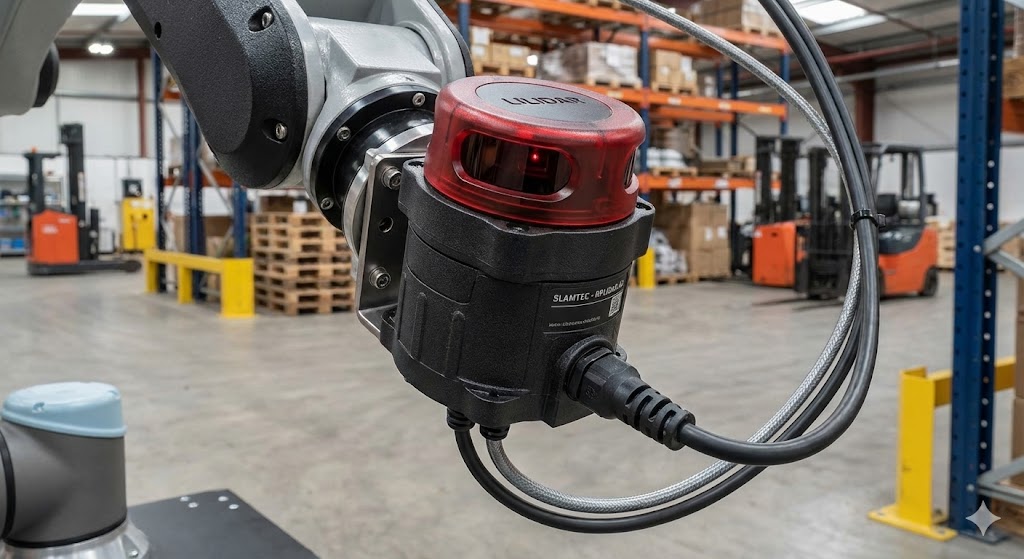
In the rapidly evolving landscape of industrial automation and precision measurement, the laser sensor stands as a cornerstone technology. Its applications span from automotive manufacturing and robotics to consumer electronics and aerospace, demanding unparalleled accuracy and reliability. At the heart of producing these sophisticated devices lies a critical, yet often underappreciated, process: assembly. The laser sensor assembly machine is the unsung hero that transforms delicate optical components, sensitive photodiodes, and intricate electronic circuits into a cohesive, high-performance unit. This article delves into the engineering principles, operational intricacies, and future trends of these advanced assembly systems.
The core challenge in laser sensor assembly is achieving micron-level precision while maintaining high throughput. A typical assembly line for a laser displacement or triangulation sensor involves several meticulously orchestrated stages. It begins with the precise placement of the laser diode, often a VCSEL (Vertical-Cavity Surface-Emitting Laser) or edge-emitting diode, onto a submount or housing. This step requires ultra-precise die bonders or pick-and-place machines equipped with vision alignment systems. Any misalignment, even by a few micrometers, can drastically affect the beam's collimation and the sensor's final calibration. Following this, the lens assembly—which may include collimating, focusing, or cylindrical lenses—must be positioned with equal exactitude. Modern machines use active alignment techniques, where the lens is adjusted in real-time while the laser is powered at a low level, and the output beam profile is monitored by a downstream camera or power meter to achieve optimal optical coupling.
The next phase involves integrating the photodetector array, typically a CCD or CMOS sensor, which captures the reflected or diffused laser light. This component must be aligned relative to the laser's emission axis with extreme angular accuracy. Robotic arms with six-axis control, guided by machine vision algorithms, perform this delicate task. Subsequently, the electronic components—including amplifiers, analog-to-digital converters, and communication interfaces (e.g., Ethernet, IO-Link)—are populated onto a PCB and connected. Here, the assembly machine transitions from pure optical precision to mechatronic integration, employing soldering techniques like reflow or selective soldering to ensure robust electrical connections without inducing thermal stress on nearby optical elements.
Sealing and housing finalization are critical for environmental robustness. Many laser sensors require hermetic sealing to protect internal components from dust, moisture, and mechanical shock. Assembly machines automate the dispensing of epoxy or the execution of laser welding for metal casings, all within controlled atmospheric chambers to prevent contamination. Final functional testing is an integral part of the assembly cell. Automated test stations subject each sensor to a battery of checks: output power stability, wavelength verification, linearity over its measurement range, temperature drift, and response time. Data from these tests are logged for traceability and often fed back to the alignment stages for closed-loop process optimization.

The engineering behind these machines is a symphony of disciplines. Precision mechanics provide the stable, vibration-damped platforms. Advanced motion control systems, often utilizing linear motors and piezoelectric actuators, deliver nanometer-resolution movement. Machine vision, powered by high-speed cameras and sophisticated software, acts as the system's eyes, enabling non-contact measurement and alignment. The software backbone, usually a programmable logic controller (PLC) or industrial PC running specialized assembly software, orchestrates the entire sequence, ensuring synchronization and handling error recovery.
Looking ahead, trends in laser sensor assembly are being shaped by Industry 4.0 and the demand for greater flexibility. Modular machine designs allow for quicker reconfiguration to assemble different sensor models on the same line. The integration of AI and machine learning is enhancing predictive maintenance of the assembly equipment itself and improving yield rates by identifying subtle patterns in test data that precede failures. Furthermore, as sensors shrink for applications in mobile devices and wearables, assembly machines are adapting to handle even smaller, more fragile components, pushing the boundaries of miniaturized automation.
In conclusion, the laser sensor assembly machine is a pinnacle of modern manufacturing engineering. It embodies the convergence of optical science, precision mechanics, and intelligent software to produce the essential sensing devices that drive automation forward. Its continuous evolution is not just about assembling parts faster, but about enabling the next generation of sensors that will see, measure, and interact with the world with ever-greater fidelity.