In the realm of precision measurement and industrial automation, laser displacement sensors have become indispensable tools. At the heart of many high-performance laser triangulation sensors lies a critical optical component: the grating. This article delves into the function, types, and significance of gratings within laser displacement sensors, providing a technical overview for engineers and professionals in the field.
A grating, in this context, is a precise optical element featuring a periodic structure of parallel lines or grooves. Its primary role within a laser displacement sensor is to diffract the coherent light emitted by the laser diode. When the laser beam strikes the grating, it is split into multiple beams traveling in specific directions, a phenomenon governed by the principles of diffraction. Typically, the sensor utilizes the first-order diffracted beam. This structured light projection is fundamental to the triangulation method. The diffracted laser spot is projected onto the target surface. The reflected or scattered light from this spot is then collected by a receiving lens and focused onto a position-sensitive detector, such as a CMOS or CCD linear array. Any change in the target's distance causes a proportional shift in the position of the laser spot image on the detector. By precisely measuring this shift, the sensor's processor calculates the displacement with high accuracy.
The design and quality of the grating directly influence sensor performance. Key grating parameters include line density (lines per millimeter), which affects the diffraction angle and ultimately the sensor's measurement range and stand-off distance. The groove profile and coating are engineered to maximize diffraction efficiency into the desired order, ensuring a bright, well-defined spot on the target for reliable detection even on dark or low-reflectivity surfaces. High-quality gratings minimize stray light and unwanted diffraction orders, which can introduce noise and reduce signal-to-noise ratio, thereby impacting resolution and linearity.
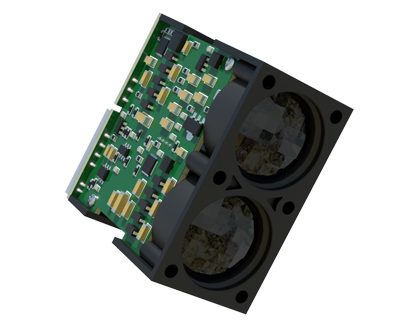
Several types of gratings are employed based on sensor design requirements. Amplitude gratings, often created by depositing opaque lines on a transparent substrate, are common. Phase gratings, which modulate the optical path length rather than the amplitude, can offer higher diffraction efficiency. For applications requiring a single, well-defined line instead of a spot, cylindrical lens arrays or line-generating gratings are used to create a laser line for profile scanning. Holographic optical elements (HOEs) can also function as sophisticated gratings, enabling complex beam shaping in compact sensor designs.
The advantages conferred by a well-designed grating system are substantial. It enables the creation of a small, intense laser spot, crucial for high spatial resolution. This allows measurements on very small features or steep edges. The defined optical path established by the grating contributes to excellent linearity across the measurement range. Furthermore, the coherent nature of the diffracted laser light provides strong contrast against ambient light, enhancing the sensor's robustness in typical industrial environments.

In practical industrial applications, laser displacement sensors with precision gratings are ubiquitous. In electronics manufacturing, they measure component coplanarity, solder paste thickness, and micro-part dimensions. In automotive assembly, they control gap and flushness between body panels with micron-level precision. In metal processing, they monitor thickness, vibration, and runout. They are also vital in robotics for guidance and part presence verification, and in quality control for inspecting surface defects, warp, and dimensional conformity.
Selecting a sensor involves considering the grating's implicit characteristics. For large stand-off distances or wide measurement ranges, a grating with a lower line density (producing a larger diffraction angle) might be integrated. For high-resolution tasks at shorter ranges, a denser grating may be preferable. The wavelength of the laser source (commonly 650nm red or 850nm infrared) is matched to the grating's design for optimal performance. Environmental factors like temperature stability and contamination resistance are also critical, as they can affect the grating's substrate and coatings.
Maintenance primarily involves keeping the grating surface clean from dust, oil mist, or other contaminants that could scatter or attenuate the laser beam, leading to signal degradation. Using sensors with appropriate IP ratings for the environment is essential.
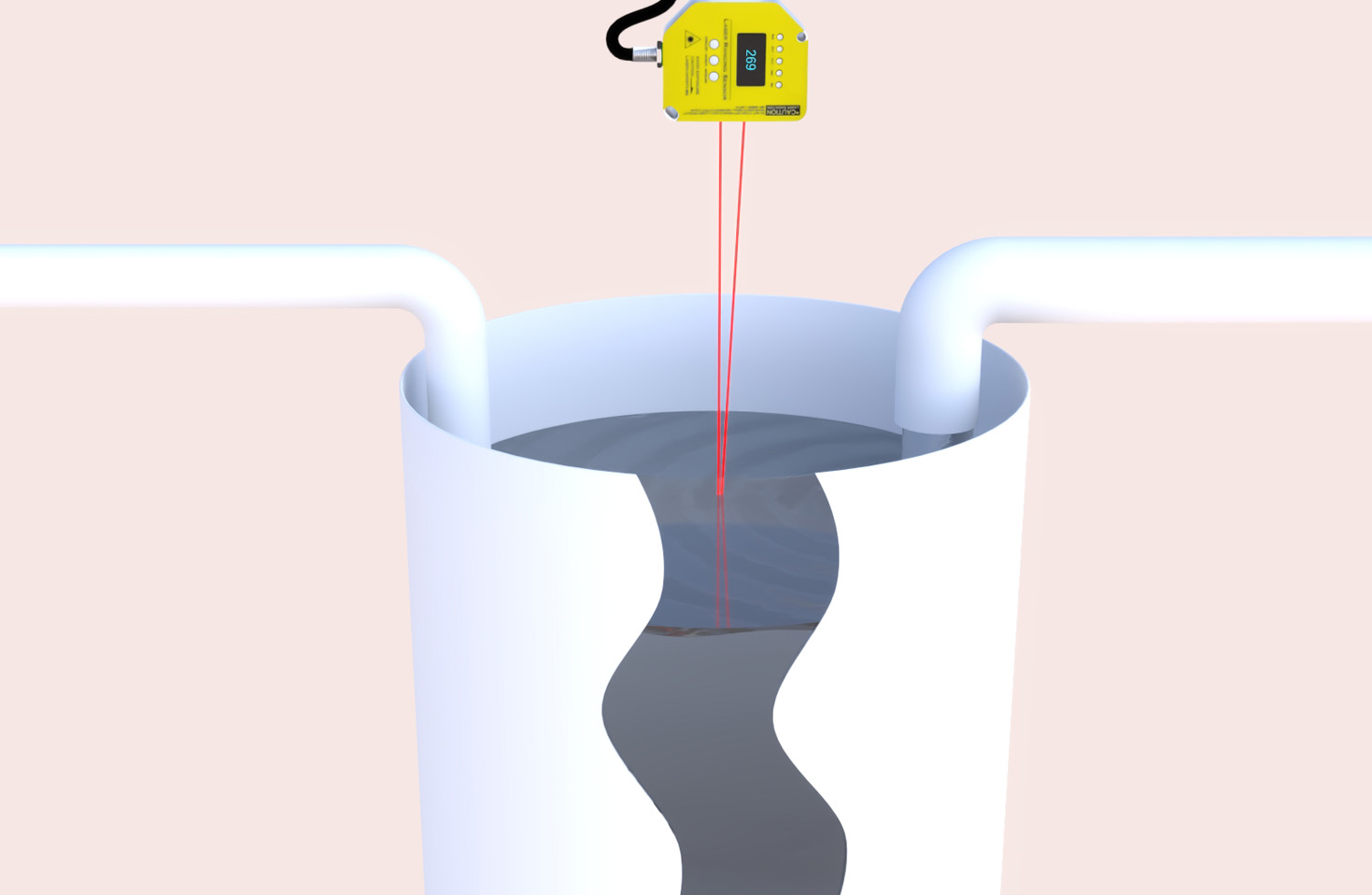
In conclusion, the grating is far more than a simple component; it is an optical engineer that defines the initial conditions for the entire triangulation measurement process. Its precision dictates the potential accuracy, stability, and versatility of the laser displacement sensor. As industry demands ever-greater precision and speed, advancements in grating technology—such as nanoimprinting and more efficient holographic designs—will continue to push the boundaries of what these powerful sensors can achieve, solidifying their role as the eyes of modern automation.