In the realm of industrial automation and control systems, terminology can sometimes lead to confusion, especially when components share overlapping functionalities. A common point of debate among engineers and technicians is whether a proximity switch qualifies as a sensor. This article delves into the technical definitions, operational principles, and industry standards to provide a clear, authoritative perspective.
Fundamentally, a sensor is a device that detects or measures a physical property and records, indicates, or otherwise responds to it. It converts a physical phenomenon—such as temperature, pressure, light, or presence—into an electrical signal that can be interpreted by a control system. The output of a sensor is typically an analog signal (e.g., 4-20 mA, 0-10V) or a digital signal that represents a continuous range of the measured variable.
A proximity switch, on the other hand, is a specific type of device designed to detect the presence or absence of an object within a defined range without physical contact. Common types include inductive (for metallic objects), capacitive (for both metallic and non-metallic objects), and photoelectric switches. Its primary function is to act as a binary, on/off control device. When a target object enters its sensing field, the switch's internal state changes, typically opening or closing an electrical circuit. The output is a discrete digital signal—most commonly a solid-state PNP/NPN signal or a relay contact—indicating simply "object present" or "object absent."
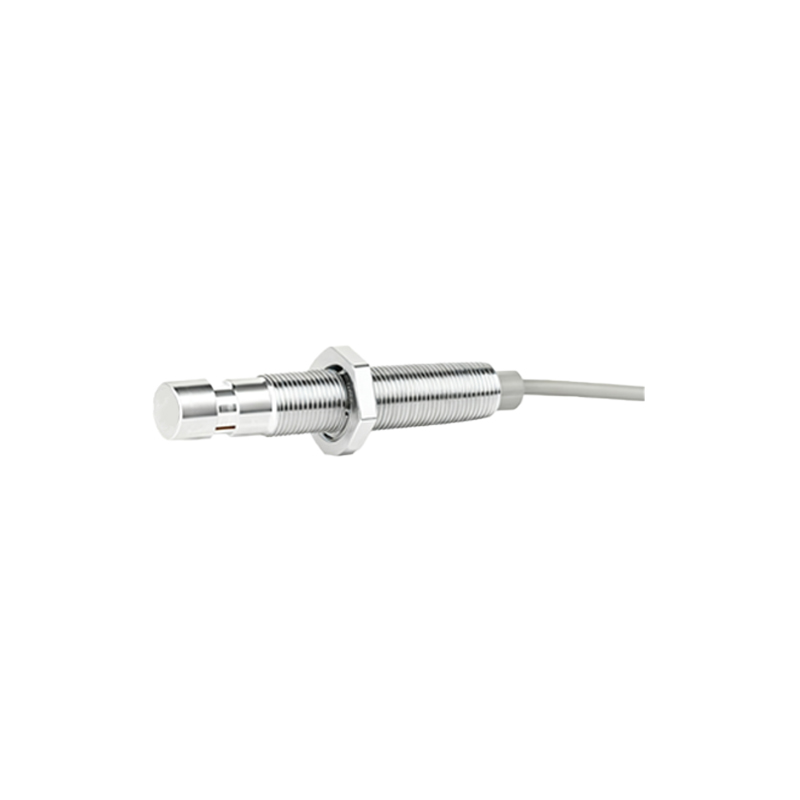
So, does this make a proximity switch a sensor? The answer is nuanced but leans strongly toward "yes." From a broad, functional perspective, a proximity switch senses a physical condition—the presence of an object. It performs the core function of detection and conversion. The key distinction lies in the nature and granularity of its output. While a general-purpose sensor often provides a measurement (quantitative data), a proximity switch provides a detection (qualitative, go/no-go data). In essence, all proximity switches are sensors, but not all sensors are proximity switches. A proximity switch represents a specialized subclass of sensors focused on binary position sensing.
Industry standards from organizations like the International Electrotechnical Commission (IEC) and the National Electrical Manufacturers Association (NEMA) often categorize proximity devices under the umbrella of "non-contact position sensors." This classification reinforces their identity as sensors. In technical documentation and parts catalogs, it is exceedingly common to see terms like "inductive proximity sensor" and "proximity switch" used interchangeably, though "switch" emphasizes its role in directly controlling a circuit.
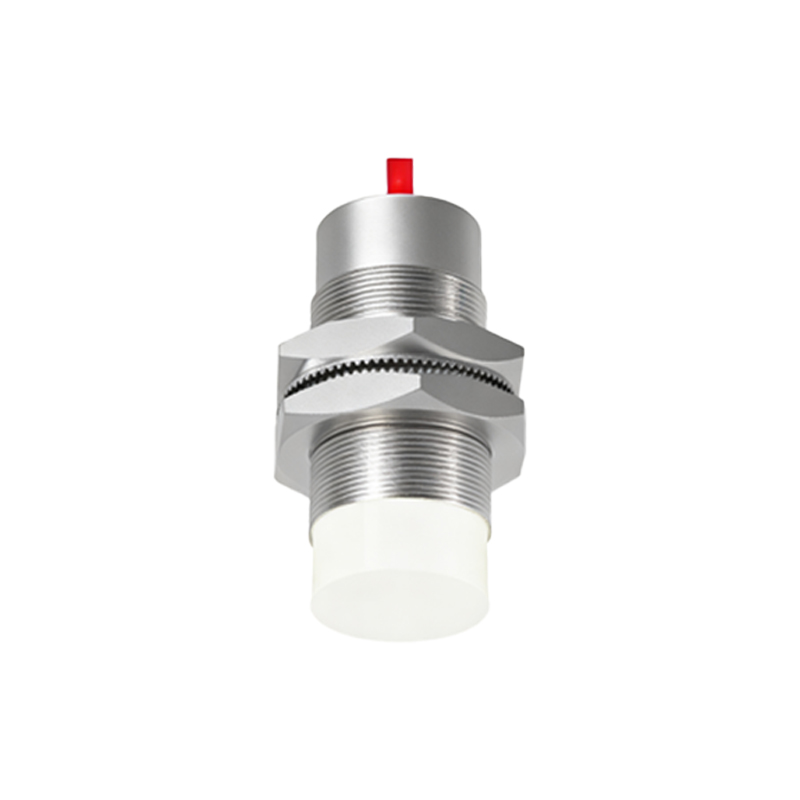
The choice of terminology often depends on context. In a discussion about the hierarchy of control system components, calling it a "sensor" highlights its data-acquisition role in the feedback loop. When focusing on its application in ladder logic or hardwired safety circuits to initiate an action (like stopping a conveyor or counting parts), the term "switch" is more descriptive of its function as a direct control element.
From an electrical engineering standpoint, the internal operation of an inductive proximity switch is a perfect example of sensing technology. It contains an oscillator circuit that generates a high-frequency electromagnetic field. When a metallic object disturbs this field, it causes a change in the oscillation amplitude. This change is detected, processed, and triggers the switching element. This process—detecting a physical change and converting it into an electrical signal—is the very definition of sensing.
In practical applications, the line can blur further. Many modern "proximity sensors" offer analog outputs (e.g., 0-10V proportional to distance), providing measurement capabilities that clearly fit the sensor definition. Conversely, devices universally called sensors, like a thermocouple, can be connected to a switch-like device (a thermostat) to provide a simple on/off control signal.
Therefore, insisting on a rigid separation is not particularly useful in engineering practice. The consensus within the electrical and automation engineering community is that proximity switches are a vital category of industrial sensors. Their design is optimized for robustness, repeatability, and reliability in harsh environments to provide a critical binary input to Programmable Logic Controllers (PLCs) and other control systems.
In conclusion, while the term "switch" underscores its output function, a proximity switch undeniably performs a sensing operation. It is a sensor specialized for discrete, non-contact position detection. Understanding this clarifies its role in system diagrams, parts selection, and technical communication, ensuring engineers and technicians speak a common, precise language when designing and troubleshooting automated systems.