In the realm of industrial process control and fluid management, the accurate measurement of liquid flow is paramount. Among the various technologies available, laser liquid flow sensors have emerged as a sophisticated and highly reliable solution. This article delves into the operational principles, key applications, and distinct advantages of these advanced instruments, offering insights for engineers and technical decision-makers.
The fundamental principle behind a laser liquid flow sensor is based on laser Doppler velocimetry (LDV) or related optical techniques. In a typical configuration, a laser beam is directed through a transparent section of a pipe or a specially designed flow cell containing the liquid. As microscopic particles or inherent density fluctuations within the liquid pass through the laser beam, they scatter the light. A photodetector, positioned at a specific angle, captures this scattered light. The movement of the particles causes a shift in the frequency of the scattered light, known as the Doppler shift. By precisely measuring this frequency shift, the sensor's processing electronics can calculate the velocity of the liquid. When combined with the known cross-sectional area of the flow conduit, the volumetric flow rate is accurately determined.
One of the most significant advantages of laser flow sensors is their non-intrusive nature. Unlike turbine meters or paddlewheel sensors, there is no physical component inserted into the flow stream. This eliminates several critical issues: there is no pressure drop induced by the sensor itself, no risk of mechanical wear or clogging from particulates, and minimal risk of contaminating the fluid. This makes them ideal for sterile processes in pharmaceuticals, biotechnology, and food and beverage production, where purity is non-negotiable. Furthermore, the absence of moving parts translates to exceptionally low maintenance requirements and a long operational lifespan, reducing total cost of ownership.
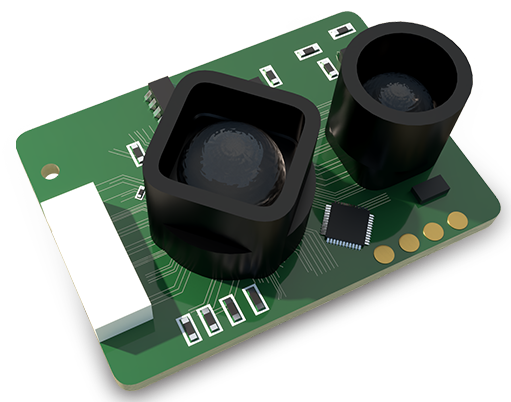
The application spectrum for laser liquid flow sensors is broad and growing. In chemical processing plants, they are employed to monitor the flow of aggressive solvents, acids, and bases where traditional sensors would corrode or fail. In water and wastewater treatment, they provide precise dosing control for chemicals like chlorine and flocculants. The semiconductor industry relies on their precision for ultra-pure water (UPW) systems and chemical mechanical planarization (CMP) slurry delivery. In research and development laboratories, these sensors are invaluable for studying fluid dynamics, microfluidics, and complex multiphase flows due to their high spatial and temporal resolution.
Performance characteristics of modern laser flow sensors are impressive. They typically offer a wide dynamic range, capable of measuring very low to very high flow rates within the same instrument. Accuracy is often within ±0.5% of reading or better, with excellent repeatability. Their response time is extremely fast, limited only by the signal processing electronics, making them suitable for rapid process control loops. Modern digital models feature sophisticated signal processing that can filter out noise and provide stable readings even in challenging conditions with low particle counts or optical imperfections.

When selecting a laser liquid flow sensor, several factors must be considered. The optical properties of the liquid are crucial; the fluid must be at least partially transparent to the specific laser wavelength used. The presence of sufficient scattering particles or bubbles is necessary for a reliable signal, though some advanced models can work with very clean liquids using molecular scattering techniques. The material compatibility of the wetted parts (e.g., the flow cell windows) with the process liquid is also essential to prevent corrosion or degradation. Finally, integration with existing control systems via standard analog outputs (4-20 mA, 0-10 V) or digital communication protocols (Modbus, PROFIBUS, Ethernet/IP) is a key practical consideration.
In conclusion, laser liquid flow sensors represent a pinnacle of optical measurement technology for liquids. Their non-contact operation, high accuracy, robustness, and versatility solve many measurement challenges that intrusive meters cannot. As industries continue to demand higher efficiency, tighter process control, and greater reliability, the adoption of laser-based flow measurement is poised to expand further. For engineers tasked with specifying flow instrumentation for critical or demanding applications, a thorough evaluation of laser Doppler sensors is highly recommended.
