In the realm of industrial process control and condition monitoring, achieving accurate, non-contact temperature measurement is a persistent challenge. Among the advanced solutions available, coaxial laser temperature sensors have emerged as a superior technology, offering distinct advantages over traditional infrared pyrometers and other non-contact methods. This article delves into the operational principles, key benefits, diverse applications, and critical selection criteria for these sophisticated instruments, providing essential knowledge for engineers and technical decision-makers.
At its core, a coaxial laser temperature sensor integrates two fundamental components: a precision laser for targeting and an infrared detector for temperature measurement. The term "coaxial" refers to the perfect alignment of the laser aiming beam and the optical path of the infrared detector. This alignment ensures that the laser spot precisely indicates the exact area from which the temperature is being measured. This is a critical improvement over older systems where parallax error—a misalignment between the sighting mechanism and the measurement field of view—could lead to significant inaccuracies, especially when measuring small targets or at a distance.
The principle of operation is elegantly straightforward. The sensor emits a low-power, visible laser beam (typically Class 2) that the operator uses to pinpoint the measurement spot on the target object. Simultaneously, the sensor's infrared optics, which share the same axial path, collect the infrared radiation emitted from that exact same spot. This radiation is focused onto a thermopile or photodetector, which converts the radiant energy into an electrical signal. This signal is then processed, accounting for the target's emissivity—a crucial material property—to calculate and output a precise temperature reading. The coaxial design virtually eliminates aiming errors, guaranteeing that the measured temperature corresponds directly to the intended location.
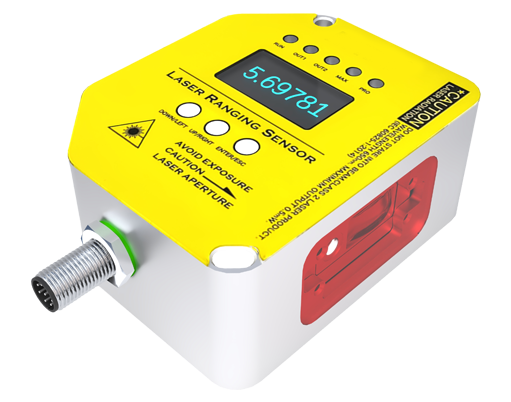
The benefits of this technology are substantial for industrial environments. First and foremost is exceptional accuracy and reliability. By eliminating parallax, these sensors provide confidence that the reading is from the correct spot, which is vital for quality control in processes like semiconductor wafer heating, plastic film extrusion, or metal heat treating. Second, they enable measurement of very small targets. With precise laser aiming, engineers can reliably measure components as small as a fraction of a millimeter in diameter. Third, they offer enhanced safety and convenience for measuring hazardous, moving, or high-voltage targets, as the measurement is performed from a safe distance without any physical contact that could contaminate or interfere with the process.
The applications for coaxial laser temperature sensors span numerous industries. In electronics manufacturing, they monitor solder reflow profiles, component temperatures on circuit boards, and LED performance. In metals processing, they are indispensable for measuring temperatures during casting, forging, rolling, and heat treatment, ensuring metallurgical properties are achieved. The plastics industry relies on them for monitoring extruder dies, molded parts, and film processes. Furthermore, they are used in automotive for brake disc testing, in aerospace for turbine component analysis, and in research and development for characterizing new materials and processes.
Selecting the right coaxial laser temperature sensor requires careful consideration of several technical parameters:
1. Spectral Response & Detector Type: Choose a sensor with a spectral range suitable for your application's temperature range and material type (e.g., short-wave for high temps, long-wave for plastics).
2. Optical Resolution (Distance-to-Spot Ratio): This defines the size of the measurement spot at a given distance. A higher ratio allows for measuring smaller spots from farther away.
3. Emissivity Adjustment: Ensure the sensor allows for precise emissivity setting, either fixed or adjustable, to match the target material's characteristics.
4. Response Time: The speed at which the sensor reacts to temperature changes is critical for dynamic processes.
5. Environmental Durability: Consider housings with appropriate IP ratings, air or water purging options, and cooling jackets for hostile environments with dust, moisture, or extreme ambient heat.
6. Outputs and Connectivity: Standard analog outputs (4-20mA, 0-10V) and digital interfaces (USB, RS-485, Ethernet) for integration into control systems and data loggers are essential.
In conclusion, coaxial laser temperature sensors represent a significant technological leap in non-contact thermometry. Their integrated, perfectly aligned design solves the historic problem of aiming uncertainty, delivering unmatched precision for critical industrial measurements. For engineers tasked with optimizing processes, ensuring product quality, and implementing predictive maintenance, understanding and leveraging this technology is key to achieving higher levels of operational efficiency and control. As industrial processes become more precise and automated, the role of these intelligent sensors will only continue to expand.