In the realm of industrial automation and precision metrology, the demand for accurate, reliable, and non-contact measurement solutions is paramount. Among the array of technologies available, SSD (Spot Sensing Displacement) Laser Displacement Sensors have emerged as a cornerstone for countless applications. These sensors project a focused laser spot onto a target surface and precisely measure the distance or displacement based on the principle of triangulation or time-of-flight, delivering micron-level accuracy in demanding environments.
The core operating principle of most industrial SSD laser sensors is optical triangulation. A laser diode emits a concentrated beam of light that strikes the target. The reflected light is focused onto a position-sensitive detector, such as a CCD or CMOS array. As the target distance changes, the position of the reflected light spot shifts on the detector. This positional shift is analyzed by the sensor's internal processor to calculate the exact distance with high resolution. Advanced models utilize sophisticated algorithms to compensate for surface color, texture, and inclination, ensuring stable measurements. For longer ranges, some sensors employ time-of-flight methods, measuring the phase shift or direct flight time of a modulated laser beam.
The advantages of SSD Laser Displacement Sensors are numerous. Their non-contact nature eliminates the risk of damaging delicate surfaces and allows for high-speed measurement of moving or vibrating objects. They offer exceptional resolution and repeatability, often down to the sub-micron range. Furthermore, their compact design, fast response times, and robustness against electrical noise make them ideal for integration into automated production lines, quality control stations, and robotic systems.
Applications span virtually every manufacturing sector. In the automotive industry, they are used for gap and flush measurement on vehicle bodies, brake disc thickness inspection, and piston position monitoring. In electronics manufacturing, they ensure the coplanarity of semiconductor packages and measure solder paste height. In metal processing, they control roll gap distances, measure sheet thickness, and inspect surface profiles. Additional uses include vibration analysis, wafer alignment, tire profile inspection, and monitoring of part presence or absence on conveyor systems.
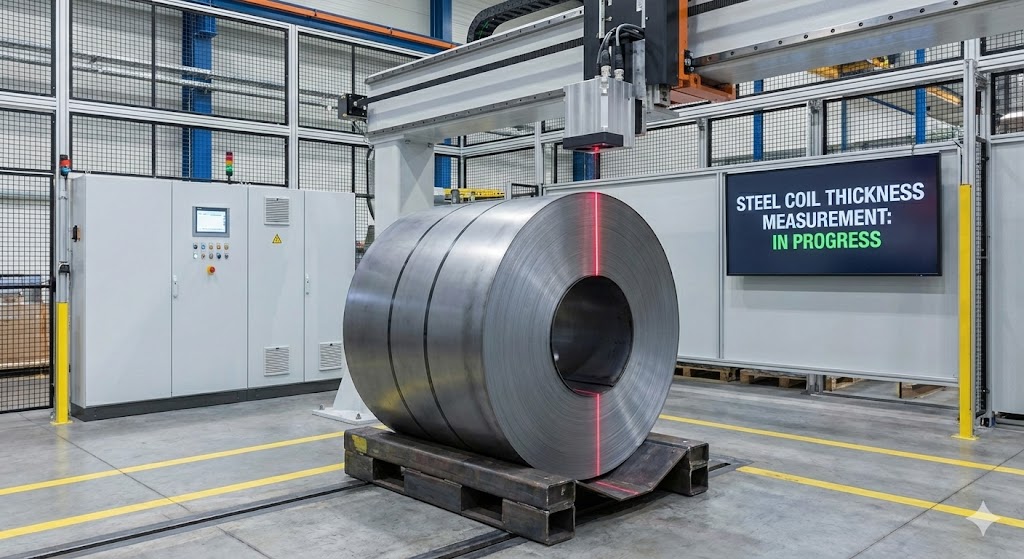
Selecting the appropriate SSD laser displacement sensor requires careful consideration of several key parameters. First, define the measurement range—the distance over which the sensor operates accurately. The reference distance, often the midpoint of this range, is crucial for optimal performance. Resolution, the smallest detectable change in distance, must meet the application's precision needs. Spot size is critical; a smaller spot allows for measurement on edges or small features but may be affected by surface roughness. Sampling speed or response frequency must be high enough to track fast-moving targets. Environmental factors like ambient light, temperature fluctuations, and the target's material and surface finish (e.g., shiny, dark, transparent) significantly influence sensor choice, necessitating models with specialized filters or adaptive gain control.

Installation and alignment are critical for achieving specified accuracy. Ensure the sensor is mounted securely to minimize vibration. The laser beam should be perpendicular to the target surface under normal measurement conditions to avoid cosine error. For transparent materials like glass or plastic, a retro-reflective model or a specific sensor designed for transparent objects may be required. Regular calibration against a known standard is recommended to maintain long-term measurement integrity.
Modern SSD sensors offer enhanced connectivity through analog outputs (4-20mA, 0-10V), digital interfaces (RS-485, Ethernet/IP, PROFINET), and discrete I/O for easy integration into PLCs and data acquisition systems. Built-in teach functions simplify setup, allowing operators to set measurement windows and thresholds directly.
Looking ahead, trends point toward even smaller form factors, higher speeds, and increased intelligence. Integration of embedded AI for real-time decision-making, such as outlier rejection and adaptive calibration, is on the rise. Furthermore, multi-point sensors and laser line profilers, which extend the SSD spot into a line, are gaining traction for 2D and 3D contour measurement.
In conclusion, SSD Laser Displacement Sensors are indispensable tools for modern industry, providing the precise, non-contact data essential for quality assurance, process control, and automation. A thorough understanding of their principles, coupled with a methodical approach to selection and application, enables engineers to unlock their full potential, driving efficiency and innovation in manufacturing processes.