In the rapidly evolving landscape of industrial automation and robotics, the demand for high-precision sensing solutions has never been greater. Among these, millimeter-level proximity sensors represent a critical technology, enabling machines to detect, measure, and respond to objects with exceptional accuracy. This article provides an in-depth exploration of the suppliers and technologies shaping this specialized market, focusing on the key considerations for engineers and procurement specialists.
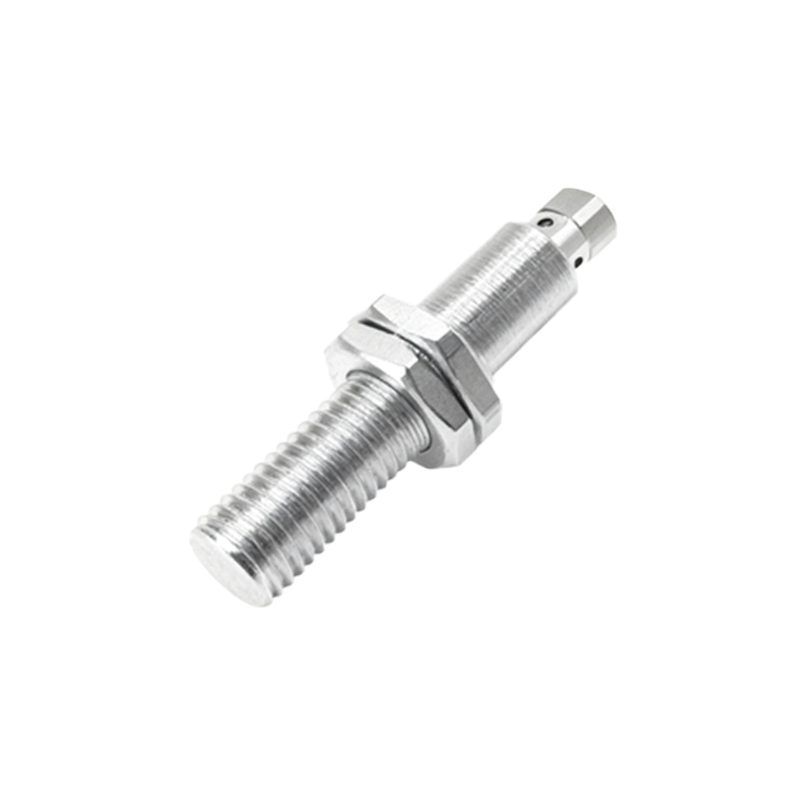
The core technology behind millimeter-level sensing typically involves inductive, capacitive, or laser-based principles. Inductive sensors are predominant for detecting metallic objects at short ranges, often within 0.1 to 15 mm, with high repeatability and resilience in harsh environments. Leading suppliers in this segment, such as Sick AG, Pepperl+Fuchs, and Balluff GmbH, have developed series with resolutions down to microns, featuring robust housings (e.g., IP67/IP69K ratings) and integrated diagnostics. These sensors are indispensable in automotive assembly lines for part positioning and in semiconductor manufacturing for wafer handling.
Capacitive sensors, offered by suppliers like ifm electronic and Turck, extend detection to non-metallic materials such as plastics, glass, and liquids. Their ability to sense through certain barriers makes them ideal for fill-level control or packaging applications. However, achieving millimeter precision with capacitive technology requires careful calibration to account for environmental factors like humidity and temperature drift.
For the highest precision, often required in metrology or micro-assembly, laser triangulation sensors are the go-to solution. Suppliers such as Keyence Corporation and Omron Corporation provide compact laser sensors with measurement ranges from a few millimeters up to several centimeters, boasting resolutions as fine as 0.5 µm. These devices excel in tasks like thickness gauging, electronic component inspection, and robotic guidance systems. Their integration often involves sophisticated software interfaces for real-time data analysis.
Selecting a supplier goes beyond mere specifications. Engineers must evaluate the total cost of ownership, which includes not only the unit price but also factors like ease of integration, compatibility with existing industrial networks (e.g., IO-Link, PROFINET, EtherCAT), and long-term support. European and Japanese suppliers have traditionally dominated the high-end market, emphasizing reliability and precision. However, several competitive suppliers from North America and Asia are gaining traction by offering cost-optimized solutions without significant compromises in core performance.
A critical trend among top suppliers is the shift toward smart sensors with embedded intelligence. Modern millimeter-level proximity sensors often feature self-monitoring capabilities, predictive maintenance alerts, and digital parameter setting, which drastically reduce downtime. The adoption of IO-Link communication is becoming a standard, allowing for seamless data exchange and remote configuration within Industry 4.0 frameworks.
When sourcing these components, it is advisable to request detailed datasheets and application notes. Pay close attention to parameters such as repeatability, hysteresis, response time, and temperature coefficient. For instance, in a high-speed bottling plant, a sensor's response time might be more critical than its absolute resolution. Furthermore, consider the mechanical design—factors like housing material (stainless steel vs. PBT plastic), sensing face design, and cable/connector type can determine suitability for washdown areas or environments with heavy vibration.
In conclusion, the market for millimeter-level proximity sensors is characterized by intense innovation and specialization. Leading suppliers continue to push the boundaries of what is possible in terms of size, speed, and intelligence. For any industrial application demanding precise non-contact detection, a thorough evaluation of supplier capabilities, technological fit, and lifecycle support is paramount to ensuring system reliability and efficiency. The right sensor, sourced from a competent supplier, can be the difference between a production line that operates smoothly and one plagued by errors and stoppages.