In the realm of industrial automation and sensing technology, laser-based sensors have become indispensable tools for precision measurement, detection, and control. However, the use of lasers necessitates stringent safety considerations to prevent potential hazards to human health and equipment. Central to these safety protocols is the international system of laser classification, which categorizes lasers based on their potential to cause injury. This article delves into the laser safety classifications as defined by the International Electrotechnical Commission (IEC) standard 60825-1 and the U.S. Food and Drug Administration (FDA) regulations, explaining their relevance to sensor applications.
Lasers are classified into several classes, primarily ranging from Class 1 to Class 4, with subcategories such as Class 1M, 2M, 3R, and 3B. Each class denotes specific safety requirements and associated risks. Class 1 lasers are considered safe under all conditions of normal use, emitting power levels that are inherently low or enclosed in a way that prevents exposure. Many sensors, especially those used in consumer electronics or enclosed industrial systems, utilize Class 1 lasers. For instance, barcode scanners or alignment sensors often fall into this category, ensuring they pose no optical radiation hazard during operation.
Class 2 lasers are visible-light lasers with low power (typically below 1 mW). They are generally safe because the human blink reflex (aversion response) provides natural protection against accidental exposure. However, prolonged staring into the beam should be avoided. Sensors employing Class 2 lasers are common in applications like laser pointers for positioning or simple distance measurement devices, where brief exposure is expected. Class 2M is a variant where the beam may be hazardous if viewed with optical instruments, such as binoculars, but is otherwise similar to Class 2 in terms of safety for unaided viewing.

Class 3 lasers are subdivided into 3R and 3B. Class 3R lasers have a reduced risk but can be hazardous if viewed directly, with power levels up to five times the limit for Class 2 for visible wavelengths. They require caution in handling and are sometimes used in specialized sensors for research or industrial settings where controlled environments are maintained. Class 3B lasers are more powerful and can cause immediate eye injury from direct or specular reflections. Sensors with Class 3B lasers, such as those in high-precision lidar systems or material processing sensors, demand strict safety measures, including protective eyewear and controlled access areas.
Class 4 lasers are high-power devices capable of causing severe eye and skin injuries, as well as posing fire hazards. They are used in demanding sensor applications like industrial cutting, welding monitoring, or advanced scientific instrumentation. Sensors incorporating Class 4 lasers require comprehensive safety protocols, including engineering controls (e.g., interlocks, enclosures), administrative controls, and personal protective equipment.
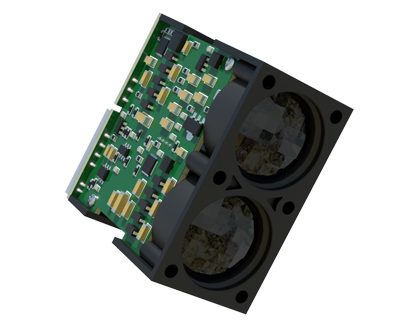
For engineers and technicians working with laser-based sensors, understanding these classifications is crucial for compliance with occupational safety standards such as OSHA in the United States or similar regulations globally. When selecting a sensor, factors like the laser class, wavelength, output power, and application environment must be evaluated to ensure safe integration. Manufacturers typically label sensors with their laser class and provide safety data sheets, which should be reviewed thoroughly.
In practice, many industrial sensors are designed to meet Class 1 safety by incorporating protective housings or beam shutters, even if internally they use higher-class lasers. This approach minimizes risk while maintaining functionality. Regular maintenance and training are also essential to prevent accidents, as misalignment or damage to sensor components could alter safety characteristics.
As technology advances, new laser types and sensor designs continue to emerge, prompting updates to safety standards. Staying informed about these developments helps professionals mitigate risks and leverage laser sensors effectively. Ultimately, adherence to laser safety classifications not only protects personnel but also enhances operational reliability and regulatory compliance in diverse industries, from manufacturing and automotive to healthcare and aerospace.