In industrial automation and control systems, proximity sensors are fundamental components for detecting the presence or absence of objects without physical contact. Their reliable operation is paramount. However, a critical design consideration often debated is the configuration of the sensor's signal conditioning electronics—specifically, whether the amplifier should be integrated within the sensor housing or separated as a remote module. This article delves into the concept and practice of proximity sensor amplifier separation, analyzing its technical rationale, advantages, and implementation considerations.
The primary function of a proximity sensor is to generate a small, often analog, electrical signal in response to a target's presence. This raw signal is typically weak and susceptible to noise, especially in harsh industrial environments characterized by electromagnetic interference (EMI), temperature fluctuations, and vibration. An amplifier is essential to boost this signal to a robust, usable level, often converting it into a clean digital output (e.g., PNP/NPN, NAMUR, or IO-Link). In integrated designs, the amplifier circuit is housed directly with the sensing element. In a separated or "remote amplifier" configuration, the sensing head contains only the core oscillator, coil, or sensing element, while the amplification, signal processing, and output circuitry are located in a separate enclosure, often mounted in a control panel some distance away.
The decision to separate the amplifier stems from several key engineering drivers focused on performance and reliability. First and foremost is improved signal integrity. By placing the sensitive amplifier circuitry away from the sensor head, it is physically removed from major sources of interference. The sensing head, often installed near motors, drives, or welding equipment, is exposed to intense EMI and heat. Transmitting the low-level analog signal over a shielded cable to a remote, protected amplifier location significantly reduces noise pickup, leading to more stable and accurate detection. This separation minimizes false triggering and enhances the signal-to-noise ratio.
Secondly, enhanced thermal management is a significant benefit. Amplifier components, particularly power output stages, generate heat. In an integrated sensor, this heat is confined to a small housing, potentially raising the internal temperature and affecting both the amplifier's performance and the sensing element's stability, especially in inductive sensors. By relocating the amplifier to a control panel with better ventilation or active cooling, its operating temperature is kept within optimal specifications, improving long-term stability and component lifespan.
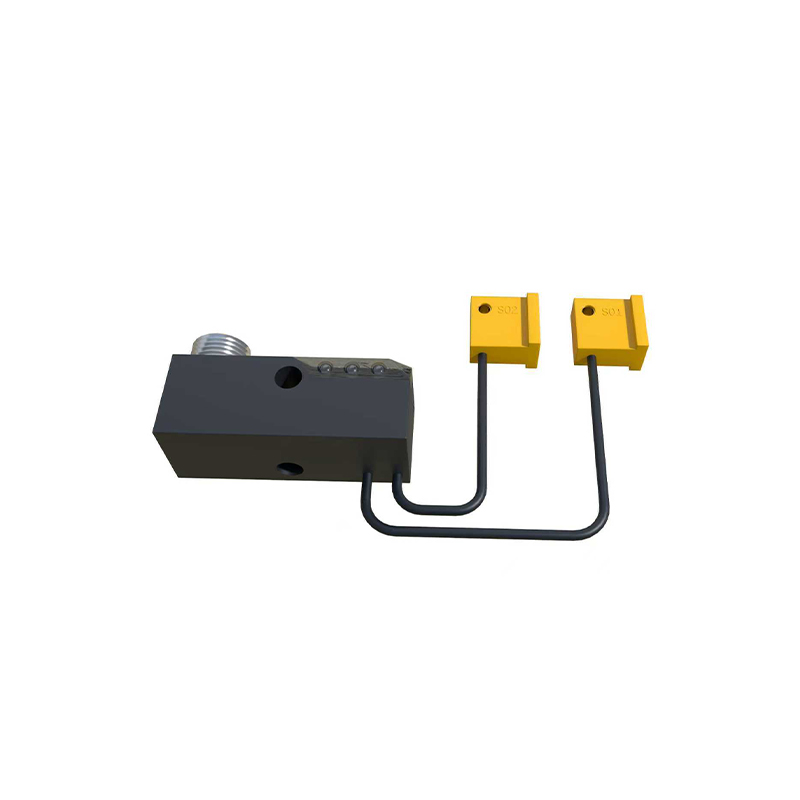
Thirdly, simplified maintenance and increased flexibility are practical advantages. In high-temperature or chemically aggressive environments, the sensor head is the component most likely to fail. With a remote amplifier system, replacing a damaged sensing head is typically quicker and more cost-effective, as it involves only the sensor itself and not the more expensive electronics. Furthermore, a single remote amplifier unit can often be configured to work with multiple sensing heads of different types or ranges, offering greater system design flexibility. This modularity simplifies inventory management and allows for easier system reconfiguration.
Implementation Considerations: Successful implementation of amplifier separation requires careful attention to several factors. The interconnecting cable is crucial. It must be properly shielded (e.g., with a braided shield and drain wire) to protect the analog signal. The cable length introduces capacitance, which can affect the performance of certain sensor types, particularly capacitive sensors; thus, manufacturer specifications for maximum cable length must be strictly adhered to. Power supply quality for the remote amplifier is also critical, as noise on the supply lines can be amplified. Using filtered or regulated power supplies is recommended. Finally, proper grounding practices are non-negotiable. The shield of the interconnect cable should be grounded at the amplifier end only to prevent ground loops, and the amplifier itself must be securely earthed according to EMC guidelines.
In conclusion, the separation of the amplifier from the proximity sensor head is a well-established design strategy aimed at optimizing system performance in demanding applications. It prioritizes signal integrity and reliability by isolating sensitive electronics from hostile environmental conditions. While it may involve a slightly higher initial material cost due to additional cabling and enclosures, the long-term benefits—reduced downtime, fewer false signals, and easier maintenance—often justify the investment. Engineers must evaluate the specific environmental challenges, sensor type, and system architecture to determine if amplifier separation is the optimal solution for achieving robust and dependable object detection.