In the dynamic landscape of industrial automation, efficiency, reliability, and ease of maintenance are paramount. Among the myriad components that form the backbone of modern control systems, proximity sensors stand out for their critical role in non-contact object detection. However, the method of connecting these sensors to controllers and power sources is equally crucial. This is where quick-disconnect (QD) or quick-connect systems for proximity sensors become a game-changer, offering significant advantages over traditional hard-wired connections.
A quick-disconnect system for a proximity sensor typically consists of two main components: the sensor body with an integrated, standardized connector (often a male pin configuration) and a separate, pre-wired cable assembly with a matching receptacle. The connection is designed to be made or broken rapidly, without the need for tools in most cases, via a simple push-and-twist or a secure locking lever mechanism. Common industry standards include the M8 and M12 circular connectors, with 3, 4, or 5 pins, which have become the de facto norm for sensor connectivity in harsh environments. These connectors are characterized by their threaded coupling nut, providing excellent resistance to vibration and ensuring an IP67 or higher ingress protection rating, safeguarding against dust and water.
The operational benefits of implementing quick-disconnect proximity sensors are substantial. First and foremost is the dramatic reduction in downtime during sensor replacement or system reconfiguration. In a hard-wired setup, a technician must de-energize the system, trace wires, disconnect terminal blocks, and often re-strip and re-terminate cables—a time-consuming and error-prone process. With a QD system, the faulty sensor is simply unlocked and unplugged, and a new unit is plugged in and locked. This can turn a 30-minute task into a 30-second one, directly impacting overall equipment effectiveness (OEE).
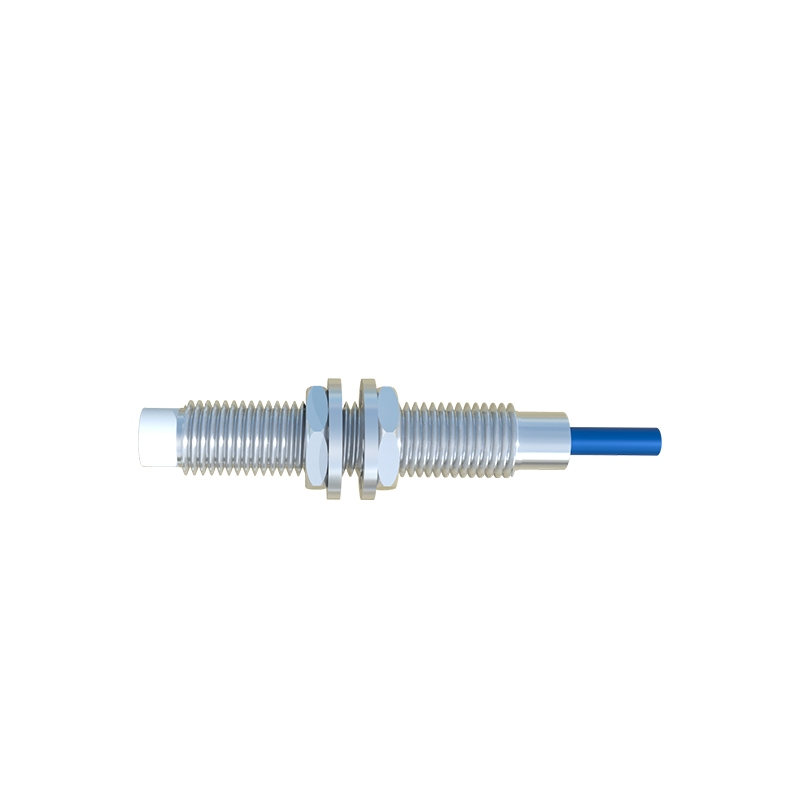
From a maintenance and inventory perspective, QD systems streamline operations. Maintenance teams can stock pre-wired, standardized cable harnesses and a selection of sensor types. This modularity simplifies troubleshooting and reduces the variety of spare parts needed. Furthermore, it allows for easy sensor relocation or process line adjustments without rewiring entire cable runs, offering unparalleled flexibility in evolving production environments.
The design and selection of these systems must consider several technical factors. Electrical specifications, such as voltage (commonly 10-30V DC), current rating, and output type (PNP/NPN, NO/NC), must be compatible between the sensor and the cable assembly. The mechanical environment dictates the choice: M12 connectors are robust for general use, while M8 connectors save space in dense panels. The cable material, typically PUR (polyurethane) or PVC, is chosen based on requirements for oil resistance, flexibility, and temperature range. For applications involving extreme washdowns (e.g., food & beverage, pharmaceuticals), connectors with stainless steel bodies and advanced sealing are essential.
Installation best practices are straightforward but critical. Ensure the power is OFF before connecting or disconnecting. Align the pins correctly to avoid damage—most connectors feature keyed housings to prevent mis-mating. Hand-tighten the coupling nut until snug; over-tightening can damage the threads or O-ring seals. Route cables away from sharp edges, excessive heat, and high-voltage lines to prevent electromagnetic interference (EMI) and physical damage. Proper strain relief at both the sensor and the control cabinet connection point is mandatory to prevent pull-out failures.
In conclusion, the adoption of quick-disconnect systems for proximity sensors is not merely a convenience but a strategic enhancement to industrial automation infrastructure. By decoupling the sensor from the permanent wiring, these systems deliver tangible benefits in maintenance speed, system uptime, and operational flexibility. As industries continue to pursue greater agility and efficiency, the role of such intelligent, user-friendly connection technologies will only become more central to designing resilient and future-proof automation solutions.